MinuteRead
30 min
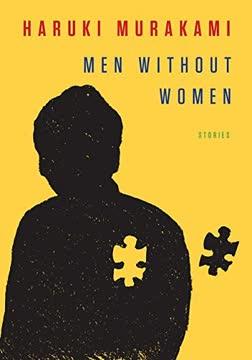
Book summary
Premium summary · Opens in the app · 30 min read
There is a particular kind of loneliness that descends when a woman leaves a man's life. It is not the same as ordinary solitude. It is not the loneliness of never having loved. It is something more specific, more acute, a hollowing out that occurs in the space where someone used to be.
**Author:** Haruki Murakami **Estimated Reading Time:** 45 minutes
Why certain men drift through life unable to form lasting connections. How the absence of love shapes identity in ways that presence never could. What happens when grief becomes a permanent resident rather than a passing visitor. The strange ways memory preserves and distorts the people we have lost. How solitude transforms ordinary reality into something dreamlike and disorienting. Why some men can only access their deepest emotions through indirect channels like music, routine, or storytelling.
This book is for anyone who has ever loved someone and lost them, not through death necessarily, but through the slower, more complicated erosion that happens between two people. It is for those who have felt the peculiar loneliness of being unable to express what they truly feel. It is for readers who understand that the most powerful forces in our lives are often absences rather than presences. And it is for anyone drawn to stories that explore the quiet, submerged territories of the human heart where language rarely reaches.
There is a particular kind of loneliness that descends when a woman leaves a man's life. It is not the same as ordinary solitude. It is not the loneliness of never having loved. It is something more specific, more acute, a hollowing out that occurs in the space where someone used to be. Haruki Murakami wrote *Men Without Women* to explore this precise territory. The book is a collection of seven stories, each examining what happens to men after the women they love disappear. Some of these women die. Some leave. Some simply fade away, becoming unreachable through the slow accumulation of distance and silence. What remains in every case is a man trying to understand what happened, trying to locate himself in a world that has been fundamentally altered by absence. The problem these stories address is not simply romantic loss. It is the peculiar difficulty many men face in processing emotional experience at all. Murakami's protagonists are intelligent, often sensitive men. They think deeply about their lives. They notice details. They have rich inner worlds. But when it comes to expressing what they feel, articulating their needs, or reaching across the gap between themselves and others, they consistently fail. Something blocks them. Something prevents the translation of inner experience into outward connection. This is why the topic matters beyond its literary dimensions. Murakami is describing a real phenomenon. Many men walk through life carrying unexpressed grief, unprocessed longing, and unarticulated love. They have been taught, implicitly or explicitly, that emotional expression is dangerous, that vulnerability invites harm, that the proper response to pain is silence. The result is a population of men who seem…
Continue reading in the MinuteRead app
Get the complete 30-minute summary of Men Without Women
Get the complete summary in the appThe absence of love shapes identity more profoundly than its presence.
Men struggle to express emotions not because they lack feelings but because they lack practice.
Grief is not a problem to solve but an experience to integrate.
Understanding why something happened is not the same as healing from it.
The stories you tell about yourself create the self you become.
Silence is not strength. It is often fear disguised as composure.
"Men Without Women" is a strong fit if you want practical ideas around short stories, japan, japanese literature, especially themes like the absence of love shapes identity more profoundly than its presence; men struggle to express emotions not because they lack feelings but because they lack practice. The MinuteRead summary distills these concepts into a focused read, whether you're deciding whether to buy the book or applying its lessons at work.
Haruki Murakami is a renowned Japanese author known for his Western-influenced writing style. Born in Kyoto, he studied drama at Waseda University and opened a jazz bar before becoming a full-time writer. Murakami's work often incorporates elements of Western music and literature, setting him apart from traditional Japanese authors. His novels frequently feature themes of alienation, loneliness, and surrealism, with titles often referencing classical music or popular songs. Murakami's accessible…
View all summaries by Haruki MurakamiContinue Reading
Access the complete 30-minute summary and thousands more nonfiction books in the MinuteRead app.

Continue reading the complete summary in the MinuteRead app.