MinuteRead
30 min
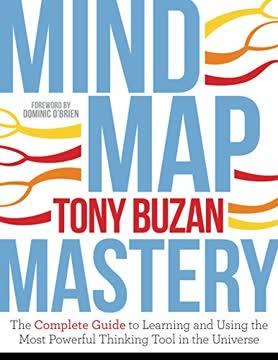
Book summary
by Tony Buzan
Premium summary · Opens in the app · 30 min read
Every day, billions of people sit down to take notes, plan projects, brainstorm ideas, and study for exams. And every day, most of them use a method that fundamentally works against the way their brains are designed to function.
**Author:** Tony Buzan
**Estimated Reading Time:** 42 minutes
**What You'll Learn:**
- The core principles behind Mind Mapping and why it works with your brain rather than against it - The essential laws for creating effective Mind Maps that enhance memory and creativity - Practical applications for work, study, and personal development - Advanced techniques for complex problem-solving and collaborative thinking - How to integrate Mind Mapping into your daily life for lasting cognitive benefits
**Who This Book Is For:**
This book is for anyone who has ever struggled to capture their thoughts, organize complex information, or unlock their creative potential. Whether you are a student facing exams, a professional managing multiple projects, an entrepreneur seeking clarity, or simply someone who wants to think more clearly and remember more effectively, Mind Map Mastery offers a proven visual thinking system that transforms how you process and retain information.
Every day, billions of people sit down to take notes, plan projects, brainstorm ideas, and study for exams. And every day, most of them use a method that fundamentally works against the way their brains are designed to function. Think about how you were taught to take notes in school. You probably learned to write in straight lines, using one color of ink, starting at the top of the page and working your way down. You may have used outlines with Roman numerals, bullet points, or numbered lists. Perhaps you highlighted key passages in a single color. This linear approach to capturing information has been the dominant method for centuries, and it has a significant problem: it ignores how the brain actually processes, stores, and retrieves information. The human brain does not think in straight lines. It thinks in associations, connections, and patterns. When you hear the word "apple," your brain does not produce a neat, linear definition. It fires off a web of associations: the color red, the taste of sweetness, the crunch of a bite, memories of autumn orchards, the story of Isaac Newton, the technology company, your grandmother's apple pie. Each of these associations connects to further associations, creating an ever-expanding network of meaning. This is how your brain naturally works, and yet most note-taking methods force you to suppress this natural tendency in favor of rigid, linear formats. Tony Buzan recognized this fundamental mismatch and spent decades developing a solution. His answer was the Mind Map, a visual thinking tool that mirrors the brain's natural associative processes. A Mind Map starts with a central image or concept and radiates outward through branches and sub-branches, using keywords, colors, and images to capture the full richness of a thought. Instead of fighting your brain's natural tendencies, a Mind Map works with…
Continue reading in the MinuteRead app
Get the complete 30-minute summary of Mind Map Mastery
Get the complete summary in the appA Mind Map mirrors the structure of a brain cell, with branches radiating from a central point through patterns of assoc
The brain thinks in associations, not linear sequences. Mind Maps work with this natural tendency rather than against it
Use blank, unlined paper in landscape orientation, start with a colorful central image, and use curved branches with one
Images and color are not decorative; they are essential for engaging the brain's visual processing system and creating s
The process of creating a Mind Map is where the cognitive benefits arise. The map itself is a byproduct of the thinking
Radiant Thinking is the brain's natural mode of operation. Let associations flow freely without self-censorship.
"Mind Map Mastery" is a strong fit if you want practical ideas around self help, productivity, psychology, especially themes like a mind map mirrors the structure of a brain cell, with branches radiating from a central point through patterns of assoc; the brain thinks in associations, not linear sequences. mind maps work with this natural tendency rather than against it. The MinuteRead summary distills these concepts into a focused read, whether you're deciding whether to buy the book or applying its lessons at work.
Tony Buzan was an influential author and educational consultant known for developing Mind Mapping techniques. He authored over 100 books on brain function, memory, and creativity, with his most famous work being "Use Your Head." Buzan promoted mental literacy and worked with diverse groups to enhance brain power. He founded the World Memory Championships and co-founded the Mind Body Spirit Festival. Buzan's Mind Mapping method, which he claimed to have invented, aimed to improve note-taking and …
View all summaries by Tony BuzanContinue Reading
Access the complete 30-minute summary and thousands more nonfiction books in the MinuteRead app.

Continue reading the complete summary in the MinuteRead app.