 MinuteRead
30 min
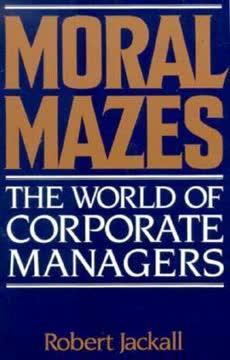
Most discussions of business ethics begin with a simple assumption: that managers face clear moral choices and simply need better principles to make better decisions. The problem, according to this view, is one of individual character. Give people stronger values, and they will act more ethically.
### By Robert Jackall
**Estimated Reading Time:** 2 hours 15 minutes
**What You'll Learn:**
- Why corporate managers develop a moral code that differs sharply from conventional ethics - How loyalty to one's boss becomes the supreme virtue in bureaucratic life - Why "team play" often means suppressing dissent and masking your true opinions - How success in corporations depends more on style, luck, and connections than on competence - What happens to personal morality when organizational survival becomes the primary goal - Why moral dilemmas in corporations get transformed into public relations problems
**Who This Book Is For:**
This book is for anyone who has ever wondered why good people do questionable things inside organizations. It is for managers navigating the unspoken rules of corporate life, for employees trying to understand the behavior of their superiors, for students of business and sociology seeking to understand how bureaucracy shapes human character, and for anyone who suspects that the ethics taught in business schools bear little resemblance to the ethics practiced in corporate hallways.
Robert Jackall spent years inside large American corporations, observing managers as an anthropologist might study an unfamiliar tribe. What he discovered was not a world of clear moral choices but a labyrinth of competing loyalties, shifting alliances, and unwritten rules that systematically reshape how people think about right and wrong. This book is his account of that world.
Most discussions of business ethics begin with a simple assumption: that managers face clear moral choices and simply need better principles to make better decisions. The problem, according to this view, is one of individual character. Give people stronger values, and they will act more ethically. Robert Jackall discovered something far more troubling. When he entered the world of corporate managers, he found that the problem was not a lack of principles. It was that the organizational world itself generates its own moral code, one that often bears little resemblance to the ethics people practice in their homes, their churches, or their communities. Jackall approached his subject not as a management consultant offering advice but as a sociologist studying an unfamiliar culture. He conducted extensive interviews with managers at all levels of several large corporations, observing their daily routines, listening to their stories, and piecing together the unwritten rules that governed their behavior. What emerged was a portrait of a world where morality is not abandoned but transformed, reshaped by the demands of hierarchy, the pressure of competition, and the constant need to navigate relationships with powerful superiors. The central problem Jackall identified is this: bureaucracy, the dominant organizational form of modern society, does not simply coordinate work. It shapes consciousness. It teaches people what to value, whom to…
Continue reading in the MinuteRead app
Get the complete 30-minute summary of Moral Mazes
Get the complete summary in the appBureaucracy shapes moral consciousness. The structure of large organizations produces its own moral code, distinct from
Fealty to the immediate boss is the fundamental rule of corporate life. Loyalty to the boss takes precedence over loyalt
Credit flows upward while details flow downward. Superiors claim credit for subordinates' work, while subordinates are h
Team play demands conformity and suppresses dissent. The fear of being labeled a troublemaker leads managers to self-cen
Appearance matters more than substance. Managers are judged on style, not just on outcomes.
Luck and connections outweigh merit. Competence is necessary but not sufficient. Advancement depends on relationships an
"Moral Mazes" is a strong fit if you want practical ideas around business, psychology, sociology, especially themes like bureaucracy shapes moral consciousness. the structure of large organizations produces its own moral code, distinct from; fealty to the immediate boss is the fundamental rule of corporate life. loyalty to the boss takes precedence over loyalt. The MinuteRead summary distills these concepts into a focused read, whether you're deciding whether to buy the book or applying its lessons at work.
Robert Jackall is a sociologist and professor at Williams College, known for his ethnographic research on corporate culture and bureaucracy. His work on "Moral Mazes" is based on extensive fieldwork in large corporations during the 1980s. Jackall's approach is similar to that of an anthropologist studying an unfamiliar society, providing an outsider's perspective on corporate practices. Beyond his corporate research, Jackall has also conducted fieldwork with New York City police detectives and p…
View all summaries by Robert JackallContinue Reading
Access the complete 30-minute summary and thousands more nonfiction books in the MinuteRead app.

Continue reading the complete summary in the MinuteRead app.






