 MinuteRead
30 min
For decades, the dominant story about business has been remarkably simple. Companies exist to maximize shareholder value. They compete to win. They externalize costs wherever possible. They lobby to protect their interests. They grow by consuming resources and generating waste. The planet and society absorb the consequences.
**Author:** Andrew S. Winston **Estimated Reading Time:** 45 minutes
### What You'll Learn
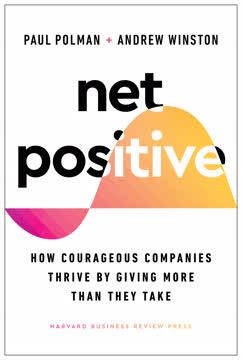
This book presents a radical yet practical argument: the companies that will thrive in the coming decades are those that commit to becoming net positive, meaning they give more to the world than they take. You will learn why the old rules of business are collapsing, how leading companies are rewriting those rules, and what it takes to build an organization that creates value for all stakeholders while restoring the natural and social systems on which we all depend.
### Who This Book Is For
This book is for leaders who sense that business as usual is no longer viable. It is for executives wrestling with sustainability commitments, entrepreneurs building companies from scratch, investors seeking durable returns, and employees who want their work to matter. It is for anyone who believes that business can be a force for good and wants a practical roadmap for making that belief real.
For decades, the dominant story about business has been remarkably simple. Companies exist to maximize shareholder value. They compete to win. They externalize costs wherever possible. They lobby to protect their interests. They grow by consuming resources and generating waste. The planet and society absorb the consequences. That story is ending. The signs are everywhere. Climate change is no longer a future threat but a present reality, disrupting supply chains, destroying infrastructure, and displacing communities. Inequality has reached levels not seen in a century, fueling political instability and social unrest. Trust in institutions, including corporations, has collapsed. Employees, customers, and investors are demanding more from the companies they work for, buy from, and own. The old model of business was built on a simple but flawed premise: that the world's resources are infinite, that waste can be dumped without consequence, and that society will tolerate any behavior as long as jobs and profits flow. None of these premises hold anymore. Andrew Winston has spent two decades advising the world's largest companies on sustainability strategy. He has watched the conversation shift from "should we care about this?" to "how do we survive this?" to "how do we lead through this?" In this book, he argues that the answer to that last question requires a fundamental reimagining of what business is for. The net positive company does not merely reduce its negative impacts. It does not settle for being "less bad." It commits to being net positive: giving more to the world than it takes. This means taking responsibility for the full lifecycle of its products. It means investing in the restoration of natural systems. It means paying fair wages, supporting communities, and advocating for policies that benefit society as…
Continue reading in the MinuteRead app
Get the complete 30-minute summary of Net Positive
Get the complete summary in the appNet positive means giving more to the world than you take. It is not about being less bad; it is about doing more good.
Take responsibility for your full impact, from suppliers to end-of-life product disposal. You break it, you own it.
Shift from short-term profits to long-term stakeholder value. Shareholder value is a result, not an objective.
Set audacious goals that force fundamental change. If you are not uneasy, you are not going far enough.
Embrace radical transparency. Share your failures as well as your successes. Trust comes on foot and leaves on horseback
Build transformative partnerships. Systemic problems require collective action. If you want to go far, go together.
"Net Positive" is a strong fit if you want practical ideas around business, sustainability, environment, especially themes like net positive means giving more to the world than you take. it is not about being less bad; it is about doing more good; take responsibility for your full impact, from suppliers to end-of-life product disposal. you break it, you own it. The MinuteRead summary distills these concepts into a focused read, whether you're deciding whether to buy the book or applying its lessons at work.
Andrew S. Winston is a renowned expert in sustainable business strategies and a prolific author in the field. He has written several influential books on corporate sustainability, including "Green to Gold" and "The Big Pivot." Winston is a sought-after speaker and advisor to multinational corporations on environmental and social responsibility issues. His work focuses on helping companies build resilient strategies that create long-term value while addressing global challenges. Winston's experti…
View all summaries by Andrew S. WinstonContinue Reading
Access the complete 30-minute summary and thousands more nonfiction books in the MinuteRead app.

Continue reading the complete summary in the MinuteRead app.






