MinuteRead
30 min
Book summary
Premium summary · Opens in the app · 30 min read
We live in a culture obsessed with youth and early achievement. Magazines celebrate the thirty under thirty. Tech founders become billionaires before their twenty-fifth birthdays. Prodigies dominate the headlines. The implicit message is clear: if you have not made your mark by your mid-thirties, you have somehow fallen behind.
**Author:** Tom Butler-Bowdon
**Estimated Reading Time:** 45 minutes
**What You'll Learn:**
Why the cult of early success is a myth, how the second half of life often produces the most significant achievements, and how to apply long-term thinking to your own goals regardless of your current age.
**Who This Book Is For:**
Anyone who has ever felt they missed their chance, started too late, or wondered whether their best years are behind them. This book is for people who suspect that their greatest work may still lie ahead.
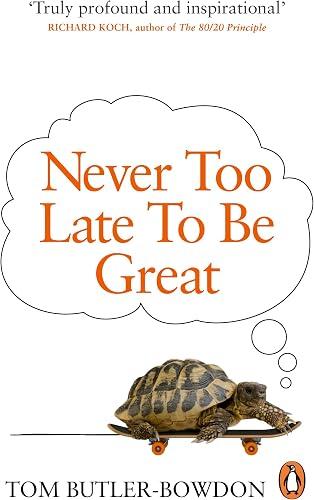
We live in a culture obsessed with youth and early achievement. Magazines celebrate the thirty under thirty. Tech founders become billionaires before their twenty-fifth birthdays. Prodigies dominate the headlines. The implicit message is clear: if you have not made your mark by your mid-thirties, you have somehow fallen behind. This belief is not merely discouraging. It is factually wrong. Tom Butler-Bowdon wrote *Never Too Late To Be Great* to dismantle one of the most pervasive and damaging myths of modern life: the idea that success has an expiration date. Drawing on decades of research into personal development literature and the biographies of hundreds of accomplished people, he discovered something remarkable. The people who achieve lasting significance rarely do so on the timeline we have been taught to expect. Consider the evidence. Julia Child did not learn to cook until she was thirty-seven. She published her first cookbook at fifty. Grandma Moses began painting seriously at seventy-six and became one of the most celebrated American artists of the twentieth century. Frank McCourt published *Angela's Ashes*, which won the Pulitzer Prize, at sixty-six. Colonel Sanders founded Kentucky Fried Chicken at sixty-five after a lifetime of failed ventures and odd jobs. Michelangelo was designing St. Peter's Basilica in his seventies and eighties. Benjamin Franklin helped draft the United States Constitution at eighty-one. These are not exceptions. They are part of a pattern that our culture simply refuses to acknowledge. The problem is not just that we worship early success. The problem is that this worship actively harms people. It creates anxiety in young people who feel they are falling behind. It creates despair in middle-aged people who believe their window has closed. It creates resignation in older people who assume their productive years are over. And it pushes all of us toward short-term thinking, quick fixes, and premature surrender. Butler-Bowdon offers a different perspective. He argues that we are living through a longevity revolution that has fundamentally changed the mathematics of human achievement. Our ancestors had to accomplish everything in a compressed timeframe. They married young, worked young, and often died before sixty. We do not live in that world anymore. Most people in developed…
Continue reading in the MinuteRead app
Get the complete 30-minute summary of Never Too Late To Be Great
Get the complete summary in the appSuccess takes time. The slow-cooked approach to achievement allows for deeper learning and true mastery.
The longevity revolution has given us more time than our ancestors had. Use it.
Adopt the long view. Think in decades, not years.
Every significant achievement has a lead time. Preparation is essential.
Many people find their stride in their forties. The 40 factor is real.
The years between fifty and eighty can be incredibly productive. Mid-century magic is real.
"Never Too Late To Be Great" is a strong fit if you want practical ideas around self help, psychology, business, especially themes like success takes time. the slow-cooked approach to achievement allows for deeper learning and true mastery; the longevity revolution has given us more time than our ancestors had. use it. The MinuteRead summary distills these concepts into a focused read, whether you're deciding whether to buy the book or applying its lessons at work.
Motivated to turn hard-won expertise into something readers can use every day, Tom Butler-Bowdon wrote “Never Too Late To Be Great” to distill the ideas behind the work into clear, actionable lessons. Through “Never Too Late To Be Great”, Tom Butler-Bowdon distills the core ideas on self help into lessons readers can absorb in a single short sitting. Readers turn to this work when they want Tom Butler-Bowdon's perspective on the subject without working through the entire original volume. The boo…
View all summaries by Tom Butler-BowdonContinue Reading
Access the complete 30-minute summary and thousands more nonfiction books in the MinuteRead app.

Continue reading the complete summary in the MinuteRead app.