MinuteRead
30 min
Most people live their lives as though they were passengers in a vehicle driven by someone else. They look at their circumstances, their relationships, their financial situation, their health, and they conclude that these things simply happened to them. They were dealt these cards. They must play them as best they can. This belief feels so natural, so obviously true, that questioning it seems almost absurd.
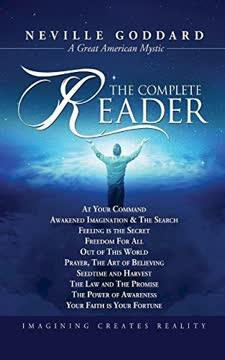
**Author:** Neville Goddard **Estimated Reading Time:** 45 minutes
**What You'll Learn:**
- Why consciousness, not the material world, is the only true reality - How your assumptions silently create the life you experience - The psychological meaning hidden within the Bible's stories - A practical method for entering the state of your wish fulfilled - How to revise your past and reshape your future - The hidden power of your inner conversations - How to free yourself from limitation by knowing who you truly are
**Who This Book Is For:**
This condensed edition is for anyone who has ever felt trapped by circumstances, frustrated by the gap between their desires and their reality, or curious about the deeper relationship between mind and world. It is for the seeker who suspects that the answers lie not in changing external conditions but in transforming consciousness itself. If you are ready to take radical responsibility for your experience and explore the creative power of your own awareness, this book will show you the way.
Most people live their lives as though they were passengers in a vehicle driven by someone else. They look at their circumstances, their relationships, their financial situation, their health, and they conclude that these things simply happened to them. They were dealt these cards. They must play them as best they can. This belief feels so natural, so obviously true, that questioning it seems almost absurd. Neville Goddard spent his life challenging this assumption at its root. He taught that the relationship between your inner world and your outer circumstances is not what you have been led to believe. The outer world, he insisted, is not the cause of your experience. It is the effect. The cause lies entirely within you. This is not a new idea. Mystics and spiritual teachers across centuries have pointed toward the primacy of consciousness. But Neville did something remarkable. He took this ancient insight and made it practical. He developed specific techniques, mental disciplines, and ways of understanding that allow ordinary people to test the principle for themselves. He did not ask his students to believe him. He asked them to experiment. Neville was born in Barbados in 1905 and came to the United States as a young man. He had no formal theological training. He was a dancer and actor before he became a teacher. Yet his lectures and books, delivered primarily in New York City during the 1940s, 1950s, and 1960s, attracted devoted audiences who found in his words something rare: a spiritual teaching that actually worked. His central claim was startling in its simplicity. Consciousness is the one and only reality. Not figuratively. Not poetically. Actually. Everything you experience, from…
Continue reading in the MinuteRead app
Get the complete 30-minute summary of Neville Goddard
Get the complete summary in the appConsciousness is the only reality. Everything you experience is an expression of your awareness.
Your assumptions create your reality. What you believe to be true becomes true in your experience.
Change your consciousness and your reality changes. The outer world follows the inner world.
Enter the state of the wish fulfilled. Feel what it would feel like to have what you want, and remain in that feeling un
Faith is essential. Hold to your conviction even when the outer world seems to contradict it.
Revise your past. Replay unpleasant events in your imagination as you wish they had happened.
"Neville Goddard" is a strong fit if you want practical ideas around inspiration, spirituality, self help, especially themes like consciousness is the only reality. everything you experience is an expression of your awareness; your assumptions create your reality. what you believe to be true becomes true in your experience. The MinuteRead summary distills these concepts into a focused read, whether you're deciding whether to buy the book or applying its lessons at work.
Neville Goddard was a influential writer, speaker, and mystic who gained popularity for his unique interpretation of the Bible and William Blake's poetry. He taught that the human imagination is omnipotent and equivalent to God. Goddard's teachings focused on the power of consciousness and the ability to manifest desires through mental imagery and belief. His work combines elements of spirituality, psychology, and self-help, emphasizing the idea that individuals can shape their reality through t…
View all summaries by Neville GoddardContinue Reading
Access the complete 30-minute summary and thousands more nonfiction books in the MinuteRead app.

Continue reading the complete summary in the MinuteRead app.