 MinuteRead
30 min
Book summary
Premium summary · Opens in the app · 30 min read
To prosper you need an ample supply of customers with two attributes: ABILITY to buy and WILLINGNESS to buy.
**Author:** Dan S. Kennedy
**Estimated Reading Time:** 45 minutes
**What You'll Learn:**
- Why the middle class is no longer a reliable customer base - How to identify and understand different segments of the affluent market - The emotional drivers that motivate wealthy consumers - How to position products and services for premium pricing - Practical strategies to attract and retain affluent clients
**Who This Book Is For:**
Business owners, entrepreneurs, sales professionals, and marketers who want to build a sustainable business by serving customers with both the ability and willingness to buy. If you are tired of competing on price with commodity products, this book will show you how to reposition your offerings for a market that values quality, expertise, and experience over discounts.
Most businesses are fighting for the wrong customers. They chase the middle class, believing that volume will compensate for thin margins. They compete on price, offer discounts, and wonder why they struggle to stay profitable. They build marketing campaigns designed to appeal to everyone, which means they resonate with no one. Meanwhile, a different group of businesses quietly prospers. They serve a smaller number of clients but earn dramatically higher profits. They rarely compete on price. Their customers are loyal, resilient during economic downturns, and willing to pay premium prices for quality and expertise. The difference is not luck. It is not industry. It is not even product quality. The difference is who they choose to serve. Dan S. Kennedy has spent decades advising entrepreneurs, professionals, and business owners on how to build profitable enterprises. His core message in this book is blunt and uncompromising: to prosper, you need an ample supply of customers with two attributes. The first is the ability to buy. The second is the willingness to buy. The affluent possess both, and they possess them consistently. The middle class, once the backbone of American consumer spending, is shrinking. Automation, technology, globalization, and economic policies have hollowed out the middle of the income distribution. The result is a bifurcated market: a growing population of price-sensitive consumers at the bottom and a concentrated pool of wealth at the top. Businesses that continue to rely on the middle class are building on a foundation that is eroding beneath them. The affluent are different. They have a higher percentage of disposable income. They spend a smaller portion of their earnings on necessities, leaving more for discretionary purchases. They tend to be more optimistic about their financial futures. They are more resilient during economic downturns. They are, in short, the ideal customer. But marketing to the affluent is not simply a matter of raising your prices and calling yourself premium. The affluent are not a monolithic…
Continue reading in the MinuteRead app
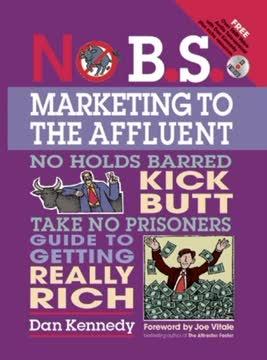
Get the complete 30-minute summary of No B.S. Marketing To the Affluent
Get the complete summary in the appTo prosper, you need customers with both the ability to buy and the willingness to buy.
The middle class is shrinking; shift your focus to the affluent.
Affluence is defined by net worth, not just income.
The ultra-rich are mostly self-made and value hard work and genuine expertise.
Women are powerful spenders who are often overlooked.
Affluent men are driven by status, competition, and validation.
"No B.S. Marketing To the Affluent" is a strong fit if you want practical ideas around business, entrepreneurship, money, especially themes like to prosper, you need customers with both the ability to buy and the willingness to buy; the middle class is shrinking; shift your focus to the affluent. The MinuteRead summary distills these concepts into a focused read, whether you're deciding whether to buy the book or applying its lessons at work.
Dan S. Kennedy is a renowned marketing expert, author, and entrepreneur. He has written numerous business books, including the popular "No B.S." series. Kennedy is a trusted advisor to many successful entrepreneurs, influencing over 1 million business owners annually through various channels. He has shared speaking platforms with former U.S. Presidents, business celebrities, and famous entrepreneurs. As a direct-response marketing consultant, Kennedy commands high fees for crafting advertising c…
View all summaries by Dan S. KennedyContinue Reading
Access the complete 30-minute summary and thousands more nonfiction books in the MinuteRead app.

Continue reading the complete summary in the MinuteRead app.






