MinuteRead
5 min
Book summary
Premium summary · Opens in the app · 5 min read
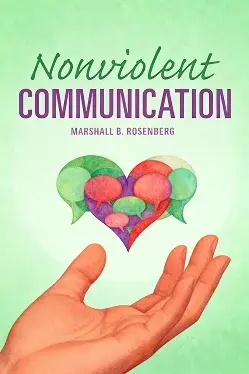
Nonviolent Communication explains how focusing on people’s underlying needs and making observations instead of judgments can revolutionize the way you interact with anybody, even your worst enemies.
Nonviolent Communication explains how focusing on people’s underlying needs and making observations instead of judgments can revolutionize the way you interact with anybody, even your worst enemies.
Often, our brains leap to label someone: that student is “lazy,” that husband is “careless,” and so on. Often our mouths rush to speak the judgment, too!
But does it really work to go around judging people? How do they tend to respond when you judge them? How do you respond when other people do this to you?
A person who’s feeling judged typically goes on the defensive or just shuts down. Judging someone is about the worst thing you can do if what you want is for them to listen to you or change something about their behavior!
Rosenberg suggests a foundational habit for NVC: that we learn to separate observations about what happened from our judgments about them. An observation is objective, concrete, and neutral. Instead of a “lazy student,” learn to think “that student did not complete the homework.” Instead of a careless husband, think “he left toothpaste in the sink.”
Straightforward observations leave much more space for potentially understanding the reasons why people did what they did, rather than making lots of assumptions. Others’ actions might provide a stimulus for us feeling the way we do, but they don’t literally cause our emotions. We must distinguish between our own “stuff” and what happened in the world.
Why are we so judgmental, if it’s not usually productive? Rosenberg explains that “analyses of others are actually expressions of our own needs and values.”
In other words, when a teacher labels a student “lazy” perhaps she’s stressed because she doesn’t know how to motivate him. Or the wife of that “careless” husband values neatness much more than he does, but she doesn’t see a way to resolve their preferences.
People’s needs are more alike than different: we have physical needs, as well as needs for autonomy, positive emotional experiences, positive social experiences, spiritual experiences of some kind, and play.
The teacher who judges her student may be trying to fulfill her need to feel competent at her job. The fastidious wife who leaps to judgment of her husband needs to feel comfortable in her own home.
Understanding other’s frustrating behaviors as manifestations of their genuine needs helps to humanize conflicts. People mostly aren’t just wandering around trying to cause problems for you. They are trying to take care of themselves, and they deserve empathy.
If you first find a way to show others that you truly understand their needs, you’re likely to receive a respectful response to your requests of them (whether it’s exactly what you wanted or not).
Continue reading in the MinuteRead app
Get the complete 5-minute summary of Nonviolent Communication
Get the complete summary in the appKeep your observations and your judgments separate in order to keep others from feeling defensive.
Connecting actions and requests to people’s specific needs can diffuse tensions and point towards possible resolutions.
Using nonviolent communication on yourself can alleviate feelings of regret and anxiety.
"Nonviolent Communication" is a strong fit if you want practical ideas around communication skills, communication, psychology, especially themes like keep your observations and your judgments separate in order to keep others from feeling defensive; connecting actions and requests to people’s specific needs can diffuse tensions and point towards possible resolutions. The MinuteRead summary distills these concepts into a focused read, whether you're deciding whether to buy the book or applying its lessons at work.
Motivated to help readers with nonviolent Communication explains how focusing on people’s underlying needs and making observations instead, Marshall B. Rosenberg PhD wrote “Nonviolent Communication” to package those ideas for a fast, focused read. In “Nonviolent Communication”, Marshall B. Rosenberg PhD focuses on nonviolent Communication explains how focusing on people’s underlying needs and making observations instead. Through “Nonviolent Communication”, Marshall B. Rosenberg PhD distills the …
View all summaries by Marshall B. RosenbergContinue Reading
Access the complete 5-minute summary and thousands more nonfiction books in the MinuteRead app.

Continue reading the complete summary in the MinuteRead app.