MinuteRead
30 min
Book summary
Premium summary · Opens in the app · 30 min read
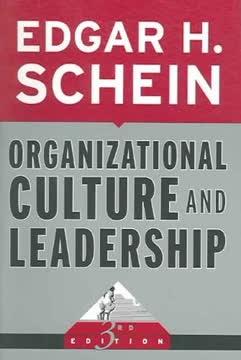
Every organization has a personality. Walk into a hospital, a tech startup, a manufacturing plant, or a government agency, and you will feel something different in each place. The way people talk to each other, the speed at which decisions get made, the things people celebrate, the things they fear. These differences are not random. They are not simply the sum of individual personalities. They are the expression of something deeper: organizational culture.
**Author:** Edgar H. Schein
**Estimated Reading Time:** 45 minutes
**What You'll Learn:** How culture forms in organizations, why it exerts such powerful influence over behavior, the mechanisms leaders use to shape it, and how to decipher and evolve culture in your own organization.
**Who This Book Is For:** Leaders, managers, founders, consultants, and anyone who has ever wondered why smart people in organizations so often do things that seem irrational from the outside.
Every organization has a personality. Walk into a hospital, a tech startup, a manufacturing plant, or a government agency, and you will feel something different in each place. The way people talk to each other, the speed at which decisions get made, the things people celebrate, the things they fear. These differences are not random. They are not simply the sum of individual personalities. They are the expression of something deeper: organizational culture. Edgar Schein spent his career trying to understand this invisible force. As a professor at MIT Sloan School of Management and a consultant to major corporations around the world, he observed something that puzzled him. Organizations with brilliant strategies failed. Organizations with mediocre strategies thrived. Organizations with identical structures produced wildly different results. The variable, he came to believe, was culture. The problem is that culture is notoriously difficult to talk about. It is abstract. It operates below the surface of conscious awareness. People inside a culture often cannot see it, just as fish cannot see water. People outside a culture can feel its effects but struggle to explain what they are experiencing. Managers who try to change culture often fail because they treat it as something that can be fixed with a new mission statement or a training program. Schein's contribution was to make culture visible. He developed a framework for understanding what culture is, how it forms, how it operates, and how leaders can work with it. His central insight is that culture is not something an organization has. It is something an organization is. Culture is the accumulated learning of a group as it solves problems of survival and internal integration. It is the set of shared assumptions that has worked well enough to be considered valid and taught to new members as the correct way to perceive, think, and feel. This matters because culture determines what people pay attention to, what they ignore, what they consider important, and what they dismiss as irrelevant. It shapes strategy, decision-making, hiring, promotion, and every other aspect of organizational life. When strategy and culture align, organizations can achieve remarkable things. When they conflict, culture almost always wins. Schein's work is not a collection of quick fixes. It is a deep exploration of how human…
Continue reading in the MinuteRead app
Get the complete 30-minute summary of Organizational Culture and Leadership
Get the complete summary in the appCulture is a pattern of shared basic assumptions learned through solving problems of survival and integration.
Culture operates at three levels: artifacts, espoused values, and underlying assumptions.
Leaders shape culture through what they pay attention to, not what they say.
Founders create cultures through their assumptions and actions.
Culture is learned through shared experience, not created through declaration.
When strategy and culture conflict, culture wins.
"Organizational Culture and Leadership" is a strong fit if you want practical ideas around leadership, business, management, especially themes like culture is a pattern of shared basic assumptions learned through solving problems of survival and integration; culture operates at three levels: artifacts, espoused values, and underlying assumptions. The MinuteRead summary distills these concepts into a focused read, whether you're deciding whether to buy the book or applying its lessons at work.
Edgar Henry Schein is a prominent figure in organizational psychology and management. As Professor Emeritus at MIT Sloan School of Management, he has made significant contributions to the fields of organizational culture, process consultation, and career dynamics. Schein's work includes influential books like "Career Anchors" and "The Corporate Culture Survival Guide." His research explores how national, organizational, and occupational cultures impact organizational performance. Schein's academ…
View all summaries by Edgar H. ScheinContinue Reading
Access the complete 30-minute summary and thousands more nonfiction books in the MinuteRead app.

Continue reading the complete summary in the MinuteRead app.