MinuteRead
30 min
Book summary
Premium summary · Opens in the app · 30 min read
Most parenting books begin with techniques. They offer scripts for discipline, charts for behavior, and step-by-step instructions for handling tantrums. The assumption is straightforward: if you learn the right methods, you will raise happy, well-adjusted children.
**Author:** Daniel J. Siegel, M.D.
**Estimated Reading Time:** 45 minutes
**What You'll Learn:** Why your own childhood history matters more than any parenting technique, how secure attachment shapes your child's developing brain, what to do when emotional reactions hijack your best intentions, and how to build a relationship with your child that fosters resilience, emotional intelligence, and deep connection.
**Who This Book Is For:** Parents who sense that their own past influences their parenting in ways they don't fully understand. Anyone who wants to move beyond quick-fix parenting scripts and build something deeper. Readers curious about how relationships shape the developing brain. Parents who sometimes react in ways they later regret and want to understand why.
Most parenting books begin with techniques. They offer scripts for discipline, charts for behavior, and step-by-step instructions for handling tantrums. The assumption is straightforward: if you learn the right methods, you will raise happy, well-adjusted children. But many parents discover something puzzling. They read the books. They know the techniques. Yet in difficult moments, something takes over. They find themselves saying things their own parents said, things they swore they would never repeat. They react with an intensity that surprises them. Later, they wonder what happened. This book exists because techniques alone are not enough. Daniel Siegel, a child psychiatrist and pioneer in the field of interpersonal neurobiology, offers a different starting point. The most powerful tool you bring to parenting is not any particular strategy. It is your own self-understanding. The way you have made sense of your life, especially your childhood experiences, shapes how you respond to your children in ways both visible and invisible. The problem is that many of us carry unresolved issues from our past without realizing it. We may have had difficult experiences with our own parents. We may have developed patterns of relating that once protected us but now limit us. These patterns live in our bodies, our emotional reactions, and our automatic responses. When our children behave in certain ways, these old patterns activate. We find ourselves on what Siegel calls the "low road," a state of emotional reactivity where thoughtful parenting becomes nearly impossible. The topic matters because parenting is not simply about managing behavior. It is about shaping a human brain. The interactions you have with your child, especially in the early years, directly influence the physical structure and functioning of their developing nervous system. Your presence, your attunement, your ability to repair ruptures, all of these become part of your child's neural architecture. This is both a profound responsibility and a profound opportunity. People struggle with this challenge because it requires looking inward. It is easier to search for the right technique than…
Continue reading in the MinuteRead app
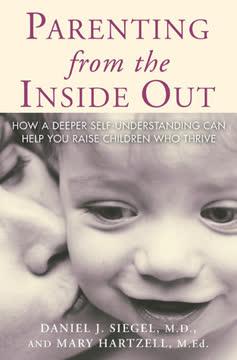
Get the complete 30-minute summary of Parenting from the Inside Out
Get the complete summary in the appMaking sense of your own childhood story is the foundation of effective parenting. Self-understanding matters more than
Secure attachment develops through consistent, emotionally attuned, contingent communication. It is built in small momen
The high road involves thoughtful, flexible responding. The low road involves automatic, reactive responding. Learn to r
Repair is as important as attunement. What matters is not never making mistakes but how you reconnect after disconnectio
Every interaction with your child shapes their developing brain. This is a biological fact, not a metaphor.
Mindsight, the ability to perceive your own mind and the minds of others, is the foundation of empathy and emotional int
"Parenting from the Inside Out" is a strong fit if you want practical ideas around parenting, psychology, self help, especially themes like making sense of your own childhood story is the foundation of effective parenting. self-understanding matters more than; secure attachment develops through consistent, emotionally attuned, contingent communication. it is built in small momen. The MinuteRead summary distills these concepts into a focused read, whether you're deciding whether to buy the book or applying its lessons at work.
Daniel J. Siegel, M.D. is a renowned child psychiatrist, author, and educator. He received his medical degree from Harvard and completed his postgraduate education at UCLA. Currently, he serves as a clinical professor of psychiatry at UCLA School of Medicine and holds several other prestigious positions. Dr. Siegel is known for his work in Interpersonal Neurobiology and his ability to explain complex scientific concepts in accessible ways. He has authored numerous bestselling books on topics suc…
View all summaries by Daniel J. Siegel M.D.Continue Reading
Access the complete 30-minute summary and thousands more nonfiction books in the MinuteRead app.

Continue reading the complete summary in the MinuteRead app.