MinuteRead
30 min
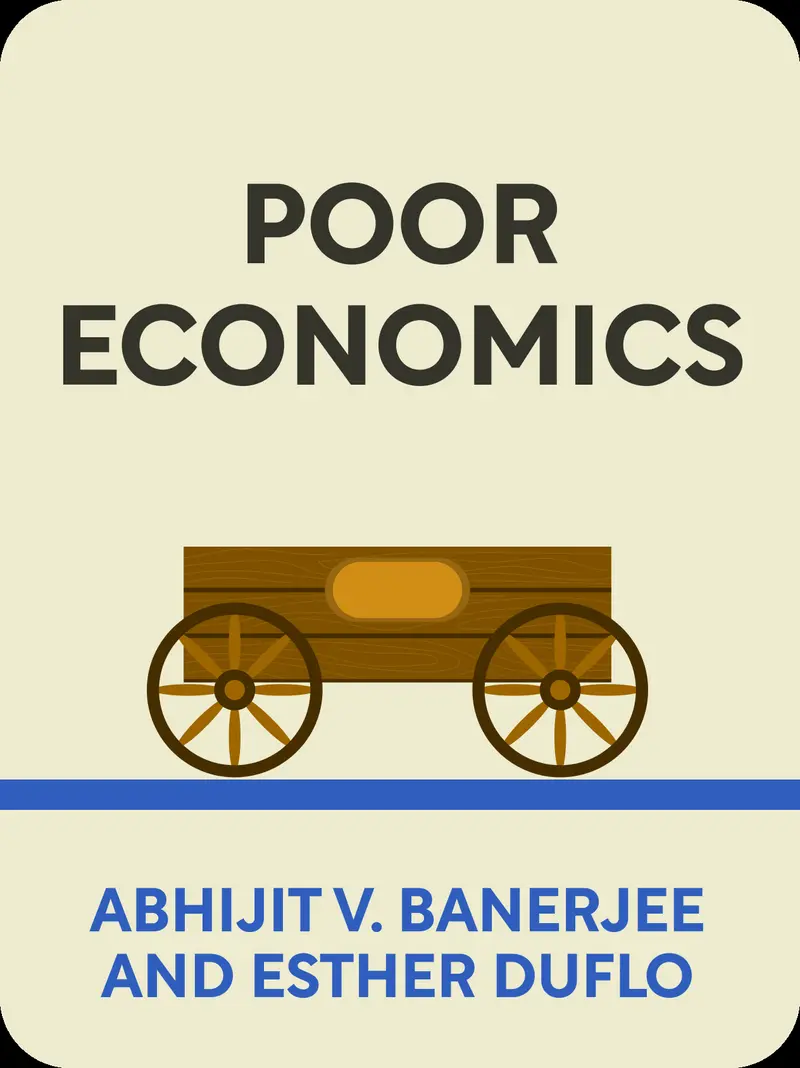
For decades, the global conversation about poverty has been trapped between two opposing camps. On one side stand those who believe that large-scale interventions, massive infrastructure projects, and sweeping institutional reforms are the only path to meaningful change. On the other side are those who argue that such grand schemes often fail and that the real solutions lie in free markets, entrepreneurship, and minimal government interference.
**Author:** Abhijit V. Banerjee
**Estimated Reading Time:** 45 minutes
**What You'll Learn:** Why poverty persists despite decades of aid and policy interventions, how the poor actually make decisions about food, health, education, and money, and what evidence-based approaches can genuinely improve lives.
**Who This Book Is For:** Anyone who wants to understand the real economics of poverty beyond slogans and ideology. This book is for policymakers, students, aid workers, entrepreneurs, and curious readers who suspect that the debate about global poverty has been dominated by oversimplified answers.
For decades, the global conversation about poverty has been trapped between two opposing camps. On one side stand those who believe that large-scale interventions, massive infrastructure projects, and sweeping institutional reforms are the only path to meaningful change. On the other side are those who argue that such grand schemes often fail and that the real solutions lie in free markets, entrepreneurship, and minimal government interference. Both camps share something important. They rarely ask the poor themselves what they think, what they need, and why they make the choices they do. Abhijit Banerjee and his co-author Esther Duflo spent years conducting field research across dozens of countries, living in villages, interviewing families, and running hundreds of randomized controlled trials. What they discovered challenged many of their own assumptions. The poor are not passive victims waiting for rescue. They are not irrational decision-makers. They are not entrepreneurs waiting to be unleashed by microloans. They are people making calculated choices under conditions of extreme constraint, limited information, and constant stress. The central problem is not that the poor make bad decisions. The problem is that the systems surrounding them often fail to provide the basic conditions that make good decisions possible. Consider a simple example. In many parts of the developing world, parents do not immunize their children against preventable diseases. From the outside, this looks like ignorance or neglect. But when researchers actually asked parents why they skipped vaccinations, they received answers that made perfect sense within the parents' frame of reference. Health centers were often closed when parents arrived. Staff were sometimes absent. Parents had to walk for hours, losing a day's wages, only to be told to come back another day. When you account for the actual costs and uncertainties, skipping immunization was not irrational. It was a reasonable response to a broken system. This book is built on a simple but radical premise. To understand poverty, you must understand the specific, concrete circumstances that shape the decisions of poor people. You must look at the world through their eyes, with their constraints, their information, and their hopes. The authors call this approach "poor economics." It is not a grand theory. It…
Continue reading in the MinuteRead app
Get the complete 30-minute summary of Poor Economics
Get the complete summary in the appThe poor make sophisticated decisions under extreme constraints. They are not irrational.
Small changes can have big effects. A bag of lentils can increase immunization rates.
Poverty imposes a cognitive burden. Scarcity consumes mental bandwidth.
Education fails when it teaches at the wrong level. Teach students at their actual level.
Microfinance is useful but not transformative. It helps smooth consumption, not lift people out of poverty.
The poor are entrepreneurs by necessity. Their businesses are survival mechanisms.
"Poor Economics" is a strong fit if you want practical ideas around economics, politics, business, especially themes like the poor make sophisticated decisions under extreme constraints. they are not irrational; small changes can have big effects. a bag of lentils can increase immunization rates. The MinuteRead summary distills these concepts into a focused read, whether you're deciding whether to buy the book or applying its lessons at work.
Abhijit Vinayak Banerjee is an Indian economist and Ford Foundation International Professor of Economics at MIT. He co-founded the Abdul Latif Jameel Poverty Action Lab and is a Research Affiliate of Innovations for Poverty Action. Banerjee's work focuses on experimental approaches to alleviating global poverty, for which he was awarded the 2019 Nobel Memorial Prize in Economic Sciences. He also received the inaugural Infosys Prize in Social Sciences (Economics). Banerjee's research has signific…
View all summaries by Abhijit V. BanerjeeContinue Reading
Access the complete 30-minute summary and thousands more nonfiction books in the MinuteRead app.

Continue reading the complete summary in the MinuteRead app.