 MinuteRead
30 min
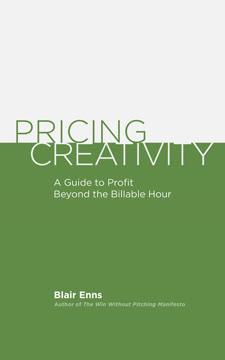
Book summary
by Blair Enns
Premium summary · Opens in the app · 30 min read
The creative services industry has a pricing problem. Most firms and independent professionals charge for their work the way a factory charges for widgets: by counting the hours, marking up the cost, and hoping the client agrees. This approach feels safe. It feels rational. It feels like the responsible way to run a business.
**Author:** Blair Enns **Estimated Reading Time:** 45 minutes
How to stop selling your time and start selling the value you create. How to structure proposals that clients respect. How to have conversations about money without fear. How to build a pricing practice that supports creative excellence rather than undermining it.
Creative professionals, agency owners, designers, writers, developers, consultants, and anyone who sells expertise rather than products. If you have ever wondered why a client pushed back on your price, or why you feel underpaid despite doing excellent work, this book is for you.
The creative services industry has a pricing problem. Most firms and independent professionals charge for their work the way a factory charges for widgets: by counting the hours, marking up the cost, and hoping the client agrees. This approach feels safe. It feels rational. It feels like the responsible way to run a business. It is also a quiet path to mediocrity. Blair Enns has spent decades working with creative firms around the world. He has seen the same pattern repeat itself in every market and every discipline. Talented people produce exceptional work, then undermine that work by pricing it as if it were a commodity. They compete on cost when they should compete on value. They let clients dictate the terms of engagement. They avoid conversations about money until the worst possible moment, then present a proposal that feels like a ransom note. The result is predictable. Margins shrink. Clients treat creative work as an expense to be minimized rather than an investment to be maximized. Firms take on too much work at too low a price, then burn out their best people trying to deliver. The quality of the work suffers. The client relationship suffers. Everyone loses. Enns argues that this is not simply a tactical failure. It is a philosophical one. The root cause is a misunderstanding of what value actually is and how it is created. Most creative professionals believe that value is an objective property of their work. They believe that a logo, a website, a campaign, or a consulting engagement has some intrinsic worth that can be calculated and defended. This belief is wrong. Value is not a property of the work. Value is a property of the client's perception. The same deliverable can be worth ten thousand dollars to one client and a hundred thousand dollars to another. The difference is not in the pixels or the code or the strategy. The difference is in the client's situation, their goals, their fears, their ambitions, and their alternatives. Once you understand this, everything changes. You stop asking "What should I charge for this project?" and start asking "What is this worth…
Continue reading in the MinuteRead app
Get the complete 30-minute summary of Pricing Creativity
Get the complete summary in the appValue is subjective. Price the client, not the job.
You cannot have a culture of efficiency and a culture of innovation. Choose innovation.
Price based on value, not inputs or outputs.
You deliver multiple value streams. Bundle them into packages.
Always present three options. Lead with your highest-priced option.
Discuss pricing orally before sending a written proposal.
"Pricing Creativity" is a strong fit if you want practical ideas around business, design, buisness, especially themes like value is subjective. price the client, not the job; you cannot have a culture of efficiency and a culture of innovation. choose innovation. The MinuteRead summary distills these concepts into a focused read, whether you're deciding whether to buy the book or applying its lessons at work.
Blair Enns is a highly respected expert in business development, particularly in the creative industry. He is known for his insights on pricing and selling creative services. Enns is the author of "Pricing Creativity" and the acclaimed "Win Without Pitching Manifesto." His work focuses on helping creative professionals and agencies improve their business practices, especially in pricing and client acquisition. Enns is praised for his smart, kind, and ethical approach to business. His expertise i…
View all summaries by Blair EnnsContinue Reading
Access the complete 30-minute summary and thousands more nonfiction books in the MinuteRead app.

Continue reading the complete summary in the MinuteRead app.






