MinuteRead
30 min
Book summary
Premium summary · Opens in the app · 30 min read
Every leader has an emotional impact. This is not a metaphor or a soft-skill platitude. It is a neurological fact. When someone steps into a leadership role, whether as a team supervisor, a department head, or a chief executive, they inherit a primal responsibility that predates modern organizational charts by thousands of years. Human beings have always looked to leaders for emotional guidance, for cues about whether to feel calm or anxious, hopeful or fearful, engaged or withdrawn.
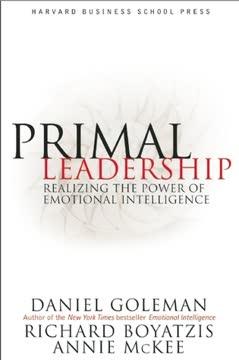
By Daniel Goleman, Richard Boyatzis, and Annie McKee
**Estimated Reading Time:** 45 minutes
**What You'll Learn:** How emotional intelligence shapes leadership effectiveness, why resonant leaders outperform dissonant ones, and how to develop the competencies that create high-performing organizations.
**Who This Book Is For:** Leaders at any level who want to understand the emotional dynamics of leadership, professionals seeking to improve their influence, and anyone responsible for developing leadership talent in organizations.
Every leader has an emotional impact. This is not a metaphor or a soft-skill platitude. It is a neurological fact. When someone steps into a leadership role, whether as a team supervisor, a department head, or a chief executive, they inherit a primal responsibility that predates modern organizational charts by thousands of years. Human beings have always looked to leaders for emotional guidance, for cues about whether to feel calm or anxious, hopeful or fearful, engaged or withdrawn. The problem is that most leaders are never taught this. Business schools emphasize strategy, finance, operations, and analytics. Leadership development programs focus on competencies, processes, and performance metrics. Yet the most powerful tool a leader possesses operates below the surface of conscious awareness, in the emotional exchanges that occur every moment between people working together. This book exists because that gap matters enormously. Organizations spend billions on leadership development while overlooking the single factor that most reliably distinguishes outstanding leaders from mediocre ones. That factor is not IQ, technical skill, or even years of experience. It is emotional intelligence: the capacity to recognize and understand emotions in oneself and others, and to use that awareness to manage behavior and relationships effectively. The authors of this book, drawing on decades of research across hundreds of organizations and thousands of executives, discovered something that transformed how leadership should be understood. The best leaders create what they call resonance: a positive emotional state that aligns people with shared goals and brings out their best thinking and performance. The worst leaders create dissonance: a toxic emotional state that drains energy, impairs cognition, and undermines results. The stakes are higher than most leaders realize. Research shows that up to 70 percent of how employees perceive their organizational climate can be traced directly to the actions of their leader. That climate, in turn, drives measurable business outcomes. Leaders who create positive emotional climates see higher engagement, better retention, more innovation, and stronger financial performance. Leaders who create negative climates see the opposite, regardless of how brilliant their strategies might be. Why do so many leaders struggle with this? Partly because the emotional dimensions of leadership feel intangible and difficult to measure. Partly because many leaders rose through the ranks by demonstrating technical expertise rather than interpersonal skill.…
Continue reading in the MinuteRead app
Get the complete 30-minute summary of Primal Leadership, With a New Preface by the Authors
Get the complete summary in the appGreat leadership works through the emotions. Resonance is the key to sustainable performance.
Emotional intelligence has four domains: self-awareness, self-management, social awareness, and relationship management.
Self-awareness is the foundation. You cannot manage what you do not understand.
Emotions are contagious. Your emotional state spreads to your people, whether you intend it or not.
The visionary style is the most consistently effective. Provide meaning, clarity, and direction.
Coaching builds capability and engagement. Invest in developing your people.
"Primal Leadership, With a New Preface by the Authors" is a strong fit if you want practical ideas around leadership, business, psychology, especially themes like great leadership works through the emotions. resonance is the key to sustainable performance; emotional intelligence has four domains: self-awareness, self-management, social awareness, and relationship management. The MinuteRead summary distills these concepts into a focused read, whether you're deciding whether to buy the book or applying its lessons at work.
Daniel Goleman is a renowned psychologist and author who has significantly impacted education, relationships, and business practices. His book "Emotional Intelligence" became a bestseller, translated into 40 languages, and named one of the most influential business management books by TIME. Goleman's work on emotional intelligence has been described as revolutionary by the Harvard Business Review. He has written several other books on related topics, including "Focus: The Hidden Driver of Excell…
View all summaries by Daniel GolemanContinue Reading
Access the complete 30-minute summary and thousands more nonfiction books in the MinuteRead app.

Continue reading the complete summary in the MinuteRead app.