MinuteRead
30 min
Book summary
Premium summary · Opens in the app · 30 min read
1) Principle-Centered Leadership: The Foundation for Personal and Organizational Effectiveness 2) The Seven Habits: A Framework for Transformative Personal Growth 3) Empowerment Through Win-Win Agreements and Self-Supervision
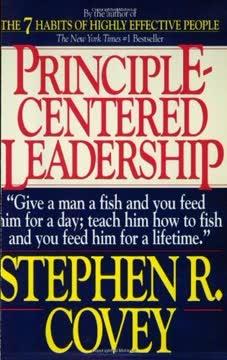
**Author:** Stephen R. Covey
**Estimated Reading Time:** 45 minutes
**What You'll Learn:**
- Why enduring leadership rests on timeless principles rather than passing techniques - How the Four Levels of Principle-Centered Leadership create lasting organizational trust - How to build win-win agreements that unleash human potential - Why mission statements fail and how to create ones that actually guide behavior - How to balance economic success with genuine quality of life for every stakeholder
**Who This Book Is For:**
Leaders who sense that quick fixes and personality tricks have reached their limits. Managers who want to build organizations that thrive over decades, not quarters. Individuals who suspect that personal integrity and professional success are not competing values but inseparable ones. Anyone who has ever wondered why some teams hum with energy while others merely function.
Every leader eventually confronts a wall that technique cannot scale. You have read the books. You have attended the seminars. You have learned the communication frameworks, the motivation tactics, the negotiation scripts. And for a while, they work. Then the team slips back into old patterns. The culture reverts. The numbers dip. You find yourself managing the same conflicts, fighting the same fires, and wondering why the latest approach did not stick. Stephen Covey spent decades observing this cycle. He watched organizations chase one management fad after another, each promising transformation and delivering only temporary relief. He saw leaders who could deliver a compelling presentation but could not build a trusting team. He met executives who mastered the language of empowerment while running organizations built on control. The problem, he concluded, was not a lack of skill. It was a lack of foundation. Most leadership training focuses on what Covey called the personality ethic: the techniques, behaviors, and communication styles that influence how people perceive you. These skills matter, but they are secondary. They are the paint on a house whose foundation may be cracked. When pressure comes, and pressure always comes, the cracks reveal themselves. What Covey proposed instead was a return to the character ethic: the idea that lasting effectiveness flows from who you are, not merely what you do. And who you are, he argued, is determined by the principles you align yourself with. Principles are not values. Values are subjective. They vary from person to person, culture to culture, era to era. Principles are objective. They are the natural laws of human effectiveness, as real and as unyielding as gravity. Fairness. Integrity. Honesty. Human dignity. Service. Quality. Growth. These are not preferences. They are realities. You can choose to ignore them, but you cannot choose to escape their consequences. Think of a farmer. A farmer cannot cram for a harvest. You…
Continue reading in the MinuteRead app
Get the complete 30-minute summary of Principle-Centered Leadership
Get the complete summary in the appPrinciples are natural laws that govern human effectiveness. Align with them or suffer the consequences.
Trustworthiness is the foundation of all leadership. It starts with keeping promises to yourself.
The Seven Habits are sequential. Private victory precedes public victory.
Trust is built through consistent deposits to the emotional bank account. There are no shortcuts.
Manage results, not methods. Win-win agreements create ownership and empowerment.
Mission statements only work when people help create them and use them to guide decisions.
"Principle-Centered Leadership" is a strong fit if you want practical ideas around leadership, business, self help, especially themes like principles are natural laws that govern human effectiveness. align with them or suffer the consequences; trustworthiness is the foundation of all leadership. it starts with keeping promises to yourself. The MinuteRead summary distills these concepts into a focused read, whether you're deciding whether to buy the book or applying its lessons at work.
Stephen Richards Covey was a renowned American educator, author, businessman, and speaker. His most famous work, "The 7 Habits of Highly Effective People," gained widespread acclaim and influenced millions. Covey authored several other successful books on leadership, family, and personal development. He was recognized as one of the 25 most influential people by Time magazine in 1996. Covey's teachings focused on principle-centered approaches to leadership and personal effectiveness. He served as…
View all summaries by Stephen R. CoveyContinue Reading
Access the complete 30-minute summary and thousands more nonfiction books in the MinuteRead app.

Continue reading the complete summary in the MinuteRead app.