MinuteRead
30 min
Book summary
Premium summary · Opens in the app · 30 min read
Every day, you participate in the economy. You buy coffee, pay rent, earn a paycheck, save for retirement, and perhaps invest in stocks. You hear about inflation, interest rates, and unemployment on the news. Politicians argue about taxes, spending, and trade. Business leaders worry about consumer confidence and market conditions. Yet for most people, the economy remains a mysterious force, something that happens to them rather than something they understand.
**Author:** N. Gregory Mankiw
**Estimated Reading Time:** 45 minutes
**What You'll Learn:**
- How economists measure a nation's economic health and why GDP matters - The forces that drive economic booms and recessions - How government policies shape the economy in both the short and long run - Why trade balances and exchange rates behave the way they do - The mental models economists use to understand a complex world
**Who This Book Is For:**
This condensed edition is for anyone who wants to understand how the economy actually works. Whether you are a student preparing for exams, a professional making business decisions, a voter evaluating policy proposals, or simply a curious reader who wants to make sense of financial news, this book will give you the foundational tools of economic thinking. No prior knowledge of economics is required.
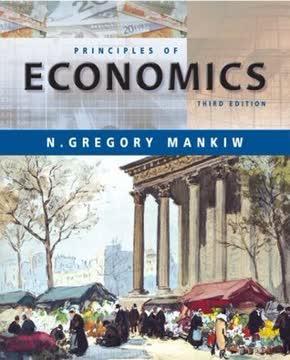
Every day, you participate in the economy. You buy coffee, pay rent, earn a paycheck, save for retirement, and perhaps invest in stocks. You hear about inflation, interest rates, and unemployment on the news. Politicians argue about taxes, spending, and trade. Business leaders worry about consumer confidence and market conditions. Yet for most people, the economy remains a mysterious force, something that happens to them rather than something they understand. This is a strange situation. We live in an age of unprecedented economic complexity. The decisions made by central bankers in Washington affect mortgage rates in California. A drought in Brazil changes the price of your morning orange juice. A technological innovation in Silicon Valley creates entire industries while making others obsolete. Understanding these connections is no longer a luxury reserved for specialists. It is a basic requirement for navigating modern life. N. Gregory Mankiw wrote Principles of Economics to demystify this subject. As a professor at Harvard University and former chairman of the Council of Economic Advisers, Mankiw has spent decades teaching economics to students from all backgrounds. His approach is built on a simple conviction: economics is not a collection of abstract theories but a set of tools for understanding the world. The principles he presents are not just academic concepts. They are lenses through which you can see the hidden logic behind everyday events. The problem Mankiw addresses is that most people think about economics in fragments. They know that prices go up, but they do not understand why. They hear that the Federal Reserve changed interest rates, but they cannot explain how that affects their lives. They sense that government debt matters, but they cannot articulate the mechanism. This fragmented understanding leaves people vulnerable to confusion, misinformation, and poor decision-making. Mankiw's approach is different because he builds from first principles. He starts with the fundamental insight that…
Continue reading in the MinuteRead app
Get the complete 30-minute summary of Principles of Economics
Get the complete summary in the appGDP measures both total income and total expenditure in an economy. They are always equal.
Real GDP adjusts for inflation. Always compare real values, not nominal values.
The aggregate-demand curve slopes downward because of the wealth effect, the interest-rate effect, and the exchange-rate
The long-run aggregate-supply curve is vertical. Money does not affect long-run output.
The short-run aggregate-supply curve slopes upward because wages and prices are sticky.
Monetary policy works through interest rates. Lower rates stimulate spending; higher rates restrain it.
"Principles of Economics" is a strong fit if you want practical ideas around economics, textbooks, business, especially themes like gdp measures both total income and total expenditure in an economy. they are always equal; real gdp adjusts for inflation. always compare real values, not nominal values. The MinuteRead summary distills these concepts into a focused read, whether you're deciding whether to buy the book or applying its lessons at work.
Nicholas Gregory Mankiw is a prominent American economist and professor at Harvard University. He is known for his work on New Keynesian economics and is highly influential in the field, ranking among the top economists globally. Mankiw has authored several popular economics textbooks and writes regularly for The New York Times. He has served as an economic adviser to Republican politicians, including as Chairman of the Council of Economic Advisers under President George W. Bush. However, in 201…
View all summaries by N. Gregory MankiwContinue Reading
Access the complete 30-minute summary and thousands more nonfiction books in the MinuteRead app.

Continue reading the complete summary in the MinuteRead app.