MinuteRead
30 min
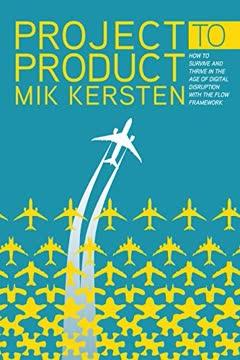
Book summary
by Mik Kersten
Premium summary · Opens in the app · 30 min read
Something strange is happening in the business world. Companies that dominated their industries for decades are disappearing at an unprecedented rate. The average lifespan of a company on the S&P 500 has dropped from over sixty years in the 1960s to less than twenty years today. At the current rate of disruption, half of the companies currently on the S&P 500 will be replaced within the next ten years.
**Author:** Mik Kersten **Estimated Reading Time:** 45 minutes
**What You'll Learn:** - Why the Age of Software is disrupting every industry and what it means for your organization - The fundamental shift from project-oriented to product-oriented software delivery - The Flow Framework: a practical system for connecting technology work to business results - How to measure what actually matters in software delivery - How to build the infrastructure needed to survive and thrive in the digital future
**Who This Book Is For:** This book is for business leaders trying to understand why their digital transformations keep failing, technology leaders struggling to communicate value to the boardroom, and anyone who senses that the old ways of managing software delivery no longer work. If you have ever wondered why your organization moves so slowly while startups seem to ship overnight, this book explains the structural reasons and offers a practical path forward.
Something strange is happening in the business world. Companies that dominated their industries for decades are disappearing at an unprecedented rate. The average lifespan of a company on the S&P 500 has dropped from over sixty years in the 1960s to less than twenty years today. At the current rate of disruption, half of the companies currently on the S&P 500 will be replaced within the next ten years. The cause is not mysterious. Software has become the primary means of production in the modern economy. Every industry, from retail to banking to healthcare to agriculture, now runs on software. The companies that master software delivery are thriving. The companies that treat software as a cost center or a support function are dying. Yet most large organizations remain stuck in management practices designed for a previous era. They manage software delivery as a series of discrete projects with fixed budgets, fixed timelines, and fixed scopes. They measure progress through activity metrics like lines of code written or hours logged. They organize people into temporary teams that disband when a project ends, destroying the tacit knowledge and working relationships that make teams effective. This approach was reasonable when software was a peripheral concern. It is catastrophic when software is the core of the business. Mik Kersten wrote Project to Product to address this crisis. His central observation is simple but profound: the fundamental unit of work in the Age of Software is not the project but the product. Products have lifecycles measured in years or decades. Products require stable, dedicated teams. Products demand continuous investment based on value delivered, not one-time funding based on upfront estimates. Kersten spent years working with large enterprises attempting digital transformations. He watched them adopt Agile methodologies and DevOps practices, only to find that these changes…
Continue reading in the MinuteRead app
Get the complete 30-minute summary of Project to Product
Get the complete summary in the appWe are in the Age of Software, and half of S&P 500 companies will be replaced in the next ten years if current trends co
The fundamental unit of work must shift from the project to the product.
The four flow items are Features, Defects, Risks, and Debts. Every piece of technology work falls into one of these cate
Flow Distribution makes trade-offs explicit and connects technology work to business strategy.
Flow Time is the metric that matters most for customer satisfaction. Reduce wait time, not active time.
Flow Load measures work in progress. Overload is one of the most common and most damaging problems in software delivery.
"Project to Product" is a strong fit if you want practical ideas around business, management, leadership, especially themes like we are in the age of software, and half of s&p 500 companies will be replaced in the next ten years if current trends co; the fundamental unit of work must shift from the project to the product. The MinuteRead summary distills these concepts into a focused read, whether you're deciding whether to buy the book or applying its lessons at work.
Mik Kersten is a software industry expert and the founder and CEO of Tasktop Technologies. He is known for developing the Eclipse Mylyn open source tool and his work on improving software development processes. Kersten holds a Ph.D. in Computer Science from the University of British Columbia, where his research focused on task-focused interfaces for software developers. He has been recognized as a top influencer in the DevOps and Agile communities. Kersten's experience working with large-scale s…
View all summaries by Mik KerstenContinue Reading
Access the complete 30-minute summary and thousands more nonfiction books in the MinuteRead app.

Continue reading the complete summary in the MinuteRead app.