MinuteRead
30 min
Book summary
Premium summary · Opens in the app · 30 min read
Every day, billions of dollars move through financial markets. Behind much of that movement is not human judgment but computer code. Algorithms scan prices, evaluate data, and execute trades in milliseconds. This is the world of quantitative trading, and it is no longer the exclusive domain of Wall Street giants.
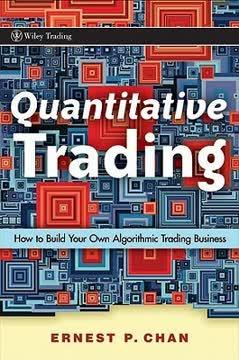
**Author:** Ernest P. Chan
**Estimated Reading Time:** 45 minutes
**What You'll Learn:**
- The fundamental principles behind quantitative trading and why it differs from traditional investing - How to build, backtest, and automate your own trading strategies - The critical role of risk management and position sizing - How to choose between retail and proprietary trading structures - Why independent traders can compete with institutional giants
**Who This Book Is For:**
This book is for anyone who has ever wondered whether they could build a systematic approach to trading. You do not need a PhD in mathematics or decades of Wall Street experience. If you have basic knowledge of statistics, some familiarity with programming or Excel, and a willingness to think rigorously, you have what it takes to begin. Whether you are a curious investor, a programmer looking for a new challenge, or a finance professional seeking independence, this book provides a practical roadmap.
Every day, billions of dollars move through financial markets. Behind much of that movement is not human judgment but computer code. Algorithms scan prices, evaluate data, and execute trades in milliseconds. This is the world of quantitative trading, and it is no longer the exclusive domain of Wall Street giants. For decades, the prevailing assumption was that successful trading required access to massive capital, proprietary data feeds, and teams of PhDs. The individual investor was told to buy index funds and wait. But something has changed. The tools that were once available only to institutions are now within reach of anyone with a computer and an internet connection. Historical data is affordable. Programming languages like Python and R are free. Brokerage APIs allow individuals to automate their trading strategies. The barriers have fallen. Ernest P. Chan wrote this book to address a simple question: Can an independent trader, working alone or with minimal resources, build a profitable quantitative trading business? His answer is a qualified but emphatic yes. Chan is uniquely positioned to answer this question. He holds a PhD in physics from Cornell University and has worked at major financial institutions including Morgan Stanley and Credit Suisse. He has managed money at hedge funds and, perhaps most importantly, he has operated as an independent quantitative trader. He knows both worlds intimately. He understands what institutions do well and where they are constrained. He also knows what independent traders can do that institutions cannot. The problem this book addresses is not a lack of information. There is no shortage of books about trading, technical analysis, or investing. The problem is that most of these books fall into one of two categories. Either they are too theoretical, filled with mathematical models that have little practical application, or…
Continue reading in the MinuteRead app
Get the complete 30-minute summary of Quantitative Trading
Get the complete summary in the appQuantitative trading uses computer algorithms to make systematic trading decisions based on tested rules.
You do not need an advanced degree to start quantitative trading; basic statistics and programming skills are sufficient
Backtesting is essential, but you must avoid look-ahead bias, survivorship bias, and data-snooping bias.
Choose your business structure carefully: retail trading offers independence, while proprietary trading offers capital a
Automate your trading to minimize human error, but manage operational risks carefully.
Use the Kelly criterion or a fraction of it to determine position sizes, and prioritize survival over growth.
"Quantitative Trading" is a strong fit if you want practical ideas around finance, business, computer science, especially themes like quantitative trading uses computer algorithms to make systematic trading decisions based on tested rules; you do not need an advanced degree to start quantitative trading; basic statistics and programming skills are sufficient. The MinuteRead summary distills these concepts into a focused read, whether you're deciding whether to buy the book or applying its lessons at work.
Ernest P. Chan is an expert in quantitative trading and financial analysis. He has authored multiple books on the subject and is known for his practical approach to teaching algorithmic trading strategies. Chan has a background in physics and financial engineering, holding a PhD from Cornell University. He has worked for various financial institutions and hedge funds before becoming an independent trader and consultant. Chan is recognized for his ability to explain complex concepts in an accessi…
View all summaries by Ernest P. ChanContinue Reading
Access the complete 30-minute summary and thousands more nonfiction books in the MinuteRead app.

Continue reading the complete summary in the MinuteRead app.