MinuteRead
30 min
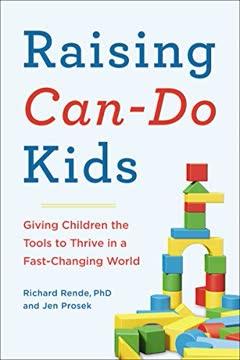
Book summary
Premium summary · Opens in the app · 30 min read
Every parent wants to raise a successful child. But what does success actually mean in a world that changes faster than at any point in human history? For decades, the answer seemed obvious: good grades, admission to a prestigious college, a stable career. Parents optimized for measurable outcomes. They scheduled enrichment activities, hired tutors, and managed every aspect of their children's lives.
**Author:** Richard Rende **Estimated Reading Time:** 45 minutes
**What You'll Learn**
How to nurture the entrepreneurial spirit that already exists in your child. This book reveals why curiosity, optimism, calculated risk-taking, and a service mindset matter more than grades or test scores. You will learn how to create an environment where children develop the confidence to explore, the resilience to fail, and the drive to create value for others.
**Who This Book Is For**
Parents who want to raise children who can navigate an unpredictable world. Educators looking for evidence-based approaches to fostering independence. Anyone who suspects that helicopter parenting and resume-building childhoods are producing fragile, anxious young people rather than capable, creative adults.
Every parent wants to raise a successful child. But what does success actually mean in a world that changes faster than at any point in human history? For decades, the answer seemed obvious: good grades, admission to a prestigious college, a stable career. Parents optimized for measurable outcomes. They scheduled enrichment activities, hired tutors, and managed every aspect of their children's lives. The result was not a generation of confident, capable young adults. It was a generation of exhausted, anxious, risk-averse children who knew how to follow instructions but struggled to think independently. Richard Rende, a developmental psychologist and researcher, argues that we have been asking the wrong questions. Instead of asking how to make children successful, we should be asking what qualities actually predict success in the real world. The answer is not a high IQ or a perfect transcript. The answer is a set of traits that entrepreneurs embody: curiosity, optimism, resilience, opportunity-seeking, work ethic, social intelligence, and a desire to create value for others. These traits are not rare gifts bestowed on a lucky few. They are natural human capacities that every child possesses from birth. Babies arrive in the world as natural explorers, driven by curiosity and unafraid of failure. They try, fall, get up, and try again. They are relentless experimenters. They are, in a very real sense, born entrepreneurs. The problem is that well-meaning parents often suppress these instincts. We hover. We correct. We structure every moment. We protect our children from failure, not realizing that failure is one of the most powerful learning tools available. We optimize for short-term achievement while undermining long-term capability. This book offers a different path. It draws on developmental science, psychological research, and real-world examples to show how parents can nurture the can-do spirit that already exists in their children. The goal is not to produce child CEOs or junior startup founders. The goal is to raise children who approach life with confidence, who see problems as opportunities, who know how to work hard,…
Continue reading in the MinuteRead app
Get the complete 30-minute summary of Raising Can-Do Kids
Get the complete summary in the appYour child is already a can-do kid. Your job is to protect and nurture that spirit.
Free play and exploration are essential for development. Do not overschedule.
Teach realistic optimism: acknowledge reality while believing in your own agency.
Encourage calculated risk-taking by helping children think through potential outcomes.
Build work ethic through meaningful contributions, not external rewards.
Develop social skills through practice and coaching, not lectures.
"Raising Can-Do Kids" is a strong fit if you want practical ideas around parenting, especially themes like your child is already a can-do kid. your job is to protect and nurture that spirit; free play and exploration are essential for development. do not overschedule. The MinuteRead summary distills these concepts into a focused read, whether you're deciding whether to buy the book or applying its lessons at work.
There is insufficient information provided about the author, Richard Rende , in the given documents. The author section is empty, and no biographical details or background information is available. Without additional context, it is not possible to provide a meaningful summary about the author's life, career, expertise, or other works. More data would be needed to create an accurate and informative 100-word summary about Richard Rende.
View all summaries by Richard RendeContinue Reading
Access the complete 30-minute summary and thousands more nonfiction books in the MinuteRead app.

Continue reading the complete summary in the MinuteRead app.