MinuteRead
30 min
Book summary
Premium summary · Opens in the app · 30 min read
The stock market has always attracted dreamers, gamblers, and optimists. Most of them lose money. A few of them learn why. And an even smaller number figure out how to win consistently. This book is the story of one of those rare individuals.
**Author:** Edwin Lefèvre **Estimated Reading Time:** 45 minutes
**What You'll Learn:**
- Why independent thinking matters more than any tip or system - How to read market trends and follow the path of least resistance - The difference between investing and speculating, and why it matters - How to manage emotions when real money is on the line - Why losses are tuition, not failure - How market manipulation works and how to avoid being its victim - The timeless principles that made Jesse Livermore one of history's greatest traders
**Who This Book Is For:**
Anyone who has ever put money into the stock market and wondered why it did not behave the way they expected. Anyone who has followed a hot tip and regretted it. Anyone who wants to understand how markets really work, not how textbooks claim they work. And anyone who wants to develop the mental discipline required to make sound decisions under pressure.
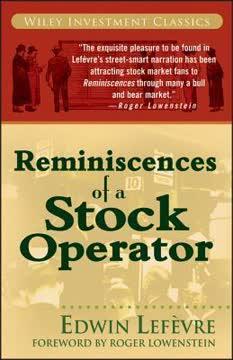
The stock market has always attracted dreamers, gamblers, and optimists. Most of them lose money. A few of them learn why. And an even smaller number figure out how to win consistently. This book is the story of one of those rare individuals. Written nearly a century ago, Reminiscences of a Stock Operator tells the story of Larry Livingston, a fictional name for Jesse Livermore, one of the most successful and controversial speculators in American financial history. Livermore made and lost multiple fortunes. He was worth millions before he turned thirty. He went broke more than once. Each time, he clawed his way back. And each time, he learned something new about how markets actually work. The book is written as a first-person narrative, a confession of sorts. Livingston speaks directly to the reader, explaining his trades, his mistakes, his victories, and his philosophy. There are no formulas here. No technical indicators. No get-rich-quick schemes. Instead, there is something far more valuable: an honest account of what it takes to succeed in a game where most people fail. The problem this book addresses is simple. Most people approach the stock market with the wrong mindset. They treat it like a casino. They chase tips. They follow the crowd. They let hope and fear drive their decisions. And then they wonder why they lose money. Livingston's approach is different. He treats speculation as a serious profession, one that requires observation, patience, discipline, and emotional control. He does not pretend that trading is easy. In fact, he repeatedly emphasizes how difficult it is. But he also shows that it can be done, if you are willing to do the work. Why does this matter today? Because the fundamental nature of markets has not changed. The…
Continue reading in the MinuteRead app
Get the complete 30-minute summary of Reminiscences of a Stock Operator
Get the complete summary in the appThink independently. Do not follow tips or the crowd.
Follow the line of least resistance. Align yourself with the market's trend.
Be patient. Wait for the right opportunity.
Be disciplined. Have a plan and stick to it.
Cut your losses quickly. If the market tells you that you are wrong, get out.
Learn from your mistakes. Every loss is tuition.
"Reminiscences of a Stock Operator" is a strong fit if you want practical ideas around finance, business, economics, especially themes like think independently. do not follow tips or the crowd; follow the line of least resistance. align yourself with the market's trend. The MinuteRead summary distills these concepts into a focused read, whether you're deciding whether to buy the book or applying its lessons at work.
Edwin Lefèvre was an American journalist, writer, and statesman born in 1871 in Colón, Colombia (now Panama). Educated at Lehigh University as a mining engineer, he began his career as a journalist at 19. Lefèvre worked as a stockbroker on Wall Street and wrote for the New York Sun. He served as an ambassador during William Howard Taft's presidency. Later, he returned to Vermont to focus on writing, contributing short stories to magazines and authoring novels. His most famous work, based on the …
View all summaries by Edwin LefèvreContinue Reading
Access the complete 30-minute summary and thousands more nonfiction books in the MinuteRead app.

Continue reading the complete summary in the MinuteRead app.