MinuteRead
30 min
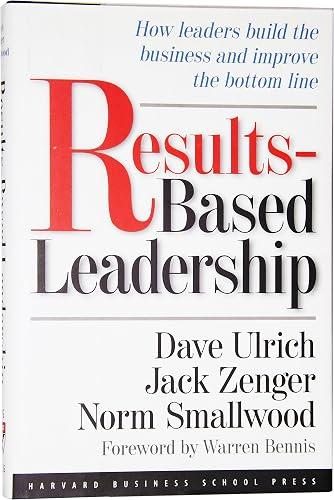
Book summary
by Dave Ulrich
Premium summary · Opens in the app · 30 min read
For decades, the conversation about leadership has been dominated by a single question: What makes a great leader? The answers have been remarkably consistent across thousands of books, articles, seminars, and corporate training programs. Great leaders have vision. They communicate effectively. They demonstrate emotional intelligence. They act with integrity. They build trust. They inspire others.
**Author:** Dave Ulrich **Estimated Reading Time:** 38 minutes
**What You'll Learn:** - Why leadership effectiveness requires both attributes and results, not one or the other - How to define results that are balanced, strategic, lasting, and selfless - The four critical result areas every leader must deliver: employee, organization, customer, and investor - Practical frameworks for building human capital, organizational capabilities, firm equity, and shareholder value - How to develop yourself and others into results-based leaders
**Who This Book Is For:** This book is for leaders at every level who sense that something is missing from their leadership. You may have attended leadership development programs, read books on emotional intelligence, and worked hard to become a better communicator. Yet despite all this effort, you may still find yourself wondering whether your leadership is actually making a difference. This book is for executives who want to move beyond leadership as a set of personal qualities and toward leadership as a force that produces tangible, measurable outcomes. It is also for HR professionals, learning officers, and talent developers who design leadership programs and want those programs to connect directly to business results.
For decades, the conversation about leadership has been dominated by a single question: What makes a great leader? The answers have been remarkably consistent across thousands of books, articles, seminars, and corporate training programs. Great leaders have vision. They communicate effectively. They demonstrate emotional intelligence. They act with integrity. They build trust. They inspire others. This focus on leadership attributes has produced an entire industry dedicated to measuring and developing personal qualities. Organizations spend billions of dollars annually on leadership development programs that assess personality traits, teach communication skills, and provide feedback on behavioral competencies. Executives dutifully attend these programs, complete their 360-degree assessments, and work on their development plans. Yet something is missing. Consider a leader who scores exceptionally well on every attribute assessment. She is self-aware, emotionally intelligent, collaborative, and visionary. Her team members rate her highly on trust and communication. She is widely admired throughout the organization. But her division consistently misses its financial targets. Her products fail to gain traction with customers. Her best employees leave for competitors. Her organization is slow to adapt to changing market conditions. Is she an effective leader? Now consider a different leader. He is demanding, somewhat aloof, and not particularly charismatic. His communication style is direct to the point of bluntness. He would not score well on measures of emotional intelligence. Yet his organization consistently delivers outstanding results. Revenues grow year after year. Customers are loyal. Employees are engaged and committed. The organization builds capabilities that competitors struggle to match. Is he an effective leader? The answer to both questions…
Continue reading in the MinuteRead app
Get the complete 30-minute summary of Results-Based Leadership
Get the complete summary in the appEffective leadership equals attributes multiplied by results. Both are necessary; neither is sufficient alone.
Desired results must be balanced, strategic, lasting, and selfless.
Human capital equals employee capability multiplied by employee commitment.
Organizational capabilities are collective skills, not individual competencies.
Firm equity is built through relationships with customers, not transactions.
Shareholder value comes from costs, growth, and management equity in balance.
"Results-Based Leadership" is a strong fit if you want practical ideas around leadership, business, management, especially themes like effective leadership equals attributes multiplied by results. both are necessary; neither is sufficient alone; desired results must be balanced, strategic, lasting, and selfless. The MinuteRead summary distills these concepts into a focused read, whether you're deciding whether to buy the book or applying its lessons at work.
Motivated to help readers with effective leadership = attributes x results, Dave Ulrich wrote “Results-Based Leadership” to package those ideas for a fast, focused read. Through “Results-Based Leadership”, Dave Ulrich distills the core ideas on leadership into lessons readers can absorb in a single short sitting. Readers turn to this work when they want Dave Ulrich's perspective on the subject without working through the entire original volume. The book is structured so each chapter highlights a…
View all summaries by Dave UlrichContinue Reading
Access the complete 30-minute summary and thousands more nonfiction books in the MinuteRead app.

Continue reading the complete summary in the MinuteRead app.