 MinuteRead
30 min
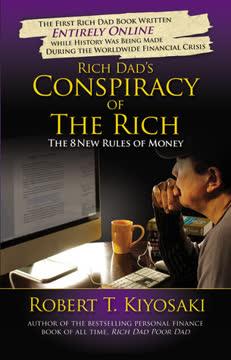
Book summary
Premium summary · Opens in the app · 30 min read
Most people believe they are bad with money because they lack discipline, willpower, or intelligence. They blame themselves for their financial struggles. They think that if they just worked a little harder, saved a little more, or found a better job, everything would improve.
**Author:** Robert T. Kiyosaki
**Estimated Reading Time:** 45 minutes
**What You'll Learn:**
- Why the financial system is designed to keep most people poor - How money has changed and why old rules no longer work - The difference between assets and liabilities that most people get wrong - How to build financial intelligence that gives you an unfair advantage - Practical strategies for creating wealth in any economic climate
**Who This Book Is For:**
This book is for anyone who has ever wondered why they work harder but seem to fall further behind. It is for people who sense that something is wrong with the financial advice they received from parents, teachers, and financial advisors. It is for those who want to understand how money really works, not how the system pretends it works. If you are ready to question everything you thought you knew about money, this book will show you what has been hidden from you and why.
Most people believe they are bad with money because they lack discipline, willpower, or intelligence. They blame themselves for their financial struggles. They think that if they just worked a little harder, saved a little more, or found a better job, everything would improve. Robert Kiyosaki offers a different explanation. The problem, he argues, is not you. The problem is that you were deliberately kept ignorant. In 1903, something significant happened in American education. According to Kiyosaki, that was the year the conspiracy took over the educational system. From that point forward, schools stopped teaching anything meaningful about money. Children learned reading, writing, and arithmetic. They learned history and science. But they learned nothing about how money works, how to invest, how to build businesses, or how to create wealth. This was not an oversight. It was a design. The result is a population that is financially incompetent and dependent on the government to take care of them. People work hard, pay taxes, and trust that the system will provide for them in retirement. They hand their money to financial advisors who may not have their best interests at heart. They invest in things they do not understand. They accept the rules of a game that was rigged against them from the start. Kiyosaki calls this the conspiracy of the rich. It is not a secret cabal meeting in dark rooms. It is something far more powerful: a set of beliefs, institutions, and systems that work together to keep money flowing from the many to the few. The rich understand how money works. They understand the tax code. They understand debt. They understand how to use other people's money to build wealth. They understand that the game has changed,…
Continue reading in the MinuteRead app
Get the complete 30-minute summary of Rich Dad's Conspiracy of the Rich
Get the complete summary in the app**The system is rigged.** The financial system is designed to keep the rich rich and the poor poor. The primary mechanis
**Take responsibility for your financial education.** No one is coming to save you. You must learn how money works.
**An asset puts money in your pocket.** A liability takes money out. Focus on acquiring assets.
**Cash flow beats capital gains.** Invest for income, not appreciation.
**Move to the right side of the CASHFLOW Quadrant.** Build businesses and investments that generate passive income.
**Develop financial intelligence.** Learn accounting, investing, market behavior, and law.
"Rich Dad's Conspiracy of the Rich" is a strong fit if you want practical ideas around business, finance, self help, especially themes like **the system is rigged.** the financial system is designed to keep the rich rich and the poor poor. the primary mechanis; **take responsibility for your financial education.** no one is coming to save you. you must learn how money works. The MinuteRead summary distills these concepts into a focused read, whether you're deciding whether to buy the book or applying its lessons at work.
Robert Toru Kiyosaki is an American businessman and author best known for his "Rich Dad Poor Dad" series of personal finance books. He founded the Rich Dad Company and Rich Global LLC, offering financial education through books and seminars. Kiyosaki's career has been marked by both success and controversy. His teachings have inspired many, but he has also faced legal challenges, including a class action lawsuit and bankruptcy filing. In 2024, Kiyosaki revealed he was over $1 billion in debt. Hi…
View all summaries by Robert T. KiyosakiContinue Reading
Access the complete 30-minute summary and thousands more nonfiction books in the MinuteRead app.

Continue reading the complete summary in the MinuteRead app.






