MinuteRead
30 min
Every investor eventually confronts the same terrifying arithmetic. A portfolio that loses 50 percent must gain 100 percent simply to break even. Lose 60 percent and you need a 150 percent gain. Lose 80 percent and you need a 400 percent gain. The numbers are unforgiving, and yet the investment industry spends most of its energy talking about the upside: finding the next great stock, timing the market, beating the benchmark, generating alpha.
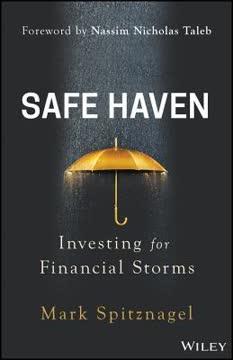
**Author:** Mark Spitznagel
**Estimated Reading Time:** 45 minutes
**What You'll Learn:**
- Why managing risk, not chasing returns, is the true engine of long-term wealth - How the mathematics of compounding quietly punishes the unprepared - What makes a safe haven genuinely cost-effective versus merely comforting - Why diversification fails precisely when you need it most - How to build an investment approach you could live with forever
**Who This Book Is For:**
Investors who sense something is missing from conventional advice. Anyone who has watched a portfolio get cut in half and wondered if there was a better way. Professionals seeking a rigorous framework for thinking about risk. And readers who appreciate that the deepest financial truths often come from philosophy, mathematics, and history rather than quarterly reports.
Every investor eventually confronts the same terrifying arithmetic. A portfolio that loses 50 percent must gain 100 percent simply to break even. Lose 60 percent and you need a 150 percent gain. Lose 80 percent and you need a 400 percent gain. The numbers are unforgiving, and yet the investment industry spends most of its energy talking about the upside: finding the next great stock, timing the market, beating the benchmark, generating alpha. Mark Spitznagel believes this is exactly backwards. The problem is not that investors fail to seek returns. The problem is that they seek returns without first understanding the mathematics of survival. They optimize for the average outcome while ignoring the distribution of outcomes. They celebrate their arithmetic returns while their geometric reality quietly erodes their capital. They diversify broadly, believing they have solved the problem of risk, only to discover that diversification fails precisely when systemic shocks arrive. This book exists because the conventional approach to risk management is fundamentally broken. Most investors treat risk mitigation as a necessary evil, a drag on performance, an insurance premium they grudgingly pay. They allocate to bonds or gold because tradition tells them to, without understanding whether these assets actually protect them when it matters. They accept lower returns in exchange for lower volatility, never realizing that there is a better path. Spitznagel's approach is different because it starts from a different question. Instead of asking, "How can I maximize my returns?" he asks, "How can I maximize my wealth over time?" These sound like the same question, but they are not. The first leads you to chase the highest arithmetic average return. The second leads you to protect the geometric compounding of your capital. The difference between these two paths is the difference between building lasting wealth and slowly losing it. The author brings an unusual background to this problem. As the founder of Universa Investments, he has spent decades…
Continue reading in the MinuteRead app
Get the complete 30-minute summary of Safe Haven
Get the complete summary in the appRisk mitigation is the essence of investment management, not a secondary concern.
The geometric average return determines your wealth, not the arithmetic average.
Losses hurt more than equivalent gains help. Avoid large losses at all costs.
Cost-effective safe havens raise the geometric return of the portfolio.
Convex safe havens are more efficient than linear ones. A small allocation can provide meaningful protection.
Diversification fails during systemic crises. Do not rely on it for protection.
"Safe Haven" is a strong fit if you want practical ideas around finance, economics, business, especially themes like risk mitigation is the essence of investment management, not a secondary concern; the geometric average return determines your wealth, not the arithmetic average. The MinuteRead summary distills these concepts into a focused read, whether you're deciding whether to buy the book or applying its lessons at work.
Mark Spitznagel is a renowned hedge fund manager and the founder of Universa Investments L.P. He is known for his expertise in tail-hedging strategies and risk mitigation. Spitznagel has worked closely with Nassim Nicholas Taleb, a prominent author and risk analyst. His investment philosophy focuses on protecting portfolios against extreme market events while maximizing long-term returns. Spitznagel's approach challenges traditional financial theories and emphasizes the importance of geometric r…
View all summaries by Mark SpitznagelContinue Reading
Access the complete 30-minute summary and thousands more nonfiction books in the MinuteRead app.

Continue reading the complete summary in the MinuteRead app.