 MinuteRead
30 min
Book summary
Premium summary · Opens in the app · 30 min read
Most people believe creativity is a gift. You either have it or you do not. The creative types are artists, musicians, inventors, the eccentric geniuses who see the world differently. The rest of us are left to admire their output and get on with logical, analytical work.
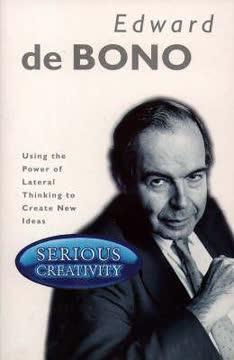
**Author:** Edward de Bono **Estimated Reading Time:** 45 minutes
**What You'll Learn:** How creativity operates as a deliberate, learnable skill rather than a mysterious gift. You will master lateral thinking techniques that break habitual thought patterns, learn to use provocations and random input to spark breakthrough ideas, understand how to extract powerful concepts from ordinary ideas, and discover how to build creativity into the fabric of an organization.
**Who This Book Is For:** Professionals who believe they are not creative, managers who need to generate innovation on demand, teams stuck solving the same problems with the same thinking, and anyone who has ever been told to think outside the box without being shown how.
Most people believe creativity is a gift. You either have it or you do not. The creative types are artists, musicians, inventors, the eccentric geniuses who see the world differently. The rest of us are left to admire their output and get on with logical, analytical work. Edward de Bono spent decades proving this belief wrong. The problem is not a shortage of creative potential. The problem is that we have never been taught how creativity actually works. We treat it as magic because no one showed us the mechanism. We wait for inspiration to strike because we lack the tools to generate ideas deliberately. We assume that trying harder in the same direction will eventually produce a breakthrough, when the real need is to move sideways into entirely new territory. This book exists because creativity is too important to leave to chance. Without it, organizations stagnate. Problems that could be solved remain unsolved. Opportunities that could be seized pass unnoticed. The information and experience locked inside old patterns, old structures, and old perceptions never gets released. Creativity is not simply a way to make things better. It is the mechanism by which we make full use of what we already know. The challenge is that the human brain is not designed to be creative. It is designed to form patterns and then stick to them. This is enormously useful for navigating daily life. You do not want to figure out how to open a door every time you encounter one. You do not want to relearn how to drive each morning. Patterns make us efficient. But patterns also trap us. They make it difficult to see alternatives. They channel thinking down familiar routes and punish deviation. De Bono's approach is different because it works with the brain rather than against it. He does not ask you to be more imaginative or to free your mind or to embrace your inner artist. He provides specific, teachable techniques that deliberately disrupt pattern-making systems. These techniques are not…
Continue reading in the MinuteRead app
Get the complete 30-minute summary of Serious Creativity
Get the complete summary in the appCreativity is a deliberate skill, not an innate talent. Anyone can learn it.
Lateral thinking moves sideways across patterns. Vertical thinking digs deeper into existing patterns. You need both.
Provocation uses unreasonable statements to force new connections. Signal provocations with po and use movement techniqu
Random input introduces unrelated words to your thinking. Force connections between the random word and your focus.
Concepts are more flexible than ideas. Extract concepts from specific ideas to find alternative implementations.
The escape method identifies what you take for granted and then removes it. Question assumptions that seem too obvious t
"Serious Creativity" is a strong fit if you want practical ideas around business, psychology, self help, especially themes like creativity is a deliberate skill, not an innate talent. anyone can learn it; lateral thinking moves sideways across patterns. vertical thinking digs deeper into existing patterns. you need both. The MinuteRead summary distills these concepts into a focused read, whether you're deciding whether to buy the book or applying its lessons at work.
Edward de Bono was a Maltese polymath known for his contributions to creative thinking and problem-solving. He coined the term "lateral thinking" and developed various techniques to enhance creativity, including the Six Thinking Hats method. De Bono advocated for teaching thinking skills in schools and consulted for numerous organizations worldwide. His work emphasized the importance of deliberate creativity in business and education. Despite some criticism of his self-promotion, de Bono's ideas…
View all summaries by Edward de BonoContinue Reading
Access the complete 30-minute summary and thousands more nonfiction books in the MinuteRead app.

Continue reading the complete summary in the MinuteRead app.






