MinuteRead
30 min
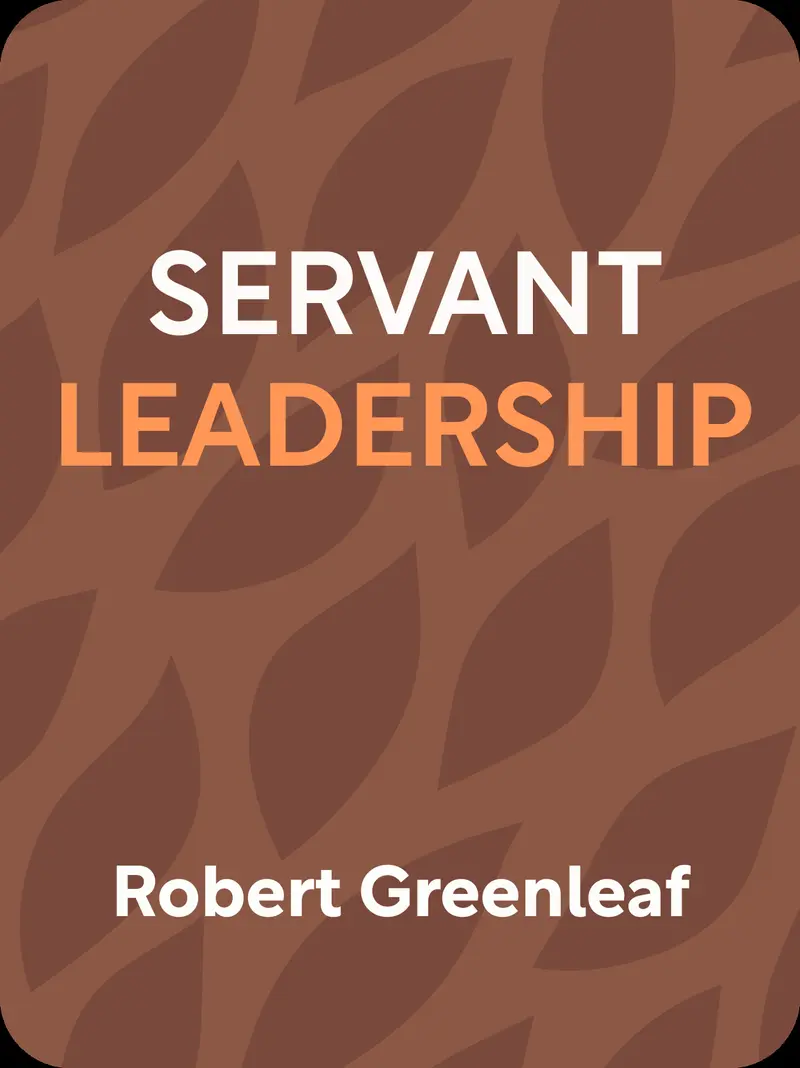
Book summary
Premium summary · Opens in the app · 30 min read
In the late 1960s, Robert K. Greenleaf found himself troubled by a paradox. The institutions that were supposed to hold society together, universities, churches, corporations, government agencies, were increasingly seen as sources of alienation rather than sources of care. Students were protesting on campuses. Workers were questioning the meaning of their labor. Citizens were losing faith in the organizations that shaped their lives.
**Author:** Robert K. Greenleaf
**Estimated Reading Time:** 48 minutes
**What You'll Learn:**
- Why the best leaders serve first and lead second - How to develop the core disciplines of servant leadership: listening, empathy, foresight, and awareness - How institutions can be transformed from within to serve the common good - Why trustees, educators, and business leaders hold the keys to societal regeneration - How to build genuine community in an increasingly bureaucratic world
**Who This Book Is For:**
This book is for anyone who holds responsibility for the growth and well-being of others. It is for executives who suspect that command-and-control leadership has run its course. It is for educators who want to nurture more than test scores. It is for trustees who sense that their role demands more than fiduciary oversight. It is for parents, community organizers, clergy, and citizens who believe that institutions can be made more humane. Most of all, it is for people who have felt the quiet pull toward a different way of leading, one that begins not with ambition but with care.
In the late 1960s, Robert K. Greenleaf found himself troubled by a paradox. The institutions that were supposed to hold society together, universities, churches, corporations, government agencies, were increasingly seen as sources of alienation rather than sources of care. Students were protesting on campuses. Workers were questioning the meaning of their labor. Citizens were losing faith in the organizations that shaped their lives. Greenleaf had spent decades inside one of America's largest corporations, AT&T, where he had risen to become director of management research. He understood how large organizations worked. He knew their strengths and their pathologies. And he had come to believe that the crisis of his time was not fundamentally political or economic. It was a crisis of leadership. But not just any leadership. The problem, as Greenleaf saw it, was that most leaders operated from a leader-first mentality. They sought power, status, and material rewards. They used institutions to accumulate influence. They viewed people as instruments for achieving organizational goals. This model had produced impressive material progress, but it had also produced a deep spiritual emptiness. Greenleaf proposed something radically different. What if leadership began with the desire to serve? What if the best test of a leader was not the size of their organization or the scale of their compensation, but the growth of the people they led? What if institutions could be transformed from within by people who saw their role as service rather than control? These questions animated Greenleaf's thinking for the final decades of his life. In 1970, he published an essay titled "The Servant as Leader." It was not an academic paper. It…
Continue reading in the MinuteRead app
Get the complete 30-minute summary of Servant Leadership
Get the complete summary in the appThe servant-leader is servant first. The desire to serve comes before the desire to lead.
The best test of leadership is the growth of those served. Do they become healthier, wiser, freer, more autonomous?
Foresight is the central ethic of leadership. Failing to anticipate the future is an ethical failure.
Listening is the foundation of servant leadership. Listen to understand, not to respond.
Empathy and acceptance create the conditions for growth. Accept people as they are while believing in their potential.
Awareness is the source of intuition. Cultivate stillness and reflection.
"Servant Leadership" is a strong fit if you want practical ideas around leadership, business, management, especially themes like the servant-leader is servant first. the desire to serve comes before the desire to lead; the best test of leadership is the growth of those served. do they become healthier, wiser, freer, more autonomous?. The MinuteRead summary distills these concepts into a focused read, whether you're deciding whether to buy the book or applying its lessons at work.
Robert K. Greenleaf was an influential thinker and writer on leadership. He introduced the concept of servant leadership, which emphasizes putting others' needs first and helping people develop and perform as highly as possible. Robert K. Greenleaf drew inspiration from literature, particularly Hermann Hesse's "Journey to the East." His ideas emerged from his experiences during the turbulent 1960s and 1970s, especially in college and university settings. Greenleaf's work has had a lasting impact…
View all summaries by Robert K. GreenleafContinue Reading
Access the complete 30-minute summary and thousands more nonfiction books in the MinuteRead app.

Continue reading the complete summary in the MinuteRead app.