MinuteRead
30 min
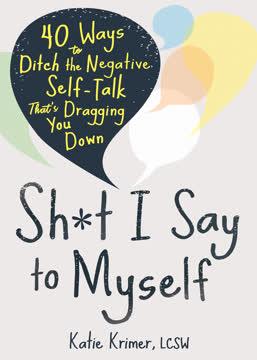
Book summary
by Katie Krimer
Premium summary · Opens in the app · 30 min read
There is a voice inside your head that says things you would never say to another human being. It calls you lazy when you rest, selfish when you set boundaries, and worthless when you fail. It remembers every embarrassing moment from the past decade and replays them at 2 a.m. It has opinions about your body, your career, your relationships, and your future. And for most of your life, you have probably believed every word it says.
**Author:** Katie Krimer **Estimated Reading Time:** 45 minutes
**What You'll Learn:** - Why your brain produces negative thoughts and how to stop believing them - How to build genuine self-compassion without feeling fake - Practical tools for breaking the cycle of comparison, perfectionism, and shame - How to reframe failure and accept difficult emotions - A step-by-step plan for rewiring your inner dialogue
**Who This Book Is For:** Anyone whose inner voice is louder, harsher, and more relentless than they would ever allow a friend to be. If you have ever called yourself stupid for a small mistake, convinced yourself everyone is judging you, or spent hours replaying a conversation you wish had gone differently, this book is for you.
There is a voice inside your head that says things you would never say to another human being. It calls you lazy when you rest, selfish when you set boundaries, and worthless when you fail. It remembers every embarrassing moment from the past decade and replays them at 2 a.m. It has opinions about your body, your career, your relationships, and your future. And for most of your life, you have probably believed every word it says. Katie Krimer knows this voice intimately. As a therapist and self-described recovered negative thinker, she spent years believing the cruel things her mind told her. She assumed the voice was telling the truth. She assumed she was the problem. And she assumed that if she could just try harder, be better, and fix herself, the voice would finally quiet down. None of that worked. What eventually changed everything was a simple but profound realization: thoughts are not facts. The voice in your head is not a reliable narrator. It is not a truth-teller. It is a storyteller, and many of its stories are distorted, exaggerated, or entirely false. This book exists because millions of people suffer from negative self-talk without realizing they have a choice. They believe their thoughts are automatic, uncontrollable, and accurate. They think the voice in their head is simply reporting reality. But the truth is far more hopeful. Your thoughts are mental events, not objective truths. They are electrical signals firing in your brain, and your mind interprets them through a lens of fear, bias, and past experience. That interpretation is often wrong. The problem is not that you have negative thoughts. Every human being does. The problem is that you believe them. You treat them as commands, as evidence, as truth. And when you believe a thought like "I'm not good enough," you act as if it were true. You shrink. You avoid. You give up. You settle. Krimer's approach is different from the typical self-help advice to…
Continue reading in the MinuteRead app
Get the complete 30-minute summary of Sh*t I Say to Myself
Get the complete summary in the appYour thoughts are not facts. They are interpretations, and they are often wrong.
Question your thoughts. Ask if they are 100 percent true and what evidence supports them.
Treat yourself with the same kindness you would offer a friend.
Perfection is a trap. Embrace imperfection and focus on progress.
Practice mindfulness to create space between your thoughts and your reactions.
Accept that life is unfair and focus on what you can control.
"Sh*t I Say to Myself" is a strong fit if you want practical ideas around self help, mental health, psychology, especially themes like your thoughts are not facts. they are interpretations, and they are often wrong; question your thoughts. ask if they are 100 percent true and what evidence supports them. The MinuteRead summary distills these concepts into a focused read, whether you're deciding whether to buy the book or applying its lessons at work.
Katie Krimer is a therapist and author who specializes in helping people overcome negative self-talk and cognitive distortions. She describes herself as a recovered negative thinker, former insomniac, and recuperating perfectionist. Krimer's work primarily focuses on millennial clients, which is reflected in the tone and examples used in her book. Her approach combines elements of cognitive behavioral therapy (CBT) and mindfulness. Krimer's writing style is characterized by its blunt, supportive…
View all summaries by Katie KrimerContinue Reading
Access the complete 30-minute summary and thousands more nonfiction books in the MinuteRead app.

Continue reading the complete summary in the MinuteRead app.