 MinuteRead
30 min
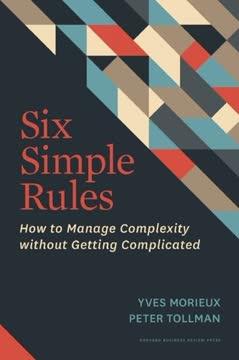
Book summary
by Yves Morieux
Premium summary · Opens in the app · 30 min read
Something strange has happened inside modern organizations. As the business world has become more complex, companies have responded by making themselves more complicated. And while those two words sound similar, they describe very different realities.
By Yves Morieux
**Estimated Reading Time:** 45 minutes
**What You'll Learn:**
- Why most organizations are making themselves slower and less effective while trying to improve - The difference between real complexity and self-inflicted complicatedness - Six practical rules for unlocking cooperation and performance - How to redesign work so people can actually succeed - A complete system for turning organizational friction into competitive advantage
**Who This Book Is For:**
This book is for anyone who has ever felt trapped by their own organization. For managers drowning in meetings while real work stalls. For executives watching good strategies die in the gap between intention and execution. For employees exhausted by rules that seem designed to prevent success rather than enable it. If you have ever wondered why smart people in well-intentioned companies so often fail to work together effectively, this book will show you the answer.
Something strange has happened inside modern organizations. As the business world has become more complex, companies have responded by making themselves more complicated. And while those two words sound similar, they describe very different realities. Complexity is a fact of the external environment. It comes from customers demanding more customized products, regulators imposing new requirements, technologies evolving at accelerating speed, and competitors emerging from unexpected places. A company that wants to serve global markets, innovate continuously, and respond quickly to changing conditions must embrace this complexity. There is no alternative. Complicatedness is different. Complicatedness is what organizations do to themselves in response to complexity. It is the multiplication of procedures, the layering of management, the creation of coordination committees, the explosion of key performance indicators, and the endless requirement to seek approvals before acting. Complicatedness is self-inflicted. Consider the numbers. Over the past fifteen years, the number of procedures, approval layers, and coordination bodies in large companies has grown by roughly 6.7 percent annually. That means the organizational machinery has more than doubled in complexity during that period. The result is predictable. Managers now spend between 40 and 60 percent of their time in coordination meetings rather than doing actual work. Teams waste between 40 and 80 percent of their time on activities that add no value to customers. Employees are three times more likely to be disengaged when they work in complicated environments. The irony is painful. Companies add these structures, rules, and roles with the best of intentions. They want to control risk, ensure quality, align priorities, and prevent mistakes. But each new mechanism creates new interfaces that must be managed, new conflicts that must be resolved, and new constraints that limit what people can actually accomplish. The organization becomes a machine designed to coordinate itself rather than serve its customers. The…
Continue reading in the MinuteRead app
Get the complete 30-minute summary of Six Simple Rules
Get the complete summary in the appComplexity is an opportunity. Complicatedness is the enemy. Do not confuse them.
Understand what people actually do, not what they should do. Examine goals, resources, and constraints.
Reinforce integrators. Give them real power to foster cooperation.
Increase total power. Create new stakes that matter to people and to the company.
Increase reciprocity. Make each person's success depend on the success of others.
Extend the shadow of the future. Tighten feedback loops and shorten project durations.
"Six Simple Rules" is a strong fit if you want practical ideas around business, management, leadership, especially themes like complexity is an opportunity. complicatedness is the enemy. do not confuse them; understand what people actually do, not what they should do. examine goals, resources, and constraints. The MinuteRead summary distills these concepts into a focused read, whether you're deciding whether to buy the book or applying its lessons at work.
Yves Morieux is a management consultant and author known for his work on organizational complexity and efficiency. As a senior partner at Boston Consulting Group, he developed the "Smart Simplicity" approach, which aims to help companies navigate complex business environments. Morieux's expertise lies in helping organizations improve performance by focusing on human interactions and cooperation rather than traditional management structures. He has given TED talks on his management philosophy and…
View all summaries by Yves MorieuxContinue Reading
Access the complete 30-minute summary and thousands more nonfiction books in the MinuteRead app.

Continue reading the complete summary in the MinuteRead app.






