 MinuteRead
30 min
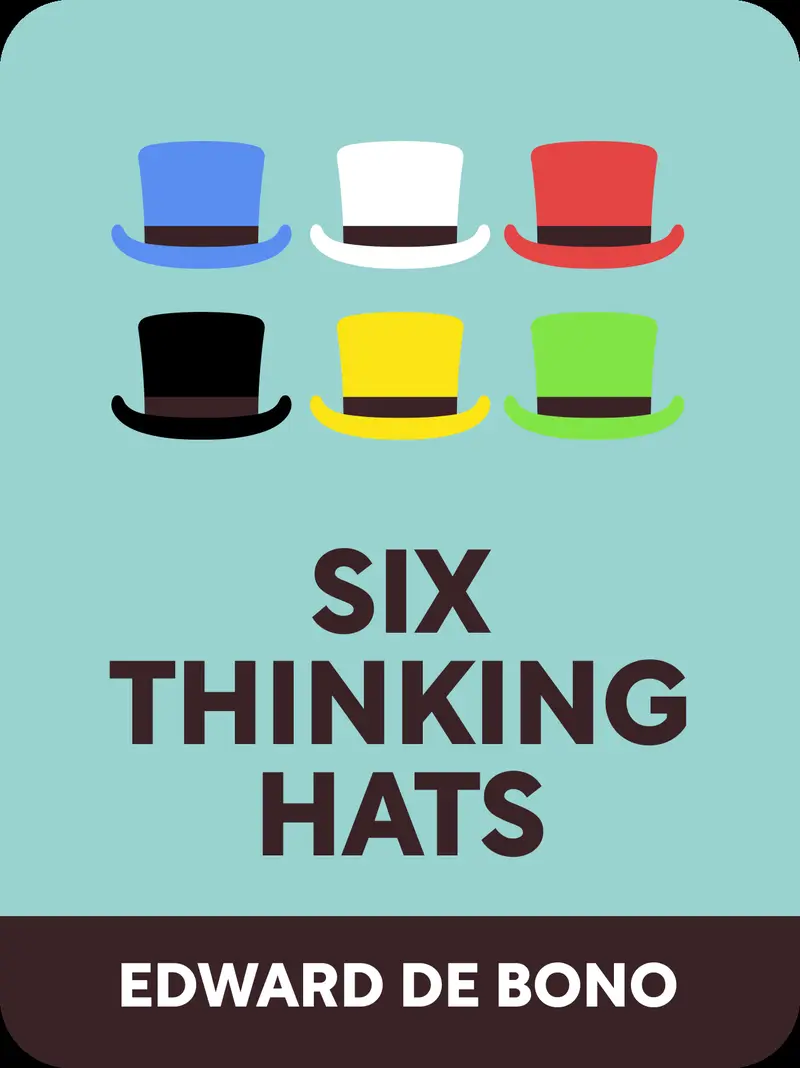
Six Thinking Hats divides thinking into six distinct areas and perspectives, which will help you, your team, and your company tackle problems from different angles, thus solving them with the power of parallel thinking and saving time, money, and energy as a result.
Six Thinking Hats divides thinking into six distinct areas and perspectives, which will help you, your team, and your company tackle problems from different angles, thus solving them with the power of parallel thinking and saving time, money, and energy as a result.
Whenever you start a brainstorming session, first put on the blue hat. It’s the hat to think about thinking. Think of it as zooming out and getting a 10,000 foot view on the problem you’re tackling first.
When wearing it, your goal is to answer questions like:
Why are we here today? What’s the scope of the problem we’re trying to tackle? Which other hats will we need during the session? What are the rules of this meeting?
Since you’re setting up the perimeter of your team effort here, one group member, usually the leader or facilitator of the meeting, will have to keep wearing the blue hat throughout the session, to make sure everyone sticks to the rules.
If that’s you, then it’s your job to tell everyone else when it’s time to switch hats, ask for a conclusion or summary at the end of the session and wrap it up with the concrete, next steps you’ll all take to move things forward.
Name a couple of things the color red reminds you of. I’m guessing right now you’re thinking of at least one of the following: blood, roses, hearts, lipstick, apples, fire, strawberries, cherries, chilis, tomatoes or a scarf or sweater.
These are some of the things most people think of first when trying to associate the color. If you examine the words more closely, you’ll realize most of them are also symbols of certain emotions.
Blood = Anger, violence.
Fire = Rage or passion.
Hearts, roses, lipstick, strawberries = Love.
It shouldn’t come as a surprise then, that the red hat is the hat of emotion. Whoever wears it should be allowed to freely express their emotions about a situation or problems – without any judgement or explanation.
If you’re running the meeting, don’t ask anyone to explain or justify why they feel a certain way. Just go around the room and have everyone tell their emotional view on the matter. It’s important to include everyone, so no one feels left out and to not judge, so people are comfortable voicing unpopular opinions.
This makes sure no resentment or grudges are carried over into the solution of the problem.
Something many people envy me for is that I’m a natural optimist. I get it. This doesn’t come easy to everyone, yet is a huge beneficial factor in overcoming failure, moving on and tackling things with enthusiasm. Especially after wearing the black hat, where you’re…
Continue reading in the MinuteRead app
Get the complete 5-minute summary of Six Thinking Hats
Get the complete summary in the appThe blue hat helps you think about thinking and monitor processes at all times.
It’s important to let employees express their feelings without judgement while wearing the red hat.
Without wearing the yellow hat sometimes, it’ll be hard to stay enthusiastic about work projects and get cracking.
"Six Thinking Hats" is a strong fit if you want practical ideas around business, career, communication skills, especially themes like the blue hat helps you think about thinking and monitor processes at all times; it’s important to let employees express their feelings without judgement while wearing the red hat. The MinuteRead summary distills these concepts into a focused read, whether you're deciding whether to buy the book or applying its lessons at work.
Motivated to help readers with six Thinking Hats divides thinking into six distinct areas and perspectives, Edward de Bono wrote “Six Thinking Hats” to package those ideas for a fast, focused read. In “Six Thinking Hats”, Edward de Bono focuses on six Thinking Hats divides thinking into six distinct areas and perspectives. Through “Six Thinking Hats”, Edward de Bono distills the core ideas on business into lessons readers can absorb in a single short sitting. Readers turn to this work when they …
View all summaries by Edward de BonoContinue Reading
Access the complete 5-minute summary and thousands more nonfiction books in the MinuteRead app.

Continue reading the complete summary in the MinuteRead app.






