MinuteRead
30 min
Book summary
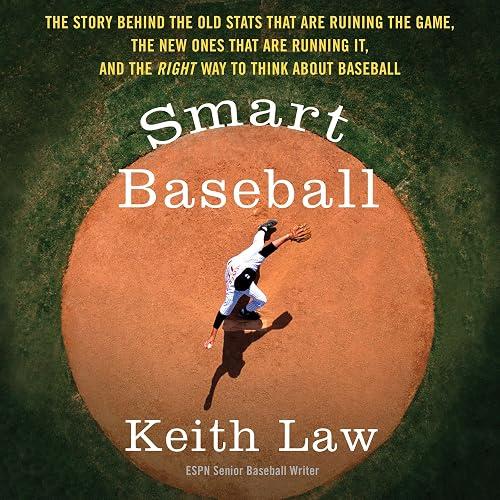
by Keith Law
Premium summary · Opens in the app · 30 min read
Baseball has always been a game of numbers. From the earliest box scores to the endless debates about who belongs in the Hall of Fame, statistics have shaped how fans understand and discuss the sport. For more than a century, a handful of numbers dominated those conversations: batting average, home runs, RBIs, wins, ERA, fielding percentage. These statistics became so deeply embedded in baseball culture that they seemed to define the game itself.
**Author:** Keith Law
**Estimated Reading Time:** 45 minutes
**What You'll Learn:**
- Why many of baseball's most cherished statistics mislead rather than inform - How to evaluate hitters, pitchers, and fielders using metrics that actually matter - Why clutch hitting is a myth and what actually predicts performance under pressure - How the analytics revolution transformed front offices across Major League Baseball - What Statcast and emerging technologies mean for the future of the game
**Who This Book Is For:**
Anyone who loves baseball and wants to understand what actually wins games. Whether you're a casual fan confused by the alphabet soup of modern statistics, a fantasy player looking for an edge, or someone who simply wants to watch the game with sharper eyes, this book gives you the tools to see baseball more clearly.
Baseball has always been a game of numbers. From the earliest box scores to the endless debates about who belongs in the Hall of Fame, statistics have shaped how fans understand and discuss the sport. For more than a century, a handful of numbers dominated those conversations: batting average, home runs, RBIs, wins, ERA, fielding percentage. These statistics became so deeply embedded in baseball culture that they seemed to define the game itself. But there was always a problem lurking beneath the surface. Many of these traditional statistics do not measure what people think they measure. They are contaminated by factors outside a player's control. They reward players for being in favorable situations and punish others for circumstances they cannot influence. They create illusions of value that collapse under scrutiny. Consider the RBI. For decades, driving in runs was treated as a fundamental skill, a measure of a hitter's ability to deliver when it mattered. Players with high RBI totals were celebrated as run producers. Players with low totals were criticized for failing in the clutch. Yet the RBI is largely a function of opportunity. A hitter batting behind players who get on base frequently will have far more chances to drive in runs than an equally talented hitter stuck in a weak lineup. The statistic tells you as much about the teammates as it does about the player. Or consider the pitcher win. A starting pitcher can throw eight innings of one-run baseball and receive a no-decision because his team failed to score. Another pitcher can allow five runs in five innings and earn a win because his offense exploded for ten runs. The win statistic, treated for generations as the ultimate measure of pitching success, is heavily dependent on run support, bullpen performance, and plain luck. These flaws were not hidden. They were visible to anyone who looked carefully. But for a long…
Continue reading in the MinuteRead app
Get the complete 30-minute summary of Smart Baseball
Get the complete summary in the appOn-base percentage matters more than batting average. Avoiding outs is the fundamental currency of offense.
RBIs, pitcher wins, and fielding percentage are deeply flawed statistics that measure context as much as skill.
WAR is the best single measure of total player value, combining offense, defense, baserunning, and positional adjustment
FIP isolates what a pitcher controls: strikeouts, walks, and home runs. It is more predictive than ERA.
Clutch hitting does not exist as a repeatable skill. Good hitters perform well in all situations.
Defensive metrics like UZR and DRS capture range, which fielding percentage ignores entirely.
"Smart Baseball" is a strong fit if you want practical ideas around baseball, sports, mathematics, especially themes like on-base percentage matters more than batting average. avoiding outs is the fundamental currency of offense; rbis, pitcher wins, and fielding percentage are deeply flawed statistics that measure context as much as skill. The MinuteRead summary distills these concepts into a focused read, whether you're deciding whether to buy the book or applying its lessons at work.
Motivated to help readers with 1) Traditional baseball stats are flawed and misleading 2) On-base percentage (OBP) is the most crucial, Keith Law wrote “Smart Baseball” to package those ideas for a fast, focused read. In “Smart Baseball”, Keith Law focuses on 1) Traditional baseball stats are flawed and misleading 2) On-base percentage (OBP) is the most crucial. Through “Smart Baseball”, Keith Law distills the core ideas on baseball into lessons readers can absorb in a single short sitting. Read…
Continue Reading
Access the complete 30-minute summary and thousands more nonfiction books in the MinuteRead app.

Continue reading the complete summary in the MinuteRead app.