 MinuteRead
30 min
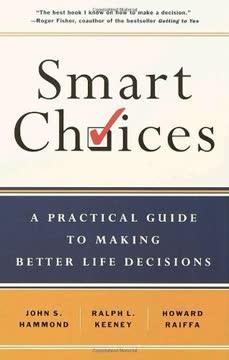
Every day you make decisions. Most are small: what to eat, what to wear, how to spend an hour. But some decisions carry weight. They shape your career, your relationships, your finances, and your future. A single choice can alter the trajectory of your life.
**A Practical Guide to Making Better Decisions**
**By John S. Hammond, Ralph L. Keeney, and Howard Raiffa**
**Estimated Reading Time:** 45 minutes
**What You'll Learn:**
* How to define decision problems so you solve the right issue * A proven framework for structuring any complex decision * How to generate creative alternatives beyond the obvious * Ways to confront uncertainty without being paralyzed by it * How to recognize and avoid the psychological traps that derail good judgment * How to make tradeoffs systematically when objectives conflict
**Who This Book Is For:**
This book is for anyone who faces important decisions and wants a reliable way to think them through. Whether you are choosing a career path, deciding on a major purchase, evaluating a job offer, or making strategic business choices, the methods here will help you approach decisions with clarity and confidence. If you have ever felt stuck between options, regretted a choice, or wondered whether you made the right call, this book provides the tools to do better.
Every day you make decisions. Most are small: what to eat, what to wear, how to spend an hour. But some decisions carry weight. They shape your career, your relationships, your finances, and your future. A single choice can alter the trajectory of your life. Yet most people never learn how to make decisions well. Think about it. You were taught mathematics, history, and science in school. You learned to write essays and solve equations. But were you ever taught a systematic way to make a difficult choice? Probably not. Most people learn decision making through trial and error, absorbing habits from parents, peers, and culture. Some of those habits are useful. Many are not. The result is that smart, capable people often make poor decisions. They rush into choices without thinking through what they really want. They fixate on two options when a third, better option exists. They let fear of loss cloud their judgment. They fall into mental traps that distort their thinking without realizing it. Consider a common scenario. A person receives a job offer in another city. The salary is higher, but the cost of living is greater. The work is interesting, but the hours are longer. The person agonizes for weeks, going back and forth, asking friends for advice, losing sleep. Eventually they make a choice based on a gut feeling, then spend months wondering if they made a mistake. Now imagine a different approach. What if this person had a clear method for thinking through the decision? What if they could identify what truly mattered to them, generate creative options, evaluate the likely consequences, and make tradeoffs deliberately? What if they could confront the…
Continue reading in the MinuteRead app
Get the complete 30-minute summary of Smart Choices
Get the complete summary in the appDefine the problem before trying to solve it. A well-posed problem is half-solved.
Identify your fundamental objectives by asking "why" repeatedly until you reach what truly matters.
Generate creative alternatives. You can never choose an option you have not considered.
Evaluate consequences systematically using a consequences table.
Make tradeoffs explicitly using the even swap method.
Confront uncertainty by constructing risk profiles and estimating probabilities.
"Smart Choices" is a strong fit if you want practical ideas around business, psychology, self help, especially themes like define the problem before trying to solve it. a well-posed problem is half-solved; identify your fundamental objectives by asking "why" repeatedly until you reach what truly matters. The MinuteRead summary distills these concepts into a focused read, whether you're deciding whether to buy the book or applying its lessons at work.
John S. Hammond , Ralph L. Keeney, and Howard Raiffa are experts in decision-making and negotiation analysis. Hammond is a former professor at Harvard and MIT, now a management consultant. Keeney is a professor at the University of Southern California and runs a consulting practice in San Francisco. Raiffa, a professor emeritus at Harvard, is recognized as a founder of decision sciences. With over 50 years of combined research and experience, they collaborated to write Smart Choices, aiming to h…
View all summaries by John S. HammondContinue Reading
Access the complete 30-minute summary and thousands more nonfiction books in the MinuteRead app.

Continue reading the complete summary in the MinuteRead app.






