 MinuteRead
30 min
Book summary
by Andrew Yang
Premium summary · Opens in the app · 5 min read
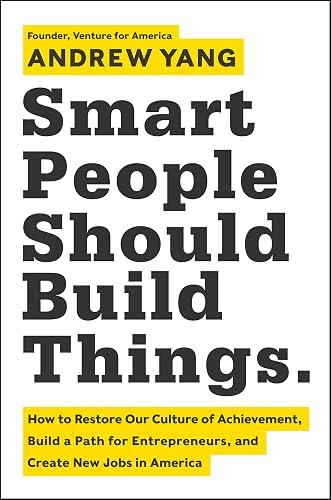
Smart People Should Build Things explains how the current education system works against the economy by producing an endless string of bankers and consultants, instead of the innovators we need, and how we can encourage more young people to become entrepreneurs to solve this problem.
Smart People Should Build Things explains how the current education system works against the economy by producing an endless string of bankers and consultants, instead of the innovators we need, and how we can encourage more young people to become entrepreneurs to solve this problem.
In 2013, Princeton sent admission letters to only 1,931 potential students. But how many applied? Over 26,000. That means just 7.29% actually get into the school. Fewer yet finish the degree they pursue. Other Ivy League schools show similar admission rates. The few who get in are the brightest kids in the US, having passed high school with flying colors.
If a few thousand get into those schools, then that also means a few thousand graduate each year. The big question is: where do the smartest kids go after they’re through with their top notch education?
In the case of Princeton, the vast majority, around 40% end up either in finance or in consulting. That means investment banks, the Big Four, and companies like McKinsey, The Boston Consulting Group or A. T. Kearney. Another 13% then go on to law school and will end up in big law firms.
What draws half of all these smart people into the world of professional services? Money and status.
Imagine being respected and congratulated by everyone you meet for most of your life, because you’re always among the smartest, and then the world’s college elite. The last thing you’d wanna do is lose that status after graduating. Plus, the work is a challenge worthy of your skills and it pays a crap load of money right out the gate. Six-figure starting salaries are not unusual in these industries.
Lastly, the students affect one another. If your roommate comes home from his 10th banking interview, it makes you think whether you shouldn’t try to get one too.
Elite college graduates are perfectly trained to go through the tough application process most of these companies have. After all, it’s not much different from getting into an elite college. What they might not be a good fit for, however, is the work that follows. Hard work, long hours, repetitive tasks, lots of travel and an environment intolerant of mistakes make it tough to stay with these firms. Inside those industries, a common motto is “up or out” – you either get promoted every 2-3 years, or you’re fired. Employee turnover can exceed 30% annually, depending on the company. That means you likely won’t see one of your two cubicle neighbors again next year. The only thing that might be harder than staying with these companies is leaving them. According to Andrew, they’ll tie you down with what he calls “golden handcuffs.”…
Continue reading in the MinuteRead app
Get the complete 5-minute summary of Smart People Should Build Things
Get the complete summary in the appAround half of all elite college graduates end up in finance, law or consulting firms – but mostly for the wrong reasons.
All of these firms then go on to tie you down with golden handcuffs.
Big, professional companies don’t drive the economy forward, startups do, because that’s where innovation happens.
"Smart People Should Build Things" is a strong fit if you want practical ideas around business, career, creativity, especially themes like around half of all elite college graduates end up in finance, law or consulting firms – but mostly for the wrong reasons; all of these firms then go on to tie you down with golden handcuffs. The MinuteRead summary distills these concepts into a focused read, whether you're deciding whether to buy the book or applying its lessons at work.
Andrew Yang is an entrepreneur, author, philanthropist, non-profit leader, and former 2020 presidential candidate. After working as a lawyer and executive at several early-stage technology companies, Andrew eventually became CEO of an education company that became #1 in the country. He then started a national entrepreneurship non-profit, Venture for America, which worked to empower thousands of young entrepreneurs to bring their dynamism to communities across the country, from New Orleans and B…
View all summaries by Andrew YangContinue Reading
Access the complete 5-minute summary and thousands more nonfiction books in the MinuteRead app.

Continue reading the complete summary in the MinuteRead app.






