MinuteRead
30 min
Book summary
by Grant Ginder
Premium summary · Opens in the app · 30 min read
There is a particular kind of loneliness that arrives in middle age, not from being alone, but from being surrounded by people who once knew you completely and now only know the version of you that shows up for weddings and funerals. Grant Ginder's novel lives inside that loneliness. It is a story about a group of friends who met in college, believed they would remain inseparable, and then spent the next seventeen years discovering that closeness has an expiration date no one warns you about.
**Author:** Grant Ginder
**Estimated Reading Time:** 22 minutes
**What This Story Explores:** The long afterlife of friendship, the way time reshapes the people we love into strangers, and the quiet grief of realizing that the life you have is not the one you imagined.
**Who This Book Is For:** Readers who have ever looked at an old photograph and felt the ache of who they used to be, and anyone who understands that growing up often means growing apart.
There is a particular kind of loneliness that arrives in middle age, not from being alone, but from being surrounded by people who once knew you completely and now only know the version of you that shows up for weddings and funerals. Grant Ginder's novel lives inside that loneliness. It is a story about a group of friends who met in college, believed they would remain inseparable, and then spent the next seventeen years discovering that closeness has an expiration date no one warns you about. The novel opens in the present, with Mia boarding a plane at Heathrow, scrolling backward through years of photographs on her phone. She is looking for one image, a single picture of all of them together, the proof that there was a time when the group existed whole. The search itself becomes a kind of archaeology, an excavation of the past that structures the entire book. From that airplane seat, the story spirals backward and forward through time, tracing the threads that bound these people together and the forces that pulled them apart. Ginder has written before about families and the particular cruelties they visit upon one another, but here he turns his attention to chosen family, which may be even more fragile. Friendships do not have the legal bonds of marriage or the biological bonds of blood. They are held together by nothing more than memory and effort, and when those fail, there is no court to adjudicate the dissolution. The novel asks what happens when the people who knew you before you became yourself are no longer part of your life, and whether any amount of nostalgia can bridge the distance. The tone is elegiac but never maudlin. Ginder writes with a sharp, unsentimental eye for the ways people disappoint each other, and an equally sharp ear for the ways they make each other laugh. The novel moves through time with the fluidity of memory itself, jumping from a New Year's Eve party in 2007 to a Halloween gathering in 2022, from a bodega run in the East Village to a memorial service in Brooklyn. The effect is not disorienting but deeply familiar, the way a mind works when it is trying to…
Continue reading in the MinuteRead app
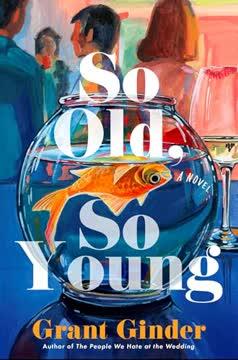
Get the complete 30-minute summary of So Old, So Young
Get the complete summary in the appThere is a particular kind of loneliness that arrives in middle age, not from being alone, but from being surrounded by people who once knew you completely and now only know the version of you that shows up for weddings and funerals. Grant
"So Old, So Young" will resonate with readers drawn to contemporary, literary fiction, book club. There is a particular kind of loneliness that arrives in middle age, not from being alone, but from being surrounded by people who once knew you completely and now only know the ve… Our summary captures the core argument so you can learn the essentials before committing to the full book.
Grant Ginder is a Brooklyn-based novelist and writing instructor at NYU, where he earned his MFA. He has authored five novels, including notable works Let's Not Do That Again and The People We Hate at the Wedding . His writing is characterized by sharp observations about human relationships, humor, and emotional depth. Ginder's work often explores friendship dynamics, aging, and identity through character-driven narratives. His prose style is described as smooth, polished, and literary, with par…
View all summaries by Grant GinderContinue Reading
Access the complete 30-minute summary and thousands more nonfiction books in the MinuteRead app.

Continue reading the complete summary in the MinuteRead app.