MinuteRead
5 min
Book summary
Premium summary · Opens in the app · 5 min read
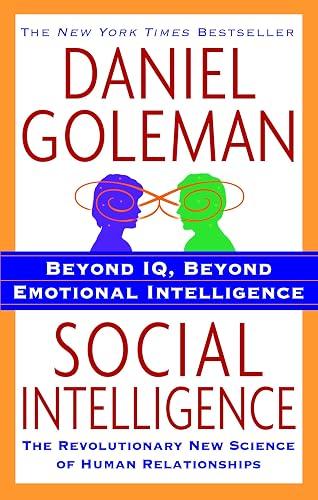
Social Intelligence is a complete guide to the neuroscience of relationships, explaining how your social interactions shape you and how you can use these effects to your advantage.
Social Intelligence is a complete guide to the neuroscience of relationships, explaining how your social interactions shape you and how you can use these effects to your advantage.
A big aspect of social intelligence is how much attention you are able to give to other people. The culture you grew up in, as well as the trajectory of your childhood, are what condition this quality.
One intriguing story that illustrates cultural influence comes from a Japanese psychologist named Takeo Doi. He stayed with an American family while visiting the United States. When he first arrived, his hosts asked whether he would like something to eat. According to his cultural etiquette, Doi politely refused and went starving till the end of the day.
As Doi pointed out, the whole situation would play out very differently in a Japanese home. Nobody would openly talk about hunger. Instead, the hosts would remain observant. They would notice the cues in the guest‘s behavior, signaling that he needs to eat something. The family would simply offer food at the right moment without asking. This shows how different cultures encourage sensitivity to other people’s needs to varying degrees.
Regardless of the cultural influence, attentiveness to others can also be learned in childhood, sometimes in less obvious ways. One 2004 study on squirrel monkeys, for example, showed that moderate levels of stress during childhood can enhance their social skills later on in life. That’s because exposure to mildly stressful experiences increases the courage to explore new environments.
According to Goleman, for humans, this can translate to being more open to other people and their perspectives.
Being socially intelligent is as useful as it can be tiring. That’s because being available for others consumes your body’s resources in a very real way. Fortunately, Goleman also provides practical ideas for how to remain in balance while being socially involved. Care work is quite stressful for most people. Helping someone old or sick for a prolonged time often results in worsening of the carer’s mental health. However – as Janice Kiecolt-Glaser and Ronald Glaser found in their study of women caring for their partners with Alzheimer – constantly looking after someone may also result in weakening the caretaker’s immune system. Being socially involved is important. But if it becomes an overwhelming responsibility, it may harm us, too. What Goleman recommends for overloaded caretakers is encouraging even more social bonds! One person’s capacity to look after others has biological limitations. Therefore, the community should share such responsibilities. If a group of family and friends is taking care of someone, it not only stops being a burden. The community can also become a way to foster new relationships and an increased sense…
Continue reading in the MinuteRead app
Get the complete 5-minute summary of Social Intelligence
Get the complete summary in the appYour culture and upbringing shape your social skills.
Putting social intelligence to use costs energy.
Your social engagement is directly related to your health.
"Social Intelligence" is a strong fit if you want practical ideas around communication skills, communication, culture, especially themes like your culture and upbringing shape your social skills; putting social intelligence to use costs energy. The MinuteRead summary distills these concepts into a focused read, whether you're deciding whether to buy the book or applying its lessons at work.
DANIEL GOLEMAN is the author of the international bestsellers Emotional Intelligence, Working with Emotional Intelligence, and Social Intelligence, and the co-author of the acclaimed business bestseller Primal Leadership. His latest books are What Makes a Leader: Why Emotional Intelligence Matters and The Triple Focus: A New Approach to Education. He was a science reporter for the New York Times, was twice nominated for the Pulitzer Prize, and received the American Psychological Association's Li…
View all summaries by Daniel GolemanContinue Reading
Access the complete 5-minute summary and thousands more nonfiction books in the MinuteRead app.

Continue reading the complete summary in the MinuteRead app.