MinuteRead
30 min
Book summary
Premium summary · Opens in the app · 30 min read
Most of us live as strangers to ourselves. We move through days crowded with obligations, notifications, and the endless hum of activity, rarely pausing long enough to ask why we are doing any of it. We know something is missing. We feel it in the exhaustion that sleep does not cure, in the relationships that feel thin despite constant connection, in the quiet dread that surfaces when the noise finally stops.
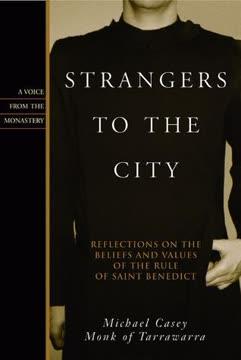
**Author:** Michael Casey **Estimated Reading Time:** 90 minutes
### What You'll Learn
This book offers a rare and intimate look into the wisdom of monastic life, not as an escape from the world but as a radical alternative to the assumptions that govern modern existence. You will learn how silence, stability, obedience, and intentional community create a life of extraordinary depth. You will discover why the ancient practices of Benedictine spirituality remain urgently relevant for anyone seeking meaning beyond consumption, productivity, and self-optimization. You will encounter a vision of human flourishing that prioritizes being over doing, listening over speaking, and love over achievement.
### Who This Book Is For
This book is for anyone who has felt the quiet suspicion that the pace and values of contemporary life are hollowing out the soul. It is for the spiritually curious who find traditional religious language difficult but still hunger for depth. It is for leaders, parents, artists, and seekers who want to understand what a life oriented toward God might actually look like in practice. You do not need to be a monk, a Catholic, or even a Christian to find these pages illuminating. You only need to be willing to consider that the most important things in life cannot be measured, optimized, or posted online.
Most of us live as strangers to ourselves. We move through days crowded with obligations, notifications, and the endless hum of activity, rarely pausing long enough to ask why we are doing any of it. We know something is missing. We feel it in the exhaustion that sleep does not cure, in the relationships that feel thin despite constant connection, in the quiet dread that surfaces when the noise finally stops. The problem is not that we lack information. We have never had more access to advice, strategies, and systems for improving our lives. The problem is that we have lost contact with the deeper currents of human existence. We have forgotten how to listen to anything except the loudest voices. We have become strangers to silence, to patience, to the slow work of becoming fully human. Michael Casey is an Australian Trappist monk who has spent decades living the Benedictine life at Tarrawarra Abbey. He is not writing from a position of theoretical knowledge. He is writing from inside a tradition that has been quietly producing lives of extraordinary depth, stability, and love for over fifteen centuries. The Rule of Saint Benedict, written in the sixth century, is not an abstract philosophical text. It is a practical guide for creating a community where ordinary people can become extraordinary through the daily discipline of seeking God together. What makes Casey's approach different is his refusal…
Continue reading in the MinuteRead app
Get the complete 30-minute summary of Strangers to the City
Get the complete summary in the appAnswer the question: "Friend, for what purpose have you come?" Your life is shaped by what you are actually living for,
Practice small, sustainable asceticism. Choose one comfort to renounce as training in freedom. The goal is not self-puni
Cultivate leisure as receptive presence. Do one ordinary activity each day with complete attention. This is the beginnin
Read slowly for formation, not just quickly for information. Let texts work on you over time rather than extracting data
Love without possession. Notice where you grasp and demand in relationships. Practice giving without expecting anything
Hold everything as gift. Your job, your reputation, your achievements are not your identity. You are a beloved child of
"Strangers to the City" is a strong fit if you want practical ideas around spirituality, religion, catholic, especially themes like answer the question: "friend, for what purpose have you come?" your life is shaped by what you are actually living for,; practice small, sustainable asceticism. choose one comfort to renounce as training in freedom. the goal is not self-puni. The MinuteRead summary distills these concepts into a focused read, whether you're deciding whether to buy the book or applying its lessons at work.
Michael Casey is an Australian Trappist monk and author known for his expertise in Benedictine spirituality. He has written numerous books on monastic life and the Rule of St. Benedict, gaining recognition as a respected voice in contemplative Christian living. Casey's work often focuses on applying monastic principles to contemporary life, both for religious and lay individuals. His writing style is described as clear, thoughtful, and profound, drawing from his extensive knowledge of monastic t…
View all summaries by Michael CaseyContinue Reading
Access the complete 30-minute summary and thousands more nonfiction books in the MinuteRead app.

Continue reading the complete summary in the MinuteRead app.