MinuteRead
26 min
Book summary
Premium summary · Opens in the app · 30 min read
Something peculiar happens when a psychiatrist sits down with a spiritual leader to discuss happiness. You might expect incense, chanting, or mystical pronouncements. Instead, you get a remarkably practical conversation about how the human mind works.
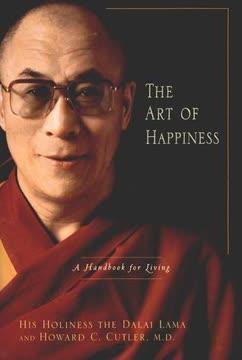
**Author:** His Holiness the Dalai Lama XIV and Howard C. Cutler, M.D.
**Estimated Reading Time:** 45 minutes
**What You'll Learn:** The foundational principles of lasting happiness, why suffering is not an obstacle to joy, how to train your mind for contentment, and practical methods for cultivating compassion, overcoming anger, and building genuine self-confidence.
**Who This Book Is For:** Anyone who has ever wondered if lasting happiness is truly possible. Those exhausted by the pursuit of external success. People navigating loss, anxiety, or anger. And anyone curious about what a lifetime of Buddhist practice combined with Western psychological inquiry can teach us about the art of living well.
Something peculiar happens when a psychiatrist sits down with a spiritual leader to discuss happiness. You might expect incense, chanting, or mystical pronouncements. Instead, you get a remarkably practical conversation about how the human mind works. The Art of Happiness emerged from a series of conversations between Howard Cutler, a psychiatrist trained in Western medicine, and His Holiness the Dalai Lama, the spiritual leader of Tibetan Buddhism. Cutler arrived with clinical questions. He left with a framework for happiness that challenged many assumptions of his profession. The problem this book addresses is ancient and universal. Human beings want to be happy. We organize our lives around this pursuit. We chase promotions, relationships, possessions, and experiences, believing each will deliver the contentment we seek. Yet happiness often remains elusive. It arrives in moments and departs just as quickly. We find ourselves asking whether lasting happiness is even possible, or whether we are destined to bounce between fleeting pleasures and inevitable disappointments. The Dalai Lama's answer is unambiguous. Happiness is not only possible, it is the very purpose of life. And it can be cultivated systematically, through training the mind. What makes this approach different is its refusal to separate the spiritual from the practical. The Dalai Lama does not ask you to adopt a religion. He does not require belief in reincarnation or any particular deity. He speaks instead of basic spirituality, the universal human capacities for compassion, patience, and inner peace. These are not mystical gifts. They are skills. And like any skill, they can be developed through understanding, practice, and sustained effort. Cutler's contribution is equally important. He translates the Dalai Lama's Buddhist framework into language Western readers can grasp. He presses for specifics. He asks the questions a skeptical mind would ask. The result is not a religious text but a practical guide to mental well-being, grounded in ancient wisdom and supported by modern psychological research. The book addresses why people struggle with happiness: we look in the wrong places. We seek satisfaction in external conditions while neglecting the internal causes…
Continue reading in the MinuteRead app
Get the complete 30-minute summary of The Art of Happiness
Get the complete summary in the appHappiness is the purpose of life and can be cultivated through training the mind.
The primary source of happiness is inner contentment, not external conditions.
Compassion is our natural state and essential for both personal happiness and social connection.
Suffering is inevitable, but much of our suffering comes from resistance, not from pain itself.
Anger and hatred are the greatest internal enemies, causing more harm than any external adversary.
Genuine confidence comes from honesty and self-acceptance, not from achievement or comparison.
"The Art of Happiness" is a strong fit if you want practical ideas around philosophy, self help, spirituality—especially themes like happiness is the purpose of life and can be cultivated through training the mind; the primary source of happiness is inner contentment, not external conditions. The MinuteRead summary distills these concepts into a focused read, whether you're deciding whether to buy the book or applying its lessons at work.
Jetsun Jamphel Ngawang Lobsang Yeshe Tenzin Gyatso , born Lhamo Döndrub, is the 14th Dalai Lama. Recognized as the tulku of the 13th Dalai Lama at age two, he became Tibet's ruler at 15. After a failed uprising in 1959, he fled to India, establishing the Tibetan Government in Exile. The first Dalai Lama to travel extensively in the West, he has promoted Buddhism, universal responsibility, and religious harmony globally. A Nobel Peace Prize laureate, he has received numerous honors, including the…
View all summaries by Dalai Lama XIVContinue Reading
Access the complete 30-minute summary and thousands more nonfiction books in the MinuteRead app.

Continue reading the complete summary in the MinuteRead app.