 MinuteRead
30 min
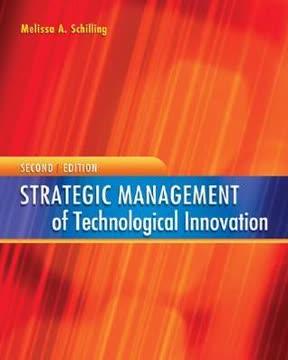
Book summary
Premium summary · Opens in the app · 30 min read
Every organization that survives for more than a few years eventually confronts the same uncomfortable truth: what worked yesterday will not work forever. Markets shift. Technologies advance. Competitors emerge from unexpected places. The companies that thrive are not necessarily the ones with the most resources or the smartest people. They are the ones that understand how to manage the process of technological change.
**Author:** Melissa A. Schilling **Estimated Reading Time:** 45 minutes
How innovation actually happens, why some companies consistently outperform others at bringing new technologies to market, and what strategic choices separate successful innovators from those who watch from the sidelines. You will learn how to evaluate technologies, time market entry, build collaborative networks, protect intellectual property, and construct an organization that turns creativity into commercial reality.
This book is for managers, entrepreneurs, engineers, and students who need to understand not just what innovation is, but how to manage it strategically. Whether you work in a large corporation, a startup, a university, or a government agency, the frameworks here will help you make better decisions about where to invest, when to move, and how to build the capabilities that sustain innovation over time.
Every organization that survives for more than a few years eventually confronts the same uncomfortable truth: what worked yesterday will not work forever. Markets shift. Technologies advance. Competitors emerge from unexpected places. The companies that thrive are not necessarily the ones with the most resources or the smartest people. They are the ones that understand how to manage the process of technological change. This book exists because innovation is not a mystery. It is not the exclusive domain of geniuses working in garages or well-funded labs in Silicon Valley. Innovation follows patterns. It responds to strategic choices. It can be studied, understood, and managed. The problem is that most organizations treat innovation as an event rather than a process. They wait for inspiration to strike. They celebrate the occasional breakthrough while ignoring the systems that made it possible. They invest in research and development without understanding how that investment connects to competitive advantage. They protect intellectual property reflexively without considering whether openness might serve them better. The cost of this confusion is enormous. Studies consistently show that the vast majority of new product development projects fail. Companies pour billions into technologies that never reach the market, or reach it too late, or reach it in a form that customers do not want. The graveyard of failed innovations is filled with products that were technically brilliant but strategically naive. Melissa Schilling offers a different approach. Drawing on decades of research in innovation management, she presents a comprehensive framework for understanding how technological innovation works and how organizations can manage it strategically. Her perspective is both rigorous and practical, grounded in academic research but written for people who need to make decisions in the real world. The central insight is that innovation is a multidimensional challenge. It involves technology, but it also involves markets, organizations, and people. A successful innovation strategy must address all of these dimensions simultaneously. Companies that focus…
Continue reading in the MinuteRead app
Get the complete 30-minute summary of Strategic Management of Technological Innovation
Get the complete summary in the appInnovation is implementation, not just ideas.
Innovation comes from networks, not just individual organizations.
Technologies follow S-curves. Know where you are on the curve.
Network effects can trump technical superiority.
Timing of entry is a strategic choice, not a race.
Strategic intent guides innovation. Without it, you drift.
"Strategic Management of Technological Innovation" is a strong fit if you want practical ideas around business, school, entrepreneurship, especially themes like innovation is implementation, not just ideas; innovation comes from networks, not just individual organizations. The MinuteRead summary distills these concepts into a focused read, whether you're deciding whether to buy the book or applying its lessons at work.
Melissa A. Schilling is the author of Strategic Management of Technological Innovation . As an academic and expert in the field of innovation management, Schilling has made significant contributions to the understanding of technological innovation strategies in business. Her work focuses on how organizations can effectively manage and leverage innovation to gain competitive advantages. Schilling's research and writing style are noted for their clarity and practical applicability, making complex …
View all summaries by Melissa A. SchillingContinue Reading
Access the complete 30-minute summary and thousands more nonfiction books in the MinuteRead app.

Continue reading the complete summary in the MinuteRead app.






