MinuteRead
30 min
Book summary
Premium summary · Opens in the app · 30 min read
Every day, millions of people buy and sell stocks, bonds, currencies, commodities, and futures contracts. Each participant believes they are making a rational decision based on careful analysis. Yet when you step back and look at the collective result of all those decisions, something remarkable emerges: patterns. Repeated formations that appear across markets, across timeframes, and across decades. Patterns that reveal something deeper about how human beings behave when money is on the line.
**Author:** John J. Murphy **Estimated Reading Time:** 45 minutes
**What You'll Learn:**
- Why price charts reveal the collective psychology of every market participant - How to identify trends before the crowd recognizes them - The essential patterns that signal reversals and continuations - How volume confirms or contradicts price movements - The core indicators professionals use to time entries and exits - A complete framework for reading any financial market
**Who This Book Is For:**
- Traders who want to move beyond guesswork and emotion - Investors seeking better timing for their fundamental decisions - Anyone who has ever looked at a price chart and wondered what it means - Students of financial markets who want a rigorous, practical foundation
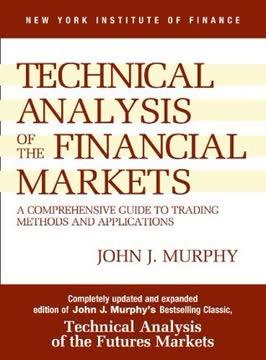
Every day, millions of people buy and sell stocks, bonds, currencies, commodities, and futures contracts. Each participant believes they are making a rational decision based on careful analysis. Yet when you step back and look at the collective result of all those decisions, something remarkable emerges: patterns. Repeated formations that appear across markets, across timeframes, and across decades. Patterns that reveal something deeper about how human beings behave when money is on the line. This is the territory of technical analysis. For much of the twentieth century, technical analysis lived in the shadows of the financial world. Fundamental analysis, with its focus on balance sheets, earnings reports, and economic indicators, was considered the serious discipline. Technical analysts were viewed as chart readers, tea leaf readers, practitioners of a vaguely disreputable art. That perception has changed dramatically. Today, technical analysis is used by professional traders at major banks, hedge funds, and proprietary trading firms. Central banks monitor technical levels. Portfolio managers consult charts before making large allocations. The tools that were once dismissed as folklore are now embedded in the software of every serious trading platform. John J. Murphy wrote *Technical Analysis of the Financial Markets* to provide something that was missing: a comprehensive, rigorous, and accessible guide to the entire field. First published in 1986, the book quickly became the standard reference for anyone serious about understanding how markets actually work. It has been translated into more than a dozen languages and remains required reading for the Chartered Market Technician designation. The book's enduring value comes from its scope. Murphy does not simply explain a few indicators or chart patterns. He builds a complete framework for understanding market behavior. He starts with the philosophical foundations of technical analysis, moves through the mechanics of chart construction, explains trend identification, covers every major pattern, and then integrates volume, moving averages, oscillators, and alternative charting methods into a coherent system. What makes Murphy's approach distinctive is his insistence on understanding why these…
Continue reading in the MinuteRead app
Get the complete 30-minute summary of Study Guide to Technical Analysis of the Financial Markets
Get the complete summary in the appMarket action discounts everything. Price reflects all known information and collective expectations.
Prices move in trends. A trend is more likely to continue than to reverse.
An uptrend is higher highs and higher lows. A downtrend is lower highs and lower lows.
The head and shoulders pattern is the most reliable reversal signal.
Volume confirms price. High volume in the direction of the trend is bullish.
Moving averages reveal the underlying trend. The 50-day and 200-day are the most widely followed.
"Study Guide to Technical Analysis of the Financial Markets" is a strong fit if you want practical ideas around money & finance, economics, especially themes like market action discounts everything. price reflects all known information and collective expectations; prices move in trends. a trend is more likely to continue than to reverse. The MinuteRead summary distills these concepts into a focused read, whether you're deciding whether to buy the book or applying its lessons at work.
John J. Murphy is a renowned American financial market analyst who has made significant contributions to the field of technical analysis. He is widely regarded as the Father of Inter-market Analysis, a discipline that examines relationships between various financial markets. Murphy's expertise and innovative approach to market analysis have earned him recognition from his peers and industry professionals. The International Federation of Technical Analysts honored him with an award for his outsta…
View all summaries by John J. MurphyContinue Reading
Access the complete 30-minute summary and thousands more nonfiction books in the MinuteRead app.

Continue reading the complete summary in the MinuteRead app.