MinuteRead
30 min
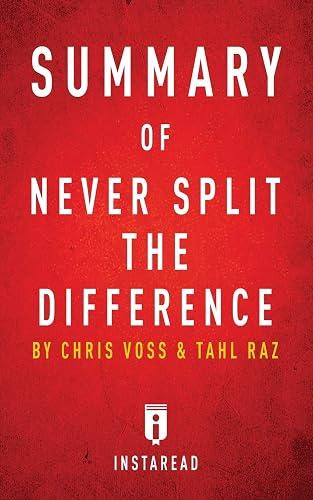
Book summary
by Instaread Summaries
Premium summary · Opens in the app · 30 min read
In 1993, three armed men walked into a Chase Manhattan Bank in Brooklyn and took two tellers hostage. The robbers were cornered, the situation was volatile, and the FBI's crisis negotiation team was called in. Chris Voss was part of that team, and what he learned in the hours that followed would reshape his understanding of human behavior.
**Author:** Chris Voss (with Tahl Raz) **Estimated Reading Time:** 45 minutes
**What You'll Learn:**
- Why emotional intelligence beats logic in high-stakes conversations - The FBI-tested techniques for gaining trust and extracting information - How to turn "no" into the beginning of a productive negotiation - Practical tools for salary discussions, business deals, and everyday conflicts - How to read the hidden signals beneath every conversation
**Who This Book Is For:**
Anyone who has ever walked away from a conversation wishing they had said something different. Whether you are negotiating a salary, managing a team, closing a sale, or simply trying to get your teenager to do their homework, the principles in this book apply. Chris Voss spent decades as the FBI's lead international kidnapping negotiator, and the methods he developed in life-or-death situations translate directly to the conversations that shape your daily life.
In 1993, three armed men walked into a Chase Manhattan Bank in Brooklyn and took two tellers hostage. The robbers were cornered, the situation was volatile, and the FBI's crisis negotiation team was called in. Chris Voss was part of that team, and what he learned in the hours that followed would reshape his understanding of human behavior. The conventional wisdom about negotiation was wrong. For decades, business schools taught that negotiation was a rational exercise. Separate the people from the problem. Focus on interests, not positions. Aim for win-win outcomes. The assumption was that humans could be reasoned with, that logic would prevail, and that emotions were obstacles to overcome. Voss discovered the opposite. In a bank robbery, in a kidnapping, in a salary negotiation, and in a marriage argument, emotions are not obstacles. Emotions are the terrain itself. The hostage takers in Brooklyn did not respond to logical arguments about the futility of their situation. They responded to being heard. When negotiators acknowledged their fear, their desperation, their anger, something shifted. The men began to talk. They began to trust. Eventually, they surrendered peacefully. This insight became the foundation of a career spent negotiating with terrorists, kidnappers, and violent criminals. But Voss realized something else: the same techniques that worked on hostage takers worked on everyone. The human brain does not fundamentally change whether you are negotiating for someone's life or negotiating for a better price on a car. The same fears, desires, and psychological patterns drive every decision. The problem is that most people approach negotiation as a battle of wills. They prepare arguments. They plan counteroffers. They steel themselves for confrontation. And in doing so, they miss the most powerful tool available: genuine human connection. Voss calls this approach "tactical empathy." It is not about being nice. It is not about being…
Continue reading in the MinuteRead app
Get the complete 30-minute summary of Summary of Never Split the Difference
Get the complete summary in the app**Listen deeply.** The most powerful tool in negotiation is genuine attention. Listen to understand, not to respond.
**Mirror to build rapport.** Repeat the last few words of what someone says, then be silent.
**Label emotions.** Say "it seems like you're frustrated" to reduce the intensity of negative feelings.
**Invite "no."** Ask questions that make it easy for the other person to say "no." "No" creates safety and opens honest
**Use calibrated questions.** Ask "how" and "what" questions to put the other person to work solving your problems.
**Anchor first.** Be the first to mention a number. The anchor shapes the entire negotiation.
"Summary of Never Split the Difference" is a strong fit if you want practical ideas around self help, business, psychology, especially themes like **listen deeply.** the most powerful tool in negotiation is genuine attention. listen to understand, not to respond; **mirror to build rapport.** repeat the last few words of what someone says, then be silent. The MinuteRead summary distills these concepts into a focused read, whether you're deciding whether to buy the book or applying its lessons at work.
Motivated to help readers with "Effective listening is the cheapest, Instaread Summaries wrote “Summary of Never Split the Difference” to package those ideas for a fast, focused read. In “Summary of Never Split the Difference”, Instaread Summaries focuses on "Effective listening is the cheapest. Through “Summary of Never Split the Difference”, Instaread Summaries distills the core ideas on self help into lessons readers can absorb in a single short sitting. Readers turn to this work when they wa…
Continue Reading
Access the complete 30-minute summary and thousands more nonfiction books in the MinuteRead app.

Continue reading the complete summary in the MinuteRead app.