MinuteRead
30 min
Book summary
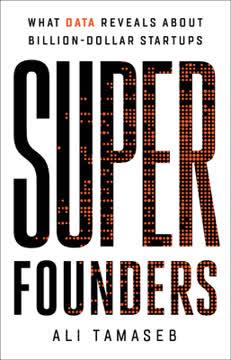
by Ali Tamaseb
Premium summary · Opens in the app · 30 min read
Every year, thousands of entrepreneurs launch startups with dreams of building the next billion-dollar company. They read blog posts about famous founders, watch keynote speeches, and try to reverse-engineer success from a handful of high-profile stories. The problem is that most of what they learn is wrong.
**Author:** Ali Tamaseb
**Estimated Reading Time:** 45 minutes
**What You'll Learn:**
- The real data behind billion-dollar startup founders - Why most myths about unicorn founders are wrong - The patterns that actually predict startup success - How to apply these insights to your own venture
**Who This Book Is For:**
Aspiring founders, early-stage startup employees, investors, and anyone who wants to understand what actually separates billion-dollar companies from the thousands that fail. If you have ever wondered whether you have what it takes to build something massive, this book will replace guesswork with evidence.
Every year, thousands of entrepreneurs launch startups with dreams of building the next billion-dollar company. They read blog posts about famous founders, watch keynote speeches, and try to reverse-engineer success from a handful of high-profile stories. The problem is that most of what they learn is wrong. The popular narrative about billion-dollar startups is built on survivorship bias and selective memory. We hear about the twenty-year-old college dropout who coded a product in a dorm room and became a billionaire. We hear about the visionary founder who predicted the future with uncanny accuracy. We hear about the startup that faced no competition and won through sheer originality. These stories are compelling, but they are not representative. Ali Tamaseb set out to answer a simple question: what do the founders of billion-dollar startups actually have in common? Unlike most commentators who rely on anecdotes, Tamaseb did something unusual. He built a dataset. He collected information on nearly every billion-dollar startup founded between 2005 and 2018, examining over 65 factors across hundreds of companies. He analyzed founder backgrounds, market conditions, funding strategies, product characteristics, competitive dynamics, and dozens of other variables. What he found was surprising. Many of the most cherished beliefs about startup success turned out to be false. The average founder of a billion-dollar company is not a college dropout. Most unicorn founders did not start their companies in garages. Most faced significant competition from day one. Most did not go through accelerator programs. And most importantly, almost all of them had been building things for years before they started the company that made them successful. The title of the book comes from a specific finding. Tamaseb discovered that founders who had previously built a company that reached at least $10 million in revenue or exit value were 3.3 times more likely to create a billion-dollar startup in their next venture. These are the Super Founders. But the title also points to something broader: the qualities that make someone capable of building something extraordinary are not mysterious or rare. They are observable, measurable, and learnable. This book matters because the stakes are enormous. Startups create…
Continue reading in the MinuteRead app
Get the complete 30-minute summary of Super Founders
Get the complete summary in the appBuild things. The founders of billion-dollar companies are builders first and foremost.
Age does not matter. The median age of billion-dollar founders is 34, with a range from 18 to 68.
Differentiate meaningfully. Over two-thirds of billion-dollar startups had highly differentiated products.
Time the market. Many successful companies built on ideas that had failed before, but entered at the right moment.
Embrace competition. Most billion-dollar startups competed against incumbents and won by being better.
Build moats. Engineering complexity, network effects, and brand strength protect your position.
"Super Founders" is a strong fit if you want practical ideas around business, startup, entrepreneurship, especially themes like build things. the founders of billion-dollar companies are builders first and foremost; age does not matter. the median age of billion-dollar founders is 34, with a range from 18 to 68. The MinuteRead summary distills these concepts into a focused read, whether you're deciding whether to buy the book or applying its lessons at work.
Ali Tamaseb is a partner at DCVC, a prominent Silicon Valley venture capital firm managing over $2 billion and investing in numerous billion-dollar startups. He holds leadership positions and board seats across various companies globally. Tamaseb has been recognized with the British Alumni Award and Imperial College President's Medal for Outstanding Achievement. His work has been featured in major media outlets such as BBC, TED, and Forbes. As a respected figure in the startup and investment wor…
View all summaries by Ali TamasebContinue Reading
Access the complete 30-minute summary and thousands more nonfiction books in the MinuteRead app.

Continue reading the complete summary in the MinuteRead app.