MinuteRead
30 min
Book summary
by Frank Miller
Premium summary · Opens in the app · 30 min read
Every day, trillions of dollars change hands in financial markets around the world. Currencies, stocks, commodities, and cryptocurrencies all fluctuate in value, creating opportunities for profit and risk of loss. Yet for all the sophistication of modern trading platforms and the endless stream of financial news, most traders still lose money.
### By Frank Miller
**Estimated Reading Time:** 45 minutes
**What You'll Learn:**
- How to identify high-probability supply and demand zones on any chart - The core economic principles that drive all price movement - A systematic scoring method for evaluating trade opportunities - How to combine multiple timeframes for stronger trade setups - Practical risk management strategies that protect your capital - The psychological habits that separate professional traders from amateurs
**Who This Book Is For:**
This book is for traders who have struggled with inconsistent results. It is for anyone who has watched price move exactly as predicted, only to miss the entry. It is for those who have tried indicator-based strategies and found them lacking. And it is for beginners who want to build their trading foundation on solid economic principles rather than gimmicks.
Every day, trillions of dollars change hands in financial markets around the world. Currencies, stocks, commodities, and cryptocurrencies all fluctuate in value, creating opportunities for profit and risk of loss. Yet for all the sophistication of modern trading platforms and the endless stream of financial news, most traders still lose money. The statistics are sobering. Depending on which study you consult, somewhere between 70 and 90 percent of retail traders fail to achieve consistent profitability. They blow up accounts, abandon strategies, and eventually walk away convinced that trading is nothing more than gambling dressed up in financial terminology. But here is what most failed traders never understand: the market is not random. Beneath the seemingly chaotic movement of prices lies a fundamental economic principle that has governed trade since the first marketplace opened thousands of years ago. That principle is supply and demand. Frank Miller wrote this book to bridge a critical gap in trading education. Most books on technical analysis teach you to memorize patterns. Most books on trading psychology tell you to control your emotions. Most books on risk management give you formulas for position sizing. But very few books explain why prices move in the first place, and fewer still show you how to build a complete trading approach around that understanding. The problem with pattern-based trading is that patterns fail. The problem with indicator-based trading is that indicators lag. The problem with purely psychological approaches is that no amount of mental discipline can save a strategy that lacks a sound foundation. What traders need is a way to understand the underlying mechanics of price movement, and that is exactly what supply and demand trading provides. Miller's approach is different because it starts with first principles. Instead of asking you to memorize chart patterns or indicator settings, he asks you to understand something more fundamental: every price movement in every…
Continue reading in the MinuteRead app
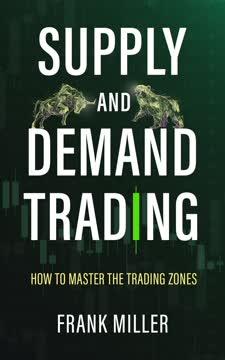
Get the complete 30-minute summary of SUPPLY AND DEMAND TRADING
Get the complete summary in the appPrice movement is driven by imbalances between supply and demand. Learn to identify these imbalances on price charts.
High-probability zones have a clear base, a strong move away, and extended-range candlesticks marking the departure.
Use a scoring system to filter out low-probability zones and remove emotional decision-making.
Always check multiple timeframes. Longer timeframes take priority and reveal the dominant trend.
Wait for price action confirmation at zones before entering trades. Pin bars, engulfing patterns, and inside bars are ke
Never risk more than 1 to 2 percent of your capital on any single trade.
"SUPPLY AND DEMAND TRADING" is a strong fit if you want practical ideas around money & finance, especially themes like price movement is driven by imbalances between supply and demand. learn to identify these imbalances on price charts; high-probability zones have a clear base, a strong move away, and extended-range candlesticks marking the departure. The MinuteRead summary distills these concepts into a focused read, whether you're deciding whether to buy the book or applying its lessons at work.
Frank Miller is the author of "Supply and Demand Trading," a book that aims to provide traders with insights into using supply and demand principles in financial markets. Miller's writing style is described as clear and concise, making complex topics accessible to readers with varying levels of experience. He emphasizes practical applications and real-world examples in his work. Miller focuses on teaching traders how to identify and utilize supply and demand zones for more effective trading stra…
View all summaries by Frank MillerContinue Reading
Access the complete 30-minute summary and thousands more nonfiction books in the MinuteRead app.

Continue reading the complete summary in the MinuteRead app.