MinuteRead
30 min
Book summary
Premium summary · Opens in the app · 30 min read
Every day, millions of people buy and sell stocks, bonds, commodities, and currencies. They make decisions based on earnings reports, economic data, news headlines, and gut feelings. Yet most of them lose money. Why? Because they are missing the single most important source of information available to them: the price itself.
**Author:** John J. Murphy
**Estimated Reading Time:** 45 minutes
**What You'll Learn:** - Why price charts reveal the psychology of market participants - How to identify and follow trends with confidence - The essential tools every technical analyst needs - How to combine price, volume, and momentum for better decisions - The role of cycles, intermarket relationships, and technology - How to manage risk and protect capital
**Who This Book Is For:** This book is for anyone who wants to understand how financial markets actually work. Whether you are a beginner trying to make sense of price charts or an experienced investor looking to sharpen your analytical skills, the principles here will give you a structured way to read market behavior. If you have ever wondered why prices move the way they do, or how professionals decide when to buy and sell, this book will answer those questions.
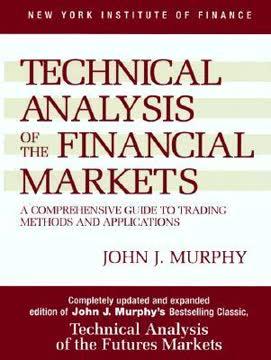
Every day, millions of people buy and sell stocks, bonds, commodities, and currencies. They make decisions based on earnings reports, economic data, news headlines, and gut feelings. Yet most of them lose money. Why? Because they are missing the single most important source of information available to them: the price itself. John J. Murphy wrote *Technical Analysis of the Financial Markets* to solve a fundamental problem. Most investors spend their time asking what to buy. They rarely ask when to buy it, when to sell it, or how to manage the risk of being wrong. Technical analysis answers those questions. It is not a crystal ball. It is a disciplined method for reading the story that prices are already telling. The core premise of technical analysis is simple but profound. Markets are driven by human decisions. Those decisions are shaped by fear, greed, hope, and uncertainty. When thousands or millions of people act on those emotions, their collective behavior creates patterns in price movements. Those patterns repeat because human nature does not change. A trader who learns to read those patterns gains a genuine edge. Murphy's approach stands apart because of its comprehensiveness. He does not present technical analysis as a collection of tricks or indicators. He presents it as a complete framework for understanding how financial markets function. Price action, volume, open interest, trends, chart patterns, oscillators, cycles, and intermarket relationships all fit together into a coherent system. The book matters because it addresses a persistent failure in how most people approach markets. The typical investor buys a stock because someone on television recommended it or because it "feels right." Then they hold on as it falls, hoping it will recover. They have no plan for when to exit, no method for measuring risk, and no framework for understanding what the…
Continue reading in the MinuteRead app
Get the complete 30-minute summary of Technical Analysis of the Financial Markets
Get the complete summary in the appPrice reflects everything. Study the chart, not the news.
The trend is your friend. Trade with it, not against it.
Support and resistance are zones, not exact prices.
Volume confirms price. Always check volume before acting on a signal.
Divergences are warnings. They reveal when a trend is weakening.
Oscillators are for sideways markets. Do not use them to fight strong trends.
"Technical Analysis of the Financial Markets" is a strong fit if you want practical ideas around finance, business, economics, especially themes like price reflects everything. study the chart, not the news; the trend is your friend. trade with it, not against it. The MinuteRead summary distills these concepts into a focused read, whether you're deciding whether to buy the book or applying its lessons at work.
John J. Murphy is a renowned financial market analyst, recognized as the Father of Inter-market Analysis. His expertise in technical analysis has earned him acclaim within the financial industry. Murphy's contributions to the field include developing innovative approaches to market analysis and authoring influential books on the subject. His work has been widely adopted by traders and analysts worldwide. Murphy's insights have shaped the way many professionals approach financial markets, earning…
View all summaries by John J. MurphyContinue Reading
Access the complete 30-minute summary and thousands more nonfiction books in the MinuteRead app.

Continue reading the complete summary in the MinuteRead app.