MinuteRead
30 min
Book summary
Premium summary · Opens in the app · 30 min read
We swim in an ocean of feedback. Every day, in ways large and small, people tell us how we are doing. A boss comments on a presentation. A partner mentions that we seemed distracted at dinner. A friend suggests we might be working too hard. A customer leaves a review. A teenager rolls their eyes at our advice. The feedback never stops.
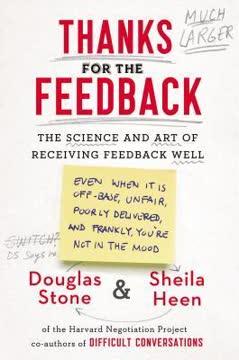
**The Science and Art of Receiving Feedback Well**
**Authors:** Douglas Stone and Sheila Heen
**Estimated Reading Time:** 45 minutes
**What You'll Learn**
Why receiving feedback is one of the most important skills you can develop, how to manage the emotional reactions that block your ability to learn, the three types of feedback and why confusing them causes problems, how to separate the message from the messenger, and practical strategies for turning even poorly delivered criticism into genuine growth.
**Who This Book Is For**
Anyone who has ever felt defensive, hurt, or confused when receiving feedback. Anyone who wants to improve but struggles to hear criticism. Anyone who manages people, works on a team, or navigates relationships where honest communication matters. If you suspect you could be learning more from the feedback you receive but something keeps getting in the way, this book is for you.
We swim in an ocean of feedback. Every day, in ways large and small, people tell us how we are doing. A boss comments on a presentation. A partner mentions that we seemed distracted at dinner. A friend suggests we might be working too hard. A customer leaves a review. A teenager rolls their eyes at our advice. The feedback never stops. And yet most of us have never been taught how to receive it well. This is a strange gap in our education. We spend years learning to read, write, calculate, and analyze. We receive training on how to give feedback, how to deliver tough messages, how to conduct performance reviews. But almost no one teaches us what to do when we are on the receiving end. We are expected to figure it out on our own, and most of us do not. Instead, we develop habits that protect us in the short term but limit us in the long term. We get defensive. We explain, justify, and argue. We dismiss the feedback as wrong or the giver as biased. We smile and nod while internally rejecting everything that was said. We accept the feedback too quickly, taking it as a verdict on our worth as a human being. Or we avoid feedback entirely, steering clear of conversations that might sting. These reactions are understandable. Feedback can hurt. It can feel unfair, misguided, or personal. It can trigger deep anxieties about who we are and whether we are good enough. But when we respond this way, we lose something valuable. We lose the chance to see ourselves as others see us. We lose the opportunity to learn and grow. We lose the relationships that depend on honest communication. Douglas Stone and Sheila Heen have spent decades studying difficult conversations. They teach negotiation at Harvard…
Continue reading in the MinuteRead app
Get the complete 30-minute summary of Thanks for the Feedback
Get the complete summary in the appReceiving feedback well is a learnable skill, and it is the most important variable in any feedback conversation.
Feedback comes in three types: appreciation, coaching, and evaluation. Know which one you are receiving and which one yo
When feedback seems wrong, resist the urge to dismiss it. Listen for what might be right.
Separate the feedback from your feelings about the giver. You can learn from someone even when the relationship is imper
When a feedback conversation goes off the rails, look for switchtracking. Name the two tracks and address them one at a
Your identity is not on the line. You can make mistakes without being a failure. You can cause harm without being a bad
"Thanks for the Feedback" is a strong fit if you want practical ideas around business, leadership, self help—especially themes like receiving feedback well is a learnable skill, and it is the most important variable in any feedback conversation; feedback comes in three types: appreciation, coaching, and evaluation. know which one you are receiving and which one yo. The MinuteRead summary distills these concepts into a focused read, whether you're deciding whether to buy the book or applying its lessons at work.
Douglas Stone is a lecturer at Harvard Law School and a founder of Triad Consulting Group. He co-authored "Thanks for the Feedback" with Sheila Heen, drawing on their expertise in negotiation and difficult conversations. Stone's work focuses on interpersonal communication, conflict resolution, and organizational dynamics. He has co-authored other influential books in the field, including "Difficult Conversations" and "The Power of Thanks." Stone's research and teachings have been applied in vari…
View all summaries by Douglas StoneContinue Reading
Access the complete 30-minute summary and thousands more nonfiction books in the MinuteRead app.

Continue reading the complete summary in the MinuteRead app.