 MinuteRead
30 min
Book summary
Premium summary · Opens in the app · 30 min read
Most people approach accounting the way they approach a foreign language they were forced to study in school. They memorize enough vocabulary to pass the test, then promptly forget everything. The result is a strange phenomenon: intelligent, capable adults who run businesses, manage teams, and make important financial decisions while secretly feeling lost when someone mentions a balance sheet or asks about accruals.
**Author:** Darrell Mullis **Estimated Reading Time:** 45 minutes
**What You'll Learn:** How to read and understand the three essential financial statements, why the fundamental accounting equation always balances, the critical difference between profit and cash, and how to use financial information to make smarter business decisions.
**Who This Book Is For:** Entrepreneurs, small business owners, students, managers, and anyone who has ever felt intimidated by accounting terminology but needs to understand what the numbers really mean.
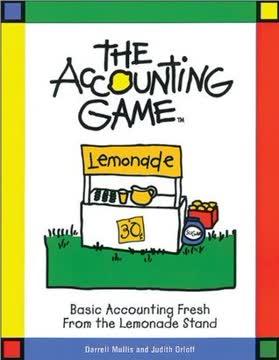
Most people approach accounting the way they approach a foreign language they were forced to study in school. They memorize enough vocabulary to pass the test, then promptly forget everything. The result is a strange phenomenon: intelligent, capable adults who run businesses, manage teams, and make important financial decisions while secretly feeling lost when someone mentions a balance sheet or asks about accruals. Darrell Mullis wrote The Accounting Game to solve this problem permanently. His insight was simple but profound. Instead of teaching accounting as a set of abstract rules and definitions, he teaches it through the story of a lemonade stand. A child's lemonade stand, complete with five-dollar investments from parents, trips to the grocery store for sugar and lemons, and the thrill of the first sale. Through this humble business, every major accounting concept becomes visible and understandable. The problem this book addresses is not a lack of intelligence among readers. It is a failure of traditional accounting education. Most textbooks begin with definitions, then move to rules, then expect students to understand how it all fits together. This approach works for people who already think in abstract terms. It fails for everyone else. The Accounting Game reverses the process. It starts with a real business doing real things, then introduces the accounting concepts as tools to understand what is happening. Why does this matter? Because accounting is the language of business. Every decision about pricing, hiring, expansion, borrowing, and investing ultimately shows up in financial statements. If you cannot read those statements, you are operating with one eye closed. You might get lucky, but you are more likely to make avoidable mistakes. You might run a profitable business into the ground because you do not understand cash flow. You might make investment decisions based on incomplete information. You might miss warning signs that were visible in the numbers all along. The author's approach is different because it treats accounting as a game. Not a game in the sense of something trivial, but a game in the sense of a structured activity with rules, players, and objectives. When you play a game, you learn by doing. You make moves, see results, adjust your strategy. The Accounting Game invites you to play along.…
Continue reading in the MinuteRead app
Get the complete 30-minute summary of The Accounting Game
Get the complete summary in the appAssets equal liabilities plus owner's equity, always.
The balance sheet shows what you own, what you owe, and what is left over.
The income statement shows whether you made money over a period of time.
The cash flow statement shows where cash came from and where it went.
Profit and cash are not the same thing.
Accrual accounting records revenue when earned and expenses when incurred, regardless of cash timing.
"The Accounting Game" is a strong fit if you want practical ideas around business, accounting, finance, especially themes like assets equal liabilities plus owner's equity, always; the balance sheet shows what you own, what you owe, and what is left over. The MinuteRead summary distills these concepts into a focused read, whether you're deciding whether to buy the book or applying its lessons at work.
Darrell Mullis is an author and educator known for his work in simplifying complex accounting concepts. Darrell Mullis co-authored "The Accounting Game" with Judith Orloff, aiming to make accounting accessible to non-financial professionals and beginners. The book's innovative approach uses a lemonade stand business example to explain fundamental accounting principles. Mullis's writing style is noted for its clarity and ability to break down complicated ideas into easily digestible formats. His …
View all summaries by Darrell MullisContinue Reading
Access the complete 30-minute summary and thousands more nonfiction books in the MinuteRead app.

Continue reading the complete summary in the MinuteRead app.






