 MinuteRead
30 min
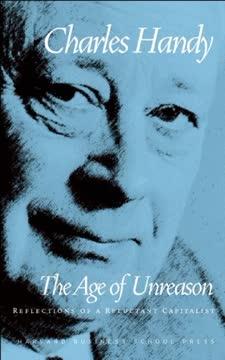
Book summary
Premium summary · Opens in the app · 30 min read
There was a time, not so long ago, when the future felt reasonably predictable. You could finish school, join an organization, work hard, and expect a steady progression through the ranks until retirement. Companies grew in predictable ways. Careers followed recognizable paths. The rules of the game were understood, even if the game itself was never easy.
**Author:** Charles B. Handy **Estimated Reading Time:** 45 minutes
**What You'll Learn:**
- Why the old rules of work, organizations, and careers no longer apply - How to build organizations that thrive amid constant disruption - How to design a career that gives you freedom, meaning, and security - Why education must be reinvented for a world that never stops changing - How to think differently about the future and your place in it
**Who This Book Is For:**
This book is for anyone who senses that the familiar world of stable jobs, predictable careers, and orderly organizations is slipping away. It is for managers trying to lead in confusing times, for professionals wondering what comes next, for parents thinking about their children's education, and for anyone who wants to stop being a passive victim of change and start shaping the future deliberately.
There was a time, not so long ago, when the future felt reasonably predictable. You could finish school, join an organization, work hard, and expect a steady progression through the ranks until retirement. Companies grew in predictable ways. Careers followed recognizable paths. The rules of the game were understood, even if the game itself was never easy. That world is gone. Charles Handy wrote *The Age of Unreason* to make sense of a transformation that was already underway in the late 1980s and has only accelerated since. He saw that the changes reshaping work and society were not minor adjustments to familiar patterns. They were fundamental breaks with the past. The old assumptions were crumbling, and new ones had not yet taken their place. Handy called this new era the Age of Unreason because it defies the logic of the past. Change no longer moves in straight lines. It jumps. It surprises. It makes obsolete the very skills and structures that once guaranteed success. The future, Handy argues, is not something we can predict with confidence. It is something we must learn to shape. This is an unsettling message. Most of us prefer certainty. We want to know what will happen next, what skills will be valuable, what choices will lead to security. But Handy insists that the search for certainty is itself a trap. The only prediction that will hold true, he writes, is that no predictions will hold true. Yet this is not a pessimistic book. Handy's central insight is that discontinuity, while frightening, is also liberating. When the old rules break down, new possibilities open up. The future becomes something we can create rather than something we must endure. The Age of Unreason is an invitation to think the unlikely and do the unreasonable. The book is built around a series of powerful ideas…
Continue reading in the MinuteRead app
Get the complete 30-minute summary of The Age of Unreason
Get the complete summary in the appWe live in an Age of Unreason, where discontinuous change is the norm and the only prediction that holds true is that no
The future is not something that happens to us. It is something we shape through bold imaginings and unreasonable action
The shamrock organization has three leaves: the professional core, the contractual fringe, and the flexible labor force.
Federalism combines the benefits of smallness with the resources of size. Decisions should be made at the lowest appropr
In the information age, value comes from intelligence, information, and ideas. The formula is I3 = AV.
The portfolio career replaces the single job with a balanced collection of wage work, fee work, homework, gift work, and
"The Age of Unreason" is a strong fit if you want practical ideas around business, management, philosophy, especially themes like we live in an age of unreason, where discontinuous change is the norm and the only prediction that holds true is that no; the future is not something that happens to us. it is something we shape through bold imaginings and unreasonable action. The MinuteRead summary distills these concepts into a focused read, whether you're deciding whether to buy the book or applying its lessons at work.
Charles Handy is an Irish author and philosopher known for his work in organizational behavior and management. He developed influential concepts such as the "portfolio worker" and the "Shamrock Organization," which have shaped modern business thinking. Handy's extensive experience as a professor at London Business School informs his writing, which often focuses on the changing nature of work and organizations. His books, including The Age of Unreason, are renowned for their forward-thinking appr…
View all summaries by Charles B. HandyContinue Reading
Access the complete 30-minute summary and thousands more nonfiction books in the MinuteRead app.

Continue reading the complete summary in the MinuteRead app.






