 MinuteRead
30 min
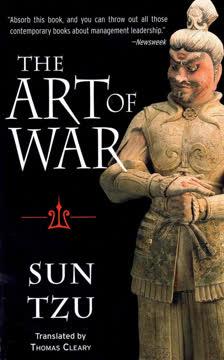
“ The victorious strategist only seeks battle after the victory has been won, whereas he who is destined to defeat first fights and afterwards looks for victory.
**Author:** Sun Tzu **Estimated Reading Time:** 45 minutes
The principles of strategy that have guided military commanders, business leaders, and political thinkers for over two millennia. You will learn why the greatest victories require no battle at all, how deception shapes every encounter, why knowing yourself and your opponent determines outcomes before conflict begins, and how to apply these timeless insights to any competitive situation you face.
This book is for anyone who faces opposition, competition, or conflict. Whether you lead a team, negotiate deals, navigate office politics, or simply want to think more strategically about the challenges in your life, Sun Tzu's framework offers a lens for seeing situations clearly and acting decisively. You do not need to be a general to benefit from understanding how position, timing, and information determine who prevails.
Most books about strategy focus on how to fight. They teach tactics, maneuvers, and techniques for overpowering opponents. Sun Tzu takes the opposite approach. His central insight, radical then and radical now, is that the highest form of victory requires no fighting at all. The Art of War emerged during China's Warring States period, an era of brutal, protracted conflict among rival kingdoms. Sun Tzu served as a military commander and adviser, and his treatise reflects hard-won experience rather than abstract philosophy. He had seen what happens when wars drag on: treasuries empty, populations suffer, and even the victor emerges weakened and vulnerable. From this grim reality, he developed a system designed to win quickly, decisively, and with minimal destruction. The problem the book addresses is timeless. People enter conflicts unprepared, driven by emotion rather than calculation. They fight battles they should avoid and avoid confrontations they should embrace. They misunderstand their own capabilities, misread their opponents, and ignore the terrain, both literal and metaphorical, on which they stand. The result is wasted effort, unnecessary loss, and victories that cost more than defeat. Sun Tzu's approach differs because it treats warfare as a matter of knowledge, positioning, and psychology rather than brute force. He does not celebrate courage or glorify combat. He respects it as a dangerous, expensive, and often avoidable enterprise that should be undertaken only when absolutely necessary and then concluded with maximum speed. His ideal general wins without fighting, subdues enemies through superior positioning, and makes victory appear effortless because it was achieved before the battle began. This may sound paradoxical. How can you win without fighting? The answer lies in Sun Tzu's understanding of conflict as a contest of systems, not just soldiers. When you disrupt an opponent's plans, isolate them from allies, control the information they receive, and position yourself so advantageously that resistance becomes futile, you have already won. The…
Continue reading in the MinuteRead app
Get the complete 30-minute summary of The Art of War Landmark Edition
Get the complete summary in the appThe supreme victory is the battle you never have to fight
Appear weak where you're strong, and strong where you're weak
Win by knowing three things: your enemy, yourself, your ground
Be water: formless in preparation, unstoppable in attack
Fight fast or don't fight — prolonged conflict destroys everyone
Never reuse the tactic that won your last battle
"The Art of War Landmark Edition" is a strong fit if you want practical ideas around business, classics, philosophy, especially themes like the supreme victory is the battle you never have to fight; appear weak where you're strong, and strong where you're weak. The MinuteRead summary distills these concepts into a focused read, whether you're deciding whether to buy the book or applying its lessons at work.
Sun Tzu , whose real name was Sun Wu, was a Chinese military strategist and philosopher who lived around 544-496 BC. He is best known for authoring The Art of War, an influential treatise on military strategy. Sun Tzu advocated for the use of intelligence, deception, and psychological warfare to achieve victory with minimal bloodshed. His ideas have been applied beyond the military realm to fields such as business and politics. The honorific title "Tzu" was bestowed upon him posthumously, reflec…
View all summaries by Sun TzuContinue Reading
Access the complete 30-minute summary and thousands more nonfiction books in the MinuteRead app.

Continue reading the complete summary in the MinuteRead app.






