MinuteRead
30 min
Book summary
Premium summary · Opens in the app · 30 min read
Money is the most misunderstood force in human history. We use it every day, depend on it for survival, build our lives around acquiring and protecting it, yet few of us understand where it came from or how it works. We treat money as a neutral tool, a simple medium of exchange, when in fact it is one of the most powerful engines of human progress ever devised.
**Author:** Niall Ferguson
**Estimated Reading Time:** 45 minutes
**What You'll Learn:**
How money evolved from ancient clay tablets to complex financial derivatives, why banks and bond markets shaped the fate of nations, how stock markets democratized wealth and risk, why insurance and pensions became pillars of modern life, how real estate transformed politics and economies, why financial crises recur with such predictable unpredictability, and what the history of finance reveals about human nature itself.
**Who This Book Is For:**
Anyone who has ever wondered why financial markets behave the way they do, investors seeking historical perspective on modern markets, students of economics and history who want a narrative rather than a textbook, professionals navigating an increasingly financialized world, and curious readers who sense that understanding money is essential to understanding civilization.
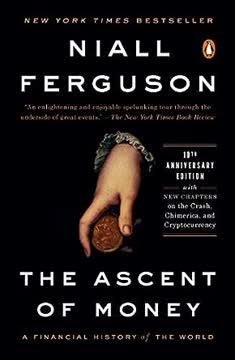
Money is the most misunderstood force in human history. We use it every day, depend on it for survival, build our lives around acquiring and protecting it, yet few of us understand where it came from or how it works. We treat money as a neutral tool, a simple medium of exchange, when in fact it is one of the most powerful engines of human progress ever devised. Niall Ferguson wrote The Ascent of Money to correct this blindness. His argument is direct and provocative: the ascent of money has been essential to the ascent of man. Behind every great civilization, every empire, every technological leap, every war won or lost, there lies a financial innovation that made it possible. The Renaissance was financed by Florentine bankers. The British Empire was built on government bonds. The Industrial Revolution was powered by stock markets and insurance. The American dream of homeownership was constructed on mortgages and the financial machinery that supports them. Yet most histories ignore this dimension entirely. They focus on kings and generals, treaties and battles, inventions and discoveries. They treat finance as a footnote, a technical detail beneath the dignity of serious historical inquiry. This is a profound mistake. Financial history is not a subplot of human history. It is the plot. Consider a simple question: why did Europe come to dominate the world between the sixteenth and twentieth centuries? Many answers have been proposed. Superior technology. Military prowess. Cultural dynamism. Scientific revolution. Ferguson offers a different explanation. Europe developed financial institutions that no other civilization possessed. Banks that pooled capital and allocated it efficiently. Bond markets that allowed governments to borrow vast sums for war and infrastructure. Stock markets that enabled large-scale corporate enterprise. Insurance that made risk manageable. Property rights that gave individuals a stake in the system. These institutions, more than any other factor, explain the rise of the West. The story of money…
Continue reading in the MinuteRead app
Get the complete 30-minute summary of The Ascent of Money
Get the complete summary in the appFinancial innovation drives human progress. The ascent of money has been essential to the ascent of man.
Money is a system of trust, not a thing. It emerged from debt and depends on institutions.
The bond market enabled governments to borrow vast sums, transforming warfare and state-building.
The joint-stock company enabled large-scale enterprise by pooling capital and limiting liability.
Insurance manages risk by pooling it across large populations, making modern life possible.
The mortgage made homeownership accessible to the middle class, creating the property-owning democracy.
"The Ascent of Money" is a strong fit if you want practical ideas around history, economics, finance, especially themes like financial innovation drives human progress. the ascent of money has been essential to the ascent of man; money is a system of trust, not a thing. it emerged from debt and depends on institutions. The MinuteRead summary distills these concepts into a focused read, whether you're deciding whether to buy the book or applying its lessons at work.
Niall Ferguson is a renowned historian and academic specializing in economic and financial history. He holds positions at prestigious institutions like Stanford, Harvard, and Tsinghua University. Ferguson has authored numerous bestselling books, including a biography of Henry Kissinger and works on global civilization and economic decline. His television series "The Ascent of Money" won an International Emmy. Ferguson's research spans various historical periods and topics, from the Rothschild fa…
View all summaries by Niall FergusonContinue Reading
Access the complete 30-minute summary and thousands more nonfiction books in the MinuteRead app.

Continue reading the complete summary in the MinuteRead app.