 MinuteRead
30 min
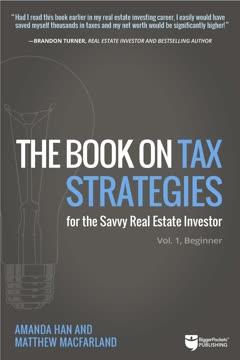
Book summary
by Amanda Han
Premium summary · Opens in the app · 30 min read
Every year, millions of real estate investors overpay their taxes. They do not do this because they want to. They do it because they simply do not know what they do not know. The tax code is thousands of pages long, written in language that seems designed to confuse, and constantly changing. Most investors hand their documents to a tax preparer, sign whatever comes back, and hope for the best. That is not a strategy. That is a gamble.
**Author:** Amanda Han and Matt MacFarland
**Estimated Reading Time:** 45 minutes
**What You'll Learn:**
- How to capture every legitimate deduction available to real estate investors - Why your business structure determines your audit risk and tax burden - How to use retirement accounts to buy real estate tax-free - The critical differences between flipping and renting for tax purposes - How to defer taxes indefinitely using 1031 exchanges and cost segregation - What happens when you gift or inherit real estate and how to plan for it
**Who This Book Is For:**
This book is for real estate investors who are tired of paying more tax than necessary. Whether you own a single rental property or a growing portfolio, whether you are flipping houses or building long-term wealth, the strategies in this book will help you keep more of what you earn. It is also for anyone who has ever wondered if their accountant is truly maximizing their deductions or if they are leaving money on the table every April.
Every year, millions of real estate investors overpay their taxes. They do not do this because they want to. They do it because they simply do not know what they do not know. The tax code is thousands of pages long, written in language that seems designed to confuse, and constantly changing. Most investors hand their documents to a tax preparer, sign whatever comes back, and hope for the best. That is not a strategy. That is a gamble. The problem is bigger than most people realize. Real estate offers some of the most powerful tax advantages of any investment class in America. Rental income can be sheltered. Depreciation can offset profits. Travel can become deductible. Retirement accounts can buy property. Capital gains can be deferred for decades, sometimes forever. Yet most investors capture only a fraction of these benefits because they never learned the rules of the game. Amanda Han and Matt MacFarland wrote this book to change that. They are certified public accountants who specialize in working with real estate investors. They are also investors themselves. They have seen firsthand how the right tax strategy can transform a mediocre investment into an outstanding one, and how poor planning can turn a profitable sale into a painful tax bill. Their goal is not to help you cheat the system. It is to help you understand the system well enough to use it exactly as it was intended. The difference between an average investor and a savvy one is rarely intelligence or effort. It is knowledge. The tax code rewards those who understand it. The investor who keeps accurate records will capture deductions that others miss. The investor who…
Continue reading in the MinuteRead app
Get the complete 30-minute summary of The Book on Tax Strategies for the Savvy Real Estate Investor
Get the complete summary in the appKeep accurate books. Every tax strategy depends on good records.
Separate business and personal finances completely.
Claim a home office deduction if you use part of your home exclusively for business.
Use self-directed retirement accounts to invest in real estate with tax advantages.
Choose the right business entity to reduce audit risk and protect your assets.
Understand that flipping is taxed differently from renting.
"The Book on Tax Strategies for the Savvy Real Estate Investor" is a strong fit if you want practical ideas around business, finance, money, especially themes like keep accurate books. every tax strategy depends on good records; separate business and personal finances completely. The MinuteRead summary distills these concepts into a focused read, whether you're deciding whether to buy the book or applying its lessons at work.
Amanda Han and Matt MacFarland are certified public accountants specializing in tax-saving strategies for real estate investors. As investors themselves, they have extensive experience in real estate tax strategies, entity structuring, and self-directed investing. Their expertise has led them to speak on national platforms, including NBC News Radio and Talks at Google. They are members of the American Institute of Certified Public Accountants and have authored the bestselling book "Tax Strategie…
View all summaries by Amanda HanContinue Reading
Access the complete 30-minute summary and thousands more nonfiction books in the MinuteRead app.

Continue reading the complete summary in the MinuteRead app.






