 MinuteRead
30 min
Book summary
Premium summary · Opens in the app · 30 min read
Most business books operate from a quiet, unspoken assumption: that the goal of business is to make money. They teach optimization, efficiency, negotiation tactics, and strategic planning. They treat profit as the scoreboard and quarterly earnings as the measure of a life well spent.
**Author:** Alan Ken Thomas **Estimated Reading Time:** 45 minutes
**What You'll Learn:** The core principles that drove Steve Jobs to build the most valuable company in the world, distilled into actionable lessons on innovation, leadership, design, and perseverance. This is not a biography. It is a field manual for thinking differently.
**Who This Book Is For:** Entrepreneurs tired of conventional advice, creators who refuse to compromise on quality, leaders building teams that change industries, and anyone who suspects the rules of business were written by people who never broke them.
Most business books operate from a quiet, unspoken assumption: that the goal of business is to make money. They teach optimization, efficiency, negotiation tactics, and strategic planning. They treat profit as the scoreboard and quarterly earnings as the measure of a life well spent. Steve Jobs rejected all of that. Not as a pose or a public relations strategy, but as a fundamental orientation toward work and life. He built Apple not by asking what would sell, but by asking what was worth making. He pursued excellence not because it was profitable, but because he could not stomach anything less. This book captures the operating philosophy behind one of the most remarkable careers in modern business. It draws from Jobs' own words, speeches, interviews, and the decisions he made when no one was watching. The lessons here are not abstract theories. They are battle-tested principles forged in the collapse of the Apple III, the exile from his own company, the near-bankruptcy of 1997, and the improbable resurrection that followed. The problem most people face is not a lack of ambition. It is a lack of clarity about what ambition should serve. We are told to work hard, but rarely told what to work toward. We are encouraged to innovate, but rarely shown what innovation actually requires. We celebrate success, but sanitize the failures that made it possible. Jobs' approach was different because he started from a different question. He did not ask, "How can we succeed?" He asked, "What is worth doing?" That reorientation changes everything. When you pursue something genuinely worthwhile, the obstacles become tolerable. The setbacks become data. The long hours become a reasonable price to pay. This book exists because the principles Jobs lived by are transferable. They do not require his exact circumstances, his temperament, or his era. They require a willingness to think clearly, to prioritize ruthlessly, and to care deeply about work that most people treat as a transaction. The chapters that follow are organized around the major themes of Jobs' business philosophy: innovation, focus, simplicity, design, culture, perseverance, and the relentless pursuit of excellence. Each chapter explains not just what Jobs believed, but…
Continue reading in the MinuteRead app
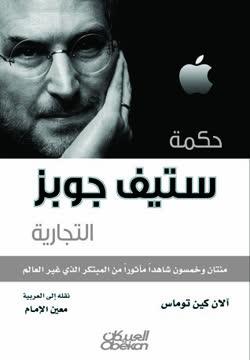
Get the complete 30-minute summary of The Business Wisdom of Steve Jobs
Get the complete summary in the appMake the product the point. Profit follows excellence, not the other way around.
Simplicity requires hard thinking. It is worth the effort because it creates leverage.
Innovation is driven by vision and people, not by budget.
Start with the experience you want to create, then work backward to the technology.
Perseverance is at least half of what separates success from failure.
Build teams of A players who balance each other's weaknesses.
"The Business Wisdom of Steve Jobs" is a strong fit if you want practical ideas around business, biography, leadership, especially themes like make the product the point. profit follows excellence, not the other way around; simplicity requires hard thinking. it is worth the effort because it creates leverage. The MinuteRead summary distills these concepts into a focused read, whether you're deciding whether to buy the book or applying its lessons at work.
Alan Ken Thomas is a graduate of Union College with experience in both newspaper and book publishing. He currently resides and works in Schenectady, New York. Alan Ken Thomas compiled "The Business Wisdom of Steve Jobs," a collection of quotes and insights from the legendary Apple co-founder. While the book has received mixed reviews, it demonstrates Thomas's interest in business leaders and their philosophies. His background in publishing likely influenced his approach to creating this compilat…
View all summaries by Alan Ken ThomasContinue Reading
Access the complete 30-minute summary and thousands more nonfiction books in the MinuteRead app.

Continue reading the complete summary in the MinuteRead app.






