MinuteRead
30 min
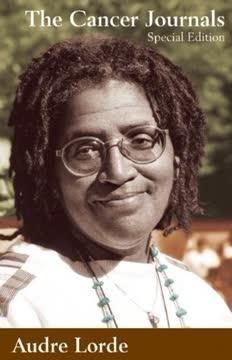
Book summary
by Audre Lorde
Premium summary · Opens in the app · 30 min read
In 1978, Audre Lorde received news that would alter the course of her life. A biopsy confirmed what she had feared: breast cancer. Within weeks, she underwent a modified radical mastectomy, losing her right breast in an attempt to stop the disease that threatened her life. What followed was not merely a medical journey but a profound confrontation with silence, identity, and the expectations that society places on women's bodies.
**Author:** Audre Lorde
**Estimated Reading Time:** 45 minutes
**What You'll Learn:**
How one woman's confrontation with breast cancer became a profound meditation on identity, silence, power, and the courage to speak truth in a world that often prefers comfortable lies. You will learn why Audre Lorde refused to hide her body after mastectomy, how she transformed personal crisis into political awakening, and what her journey teaches about living authentically in the face of mortality.
**Who This Book Is For:**
This book is for anyone who has faced a life-altering diagnosis, anyone who has struggled to speak their truth, and anyone who wants to understand how personal suffering can become a source of collective strength. It is especially for women, for Black women, for lesbians, for those whose experiences are too often erased from mainstream narratives of illness and recovery.
In 1978, Audre Lorde received news that would alter the course of her life. A biopsy confirmed what she had feared: breast cancer. Within weeks, she underwent a modified radical mastectomy, losing her right breast in an attempt to stop the disease that threatened her life. What followed was not merely a medical journey but a profound confrontation with silence, identity, and the expectations that society places on women's bodies. The Cancer Journals began as a series of diary entries, written in the raw aftermath of surgery and treatment. Lorde did not set out to write a book about cancer. She wrote because writing was how she made sense of the world, how she processed fear and pain, how she transformed experience into understanding. The result was something far more significant than a personal memoir. It became a political document, a challenge to the medical establishment, and a rallying cry for women to reclaim their bodies and their voices. What makes this book remarkable is not simply that Lorde survived cancer. It is that she refused to survive quietly. At a time when breast cancer was discussed in whispers, when women were expected to conceal their mastectomies and return to "normal" as quickly as possible, Lorde made a radical choice. She refused to wear a prosthesis. She refused to pretend that her body had not changed. She refused to accept that her primary concern after surgery should be whether she could still attract a man. This refusal was not born of anger alone, though anger was certainly present. It emerged from a deeper understanding of what silence costs. Lorde recognized that the pressure to hide her altered body was not about her comfort or her healing. It was about making other people comfortable. It was about maintaining an illusion of wholeness that served everyone except the woman who had actually lost…
Continue reading in the MinuteRead app
Get the complete 30-minute summary of The Cancer Journals
Get the complete summary in the appYour silence will not protect you. Speak your truth, even when it is frightening.
Refuse to hide your body to make others comfortable. Your body is your own.
The erotic is a source of power. Reclaim your capacity for joy.
Women's support networks are essential. Build them, nurture them, rely on them.
Question medical authority. You are an active participant in your own care, not a passive recipient.
Cancer has environmental causes. The medical establishment's reluctance to address them is political.
"The Cancer Journals" is a strong fit if you want practical ideas around memoir, feminism, essays, especially themes like your silence will not protect you. speak your truth, even when it is frightening; refuse to hide your body to make others comfortable. your body is your own. The MinuteRead summary distills these concepts into a focused read, whether you're deciding whether to buy the book or applying its lessons at work.
Audre Lorde was a prominent Black feminist poet and activist. Her poetry, published regularly in the 1960s, addressed themes of civil rights, feminism, and lesbian identity. Lorde's first poetry collection, The First Cities, was released in 1968. She co-founded Kitchen Table: Women of Color Press in 1980, the first U.S. publisher for women of color. Lorde was politically active in civil rights, anti-war, and feminist movements throughout her career. She served as State Poet of New York from 1991…
View all summaries by Audre LordeContinue Reading
Access the complete 30-minute summary and thousands more nonfiction books in the MinuteRead app.

Continue reading the complete summary in the MinuteRead app.