MinuteRead
5 min
Book summary
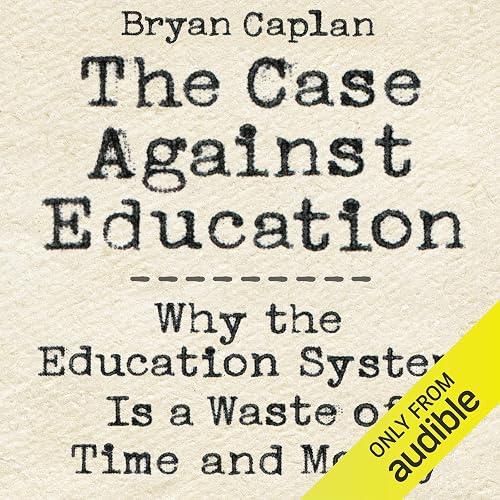
by Bryan Caplan
Premium summary · Opens in the app · 5 min read
The Case Against Education reveals why the schooling system is so broken, how it doesn’t fulfill its intended purposes but instead creates multiple problems for society, and what we might try to do to fix it.
The Case Against Education reveals why the schooling system is so broken, how it doesn’t fulfill its intended purposes but instead creates multiple problems for society, and what we might try to do to fix it.
Taking a physics class as part of a Civil Engineering degree doesn’t sound so crazy, right? But what if the subject matter focuses on light and relativity? I had this very experience and when I asked the dean about it in my exit interview before graduating he just told me that it was required for them to be accredited.
How ridiculous is it that governing bodies require such a useless class to have this certification? It certainly didn’t make it any easier to adjust to being an engineer once I graduated!
What’s worse is that few of the classes I took as part of my major made any difference when it was time to begin working. I remember many times thinking that it would be nice if someone fixed the system so I didn’t have to learn everything on the job!
Regardless of whether it’s college physics or high school Spanish, classes that provide no help in the real world are abundant in the school system. And when it comes to foreign languages, people only become fluent outside the classroom!
Educators will disagree with these notions, declaring that classes teach critical thinking and logic. But are they right? Science says no. Research identifies that while college does help with critical thinking skills, they don’t reach beyond the classroom.
In other words, a college degree does nothing to prevent you from using illogical thinking in the real world.
If you get a bachelor’s degree you earn more money. You learned a lot and developed new skills in school so you’re more valuable to employers, right? Actually, that’s not why a diploma gets you a higher salary. It’s simply because hardworking people are those that go to college and graduate. The character traits are already there, and getting the degree is evidence of that. But it doesn’t build those attributes. When economists try to explain why graduates make more, they use a flawed system called human capital theory. This is the idea that the classroom trains you to be a better employee by giving you those skills which you didn’t have before. A more accurate way is what’s known as signaling. In this view, employers will pay more if you have a college diploma because it’s a signal that you have preexisting profitable traits like diligence, obedience, and intelligence. In other words, school doesn’t give you those skills, it only proves that you already had them in the first place. Signaling theory also can explain things…
Continue reading in the MinuteRead app
Get the complete 5-minute summary of The Case Against Education
Get the complete summary in the appSchool doesn’t teach you much that is relevant to real life.
Graduating from college signals to employers that you’re a hard worker, but it won’t turn you into a diligent person.
To fix education we need to reform the way it’s done and rethink the way we see work.
"The Case Against Education" is a strong fit if you want practical ideas around career, culture, education, especially themes like school doesn’t teach you much that is relevant to real life; graduating from college signals to employers that you’re a hard worker, but it won’t turn you into a diligent person. The MinuteRead summary distills these concepts into a focused read, whether you're deciding whether to buy the book or applying its lessons at work.
I'm Bryan Caplan, Professor of Economics at George Mason University and New York Times bestselling author. I’ve written *The Myth of the Rational Voter*, named "the best political book of the year" by the New York Times, *Selfish Reasons to Have More Kids*, *The Case Against Education*, and *Open Borders: The Science and Ethics of Immigration* – co-authored with Saturday Morning Breakfast Cereal’s Zach Weinersmith. My latest project, *Poverty: Who To Blame*, is now well underway. I blog for Eco…
View all summaries by Bryan CaplanContinue Reading
Access the complete 5-minute summary and thousands more nonfiction books in the MinuteRead app.

Continue reading the complete summary in the MinuteRead app.