MinuteRead
30 min
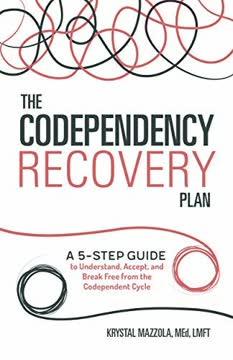
Book summary
Premium summary · Opens in the app · 30 min read
Most people think of codependency as something that happens to people who love someone with an addiction. The wife who makes excuses for her alcoholic husband. The mother who enables her adult son's drug use. The partner who keeps rescuing someone from the consequences of their own choices. But codependency is far more widespread than these familiar scenarios suggest.
**Author:** Krystal Mazzola
**Estimated Reading Time:** 45 minutes
**What You'll Learn:**
- How to recognize codependent patterns in your relationships and behavior - Why codependency develops and how family dynamics shape it - Practical strategies for setting boundaries and communicating effectively - How to build self-care practices that support lasting recovery - Ways to develop healthy intimacy without losing your authentic self
**Who This Book Is For:**
This book is for anyone who has ever felt exhausted from taking care of others while neglecting themselves. It is for people who struggle to say no, who feel responsible for everyone else's happiness, and who have lost touch with their own needs and desires. It is also for those who grew up in difficult family environments and are now ready to understand how those experiences shaped their relationship patterns. Whether you are just beginning to recognize codependent tendencies or have been working on recovery for years, this book offers a compassionate and practical path forward.
Most people think of codependency as something that happens to people who love someone with an addiction. The wife who makes excuses for her alcoholic husband. The mother who enables her adult son's drug use. The partner who keeps rescuing someone from the consequences of their own choices. But codependency is far more widespread than these familiar scenarios suggest. At its core, codependency is about losing yourself in the service of others. It is about believing, often unconsciously, that your worth depends on how much you give, how much you sacrifice, and how well you manage the emotions and needs of the people around you. It is about feeling responsible for things that are not yours to carry. Krystal Mazzola knows this territory intimately. As a licensed marriage and family therapist, she has spent years helping clients untangle the complicated web of codependent patterns. But her understanding goes beyond professional training. She grew up in a home marked by physical and verbal abuse, shaped by alcoholism and the chaos that accompanies it. She knows what it feels like to believe that if you could just be good enough, helpful enough, or invisible enough, you might somehow make things better. That belief is the seed from which codependency grows. The problem is that codependency often masquerades as virtue. People praise you for being selfless. They admire your willingness to help. They call you dependable, caring, and generous. Meanwhile, you are slowly disappearing. Your needs go unexpressed. Your boundaries crumble. Your sense of self becomes so entangled with others that you no longer know where you end and someone else begins. This is not a sustainable way to live. Chronic stress, resentment, burnout, and a profound sense of emptiness…
Continue reading in the MinuteRead app
Get the complete 30-minute summary of The Codependency Recovery Plan
Get the complete summary in the appCodependency is prioritizing others' needs over your own well-being.
Codependency develops as an adaptive response to dysfunctional family environments.
Recovery begins with reconnecting with your authentic self.
Self-care is a necessity, not a luxury.
Boundaries protect your well-being and build self-respect.
Assertive communication balances respect for self and others.
"The Codependency Recovery Plan" is a strong fit if you want practical ideas around self help, psychology, mental health, especially themes like codependency is prioritizing others' needs over your own well-being; codependency develops as an adaptive response to dysfunctional family environments. The MinuteRead summary distills these concepts into a focused read, whether you're deciding whether to buy the book or applying its lessons at work.
Krystal Mazzola is a Licensed Marriage and Family Therapist based in Phoenix, Arizona. She is the co-owner and practicing therapist at Dantia Wellness. Mazzola's personal experience with codependency informs her work, as she grew up in a physically and verbally abusive alcoholic home. This background has shaped her approach to therapy and writing, allowing her to connect with readers on a personal level. Her writing style is described as clear, engaging, and empathetic, making complex topics acc…
View all summaries by Krystal MazzolaContinue Reading
Access the complete 30-minute summary and thousands more nonfiction books in the MinuteRead app.

Continue reading the complete summary in the MinuteRead app.